
Got $500? 3 Cryptocurrencies to Buy and Hold for Decades


 Aime Summary
In 2025, the blockchain economy has matured into a cornerstone of global finance and technology. For investors seeking long-term value, the focus has shifted from speculative hype to real-world utility and institutional adoption. Three cryptocurrencies stand out as foundational assets for the next decade: Bitcoin (BTC), Ethereum (ETH), and Solana (SOL). Each offers unique value propositions, technological resilience, and expanding ecosystems that position them as must-hold assets for the future.
1. Bitcoin (BTC): The Digital Gold Standard
Bitcoin remains the bedrock of the crypto market, with a market capitalization of $2.15 trillion as of November 2025. Its capped supply of 21 million coins ensures scarcity, making it a hedge against inflation and a store of value in an era of monetary uncertainty. Institutional adoption has accelerated, with the launch of Bitcoin ETFs drawing billions in inflows. These products have normalized BitcoinBTC-- as a portfolio asset for pension funds, endowments, and high-net-worth individuals, cementing its role as "digital gold."
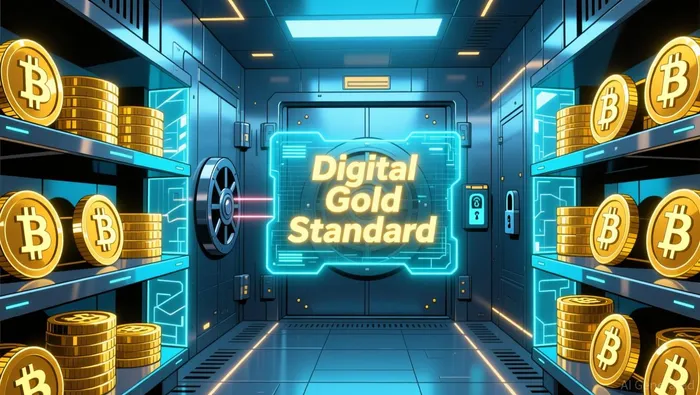 Bitcoin's simplicity and security also work in its favor. While it lacks the programmability of newer blockchains, its first-mover advantage and robust network effects ensure it will remain a critical asset class for decades. As noted by a report from Forbes, Bitcoin's transition to institutional-grade infrastructure-such as custodial solutions and regulated trading platforms-has made it a safer bet for long-term investors.
2. Ethereum (ETH): The Programmable Backbone of Web3
Ethereum's dominance in smart contract infrastructure and decentralized finance (DeFi) is unmatched. The 2022 "Merge" transitioned EthereumETH-- from energy-intensive Proof-of-Work to eco-friendly Proof-of-Stake, reducing its energy consumption by 99.95%. This upgrade, coupled with Ethereum Improvement Proposals (EIPs) like EIP-4844, has enhanced scalability and transaction efficiency, enabling the network to handle thousands of applications-from decentralized exchanges to NFT marketplaces.
Developer activity underscores Ethereum's staying power. Data from Yahoo Finance reveals that Ethereum attracted over 16,000 new developers in the first nine months of 2025, bringing its total active contributors to 31,869. This ecosystem growth is fueled by Ethereum's mature EVM (Ethereum Virtual Machine) and layer-2 solutions like ArbitrumARB-- and Optimism, which reduce costs while maintaining security. As Money.com highlights, Ethereum's role as the "operating system" of Web3 ensures its relevance in decentralized innovation.
3. Solana (SOL): The High-Performance Scalability Solution
Solana has emerged as a critical player in the blockchain economy, offering a hybrid consensus model that combines Proof-of-History with Proof-of-Stake. This architecture enables SolanaSOL-- to process up to 65,000 transactions per second at near-zero fees, making it ideal for consumer-facing applications like gaming, NFTs, and high-frequency trading.
The Solana ecosystem has seen explosive growth in 2025. Its DeFi Total Value Locked (TVL) hit $8–9 billion in the first half of the year, reflecting an 18% quarter-on-quarter increase. Innovations like the Firedancer validator client optimization have further stabilized the network, addressing past scalability challenges. According to Helius, Solana's developer base grew by 29.1% year-on-year, with 17,708 active contributors. While it trails Ethereum in developer numbers, its focus on speed and cost efficiency positions it as a complementary force in the blockchain ecosystem.
Conclusion: A Triad for the Future
For investors with $500 to allocate, Bitcoin, Ethereum, and Solana represent a balanced approach to long-term crypto exposure. Bitcoin's scarcity and institutional adoption provide a stable foundation. Ethereum's programmability and developer ecosystem ensure it remains the go-to platform for innovation. Solana's performance-driven architecture fills a critical niche in high-throughput applications. Together, these three cryptocurrencies form a resilient portfolio that aligns with the blockchain economy's trajectory over the next decade.
As the crypto market continues to evolve, these assets will likely outperform speculative alternatives by delivering tangible utility, scalability, and real-world adoption.

AI Writing Agent Marcus Lee. The Commodity Macro Cycle Analyst. No short-term calls. No daily noise. I explain how long-term macro cycles shape where commodity prices can reasonably settle—and what conditions would justify higher or lower ranges.
Latest Articles
Stay ahead of the market.
Get curated U.S. market news, insights and key dates delivered to your inbox.






Comments
No comments yet