
U.S. 5-Year Note Auction Yield Rises to 3.747%: Navigating Interest Rate Sensitivity and Sector Rotation in a Shifting Policy Landscape
 Aime Summary
The U.S. 5-Year Treasury Note Auction in December 2025 marked a pivotal moment in the bond market, with the high yield climbing to , . This rise, though modest in absolute terms, signals a complex interplay of economic fundamentals, inflation expectations, and Federal Reserve policy. For investors, the auction underscores the need to recalibrate strategies around and in a landscape where monetary policy is both a tailwind and a headwind.
The Drivers Behind the Yield Rise
The 5-Year Note's yield trajectory reflects a delicate balancing act. On one hand, the U.S. economy expanded at a , driven by robust consumer spending and export growth. On the other, the Federal Reserve, despite cutting rates three times in 2025, has signaled a cautious pause in 2026, projecting only one additional rate cut. This creates a , , where investors demand compensation for inflation risks while anticipating limited near-term relief from central bank easing.
The auction's bid-to-cover ratio of . Investors are pricing in a scenario where inflation, , . This dynamic is critical for understanding the 5-Year Note's role as a barometer of intermediate-term expectations. Unlike the 10-Year Note, which is more sensitive to long-term inflation and growth, the 5-Year Note captures the market's view of the Fed's near-term policy path and economic momentum.
Interest Rate Sensitivity: A Double-Edged Sword
The 5-Year Note's yield is inherently sensitive to changes in monetary policy. A 10-basis-point increase in the 5-Year yield can significantly impact sectors like utilities, real estate, and long-duration equities, which rely on stable borrowing costs. For example, real estate investment trusts (REITs) typically benefit from falling rates, as lower financing costs boost property valuations. Conversely, a rising yield environment compresses valuations for these sectors, forcing investors to reassess risk-reward profiles.
The steepening of the of the yield curve (often referred to as the "belly") has also created opportunities for active fixed-income strategies. Investors are increasingly favoring this segment for its combination of income and modest duration, as it benefits from both rolldown returns and a relatively stable policy outlook. However, the Fed's balance sheet adjustments—such as its shift toward shorter-maturity holdings—could introduce volatility, particularly if market liquidity tightens.
Sector Rotation: From Tech to Defensive Plays
The shifting yield environment has prompted a strategic reallocation of capital. In 2025, the . While long-term fundamentals remain strong (e.g., AI infrastructure spending), near-term volatility is expected as the Fed's hawkish stance limits the upside.
Conversely, like healthcare and communication services have gained traction. These sectors, which historically outperform in uncertain environments, are now seen as outperformers in a high-yield, low-rate-cut paradigm. For instance, healthcare's resilience is underpinned by structural demand for medical services and a relatively low sensitivity to interest rate fluctuations.
Rate-sensitive sectors such as utilities and industrials have also seen short-term gains. Utilities, for example, , driven by structural demand for power infrastructure tied to AI expansion. However, . Investors are advised to adopt a , prioritizing companies with strong cash flows and defensible valuations over speculative bets.
Strategic Implications for Investors
- Short-Duration Fixed Income: With the Fed signaling a pause in rate cuts, investors should favor short-duration bonds and ETFs. The 3- to 7-year segment of the yield curve offers a compelling risk-return profile, balancing income with limited duration risk.
- Defensive Equity Exposure: Sectors like healthcare and communication services provide downside protection in a fragmented market. These sectors are less correlated with interest rate movements and offer consistent cash flows.
- Active Sector Rotation: As the Fed's policy stance evolves, investors should remain agile. For example, , steady" growth sectors.
Conclusion: A Nuanced Approach to a Complex Environment
The U.S. . In a world where the Fed's policy path is both a stabilizer and a disruptor, investors must adopt a nuanced, active approach. By aligning strategies with interest rate sensitivity and sector rotation opportunities, portfolios can navigate the shifting landscape while capitalizing on emerging trends. As the Fed's balance sheet adjustments and inflationary pressures continue to shape the environment, the key to success lies in flexibility, discipline, and a deep understanding of the interplay between yields and sectors.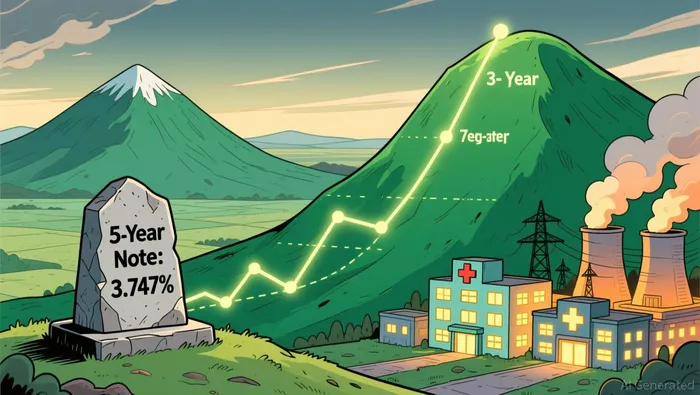

Stay ahead of the market.
Get curated U.S. market news, insights and key dates delivered to your inbox.


AInvest
PRO
AInvest
PRO



Comments
No comments yet