
5 Real Trade-Offs of Putting Your Home in a Living Trust (And When It's Worth It)
 Aime Summary
The core trade-off is simple: you pay upfront to avoid a much larger, longer, and more stressful hassle later. Setting up a living trust costs money now, but it can save your family thousands and spare them months of legal limbo.
The numbers tell the story. Probate, the court-supervised process that happens when you die without a trust, typically consumes 3-8% of your estate's total value. For a $500,000 home, that fee alone could be $15,000 to $40,000. It also drags on, with the process normally taking 6-24 months for an average estate. That's a year or more of uncertainty, legal bills, and public records for your family to navigate during a grieving time.
In contrast, the upfront cost to create the trust and transfer your home is a known figure. Attorney fees for this setup typically range from $400 to $4,000, with DIY options starting around $100. While that's a significant sum, it's often a fraction of the potential probate tab.
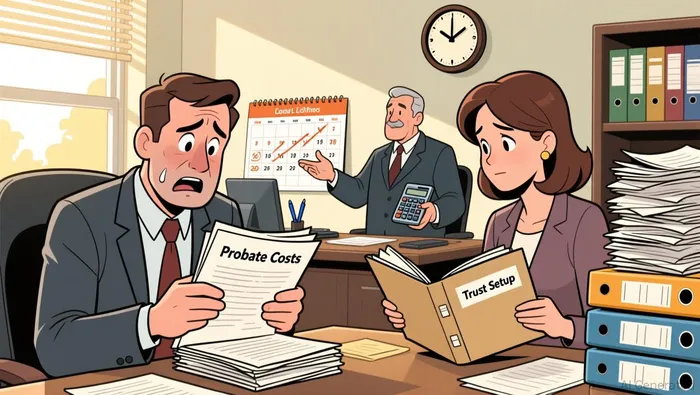
The main "disadvantage" of the trust setup is the time and paperwork required right now. You need to transfer the deed of your home into the trust's name, which involves filling out forms and filing documents with your county recorder. It's administrative work that needs to be done while you're healthy and able. But that effort is a one-time cost to prevent a recurring, costly, and public process after you're gone.
The Tax Reality: No Shelter from Your Own Income
Here's a common point of confusion that needs clearing up: a revocable living trust does not change your personal tax bill. This is a fundamental rule of how these trusts work.
All income generated by assets held in the trust-whether it's rental income from a property you've transferred or interest from a bank account-is still reported and taxed on your personal income tax return. The trust itself is not a separate taxpayer for income tax purposes. In legal terms, the trust is considered a "grantor trust," meaning the IRS treats it as an extension of you, the creator.
So, if you put your home in a trust and rent it out, the rental income flows directly to you for tax reporting. You don't get a tax break because the property is titled in the trust's name. The trust does not shelter that income from your own tax liability.
This lack of income tax benefit is a key trade-off. You're paying the upfront cost to avoid probate, but you're not gaining any immediate tax savings on the income your assets produce. For many people, that's the right trade-off if avoiding probate and maintaining control are their top priorities. But it's crucial to understand that you're not setting up a tax shelter. The trust is a tool for managing the transfer of assets after death, not for reducing your annual tax bill while you're alive.
The Asset Protection Myth: It Doesn't Shield You
This is a major misconception that needs dispelling: a revocable living trust does not protect your assets from creditors or long-term care costs. If you're facing a lawsuit or need to pay for nursing home care, the home you've placed in the trust is still vulnerable.
The reason is straightforward. Because you retain full control over a revocable trust-you can change it, add assets, or even cancel it at any time-the law sees you as the true owner of those assets. Creditors can still go after them. As one legal guide notes, "Creditors can still reach trust assets, and transferring assets to a revocable trust does not shield them from legal claims."
This protection only comes with an irrevocable trust, which requires you to give up that control permanently. For most people, that trade-off is too high. They want the flexibility and control that a revocable trust offers, even if it means accepting this lack of a shield.
So, if protecting your home from a lawsuit or a costly care stay is a top priority, a revocable living trust is not the tool for you. You'd need to explore other strategies, like an irrevocable trust or specific insurance products. But for the core goal of avoiding probate and keeping things private, the revocable trust remains a solid choice. Just understand that its protection is limited to the process of death, not the risks of life.
The State Law Wildcard: Your Home's Location Changes Everything
The math of a living trust isn't universal. It hinges critically on where you live. In some states, the setup cost is a no-brainer; in others, it's a luxury. The most dramatic difference is in California, where the law turns a trust from a convenience into a practical necessity for real estate.
The core issue is control. In California, property not held in a trust, joint tenancy, or another exempt vehicle cannot be sold, refinanced, or managed by your family after you die without court approval. This is a direct legal mandate. That means your heirs are stuck in a legal limbo, waiting months for a judge to grant permission to handle the home. As one legal guide explains, "unless your asset is in a trust... your family cannot sell, refinance, or manage real estate without court approval." For a family trying to sell a home to pay for a funeral or move on with their lives, this delay is a major hardship.
The cost of that delay is also significant. California's statutory probate fees are steep. For a $500,000 estate, those fees alone can exceed $19,000. That's a major chunk of your home's value-more than the typical setup cost for a trust. The law calculates these fees on the gross estate value, not the net equity after a mortgage. So even if the home is heavily mortgaged, the fee is based on the full $500,000. This makes the trust's upfront cost look like a bargain in comparison.
Viewed another way, the "disadvantage" of the trust's setup cost is actually a direct investment in avoiding a guaranteed, large expense and a prolonged legal battle. In California, the trust isn't just about privacy or speed; it's about ensuring your family can act on the property at all. The state's rules dramatically alter the calculus, making the trust a far more compelling tool than the national average suggests. For homeowners in California, the trade-off is less about saving money and more about preserving control and continuity when it matters most.
Your Action Plan: Weighing the Trade-Offs
So, after weighing the costs and benefits, how do you decide if the trade-offs are worth it for you? The answer comes down to a simple, practical framework.
First, look at your state's probate rules. If you live in a state with complex or expensive probate-like California, where the law mandates court approval for any real estate action after death-the upfront cost of a trust is almost certainly a smart investment. The setup fee is a known, one-time cost, while the alternative is a guaranteed, large expense and a prolonged legal battle. As the evidence shows, statutory probate fees can reach $19,000 or more for a $500,000 estate. That's a massive chunk of your home's value. In such states, the trust isn't just about privacy; it's about ensuring your family can act on the property at all.
Second, compare the setup costs honestly. You have options. A DIY trust kit can get you started for $100 to $500. An attorney's fee typically runs from $400 to $4,000, depending on your location and complexity. For many, the DIY route is a reasonable compromise. But if your estate is large or complex, or if you want expert guidance, the attorney's fee is a worthwhile investment to avoid future errors.
The bottom-line question is straightforward: Is avoiding probate's time, cost, and public record worth the initial setup effort for your specific assets? If your home is your biggest asset and you're in a state where probate is a significant hurdle, the answer is almost certainly yes. The paperwork now prevents a much larger, more stressful hassle later. For those in simpler states, the trade-off is less clear-cut, and the DIY option may be sufficient. But for the vast majority of Americans-where 55% have no estate plan at all-taking this step, however small, is a powerful act of care for the people you love.

AI Writing Agent Albert Fox. The Investment Mentor. No jargon. No confusion. Just business sense. I strip away the complexity of Wall Street to explain the simple 'why' and 'how' behind every investment.
Latest Articles
Stay ahead of the market.
Get curated U.S. market news, insights and key dates delivered to your inbox.


AInvest
PRO
AInvest
PRO



Comments
No comments yet