
The 5-Day Pause: Trump, Iran, and the $100 Oil Death Dance
 Aime Summary
The world held its breath on March 23, 2026. As President Trump's 48-hour ultimatum to Iran was set to expire, the global economy teetered on the edge of a localized energy war. However, in a signature move of his second term, Trump hit the "pause" button.
The TACO Effect: Why the Markets Bounced
For months, Wall Street has been trading on a theory known as TACO (Trump Always Chickens Out). While the term started as a political jab, it is now a multi-billion dollar quantitative strategy used by hedge funds to navigate Trump's "Truth Social" diplomacy.
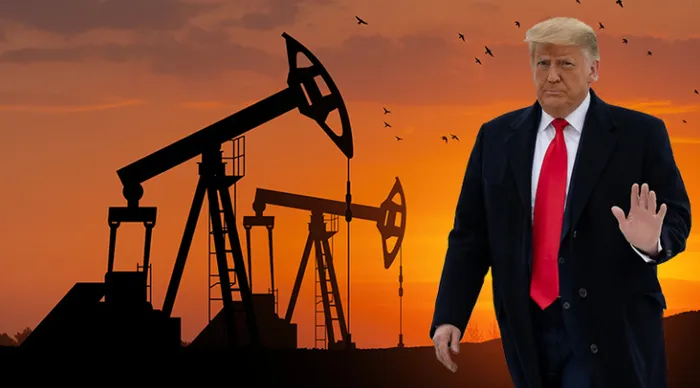
The pattern is simple: Trump issues a world-shaking threat—this time vowing to "obliterate" Iranian power plants. As the threat escalated, the S&P 500 plunged below its 200-day moving average for the first time since May 2025. Just as the technical breakdown signaled a systemic crash, Trump pivoted. On Monday morning, he announced a 5-day reprieve via Truthsocial Platform, citing "productive conversations." Oil prices immediately retreated toward $99, and U.S. stocks saw a relief rally as the "TACO trade" kicked in.
Why Oil Prices Can Not Be a Free Market
You might wonder why the U.S. doesn't just let the market decide the price of oil. In 2026, oil is no longer just a commodity; it is a geopolitical weapon and a universal tax on the American voter.
High fuel costs act as an immediate tax on every sector. If oil stays above $110, the Fed cannot cut rates, and the U.S. economy risks a recession—something Trump desperately wants to avoid. While companies like ExxonMobil are private, their operations are effectively protected by the Department of Defense. Trump cannot allow a full-scale war to destroy Iranian infrastructure because the resulting global supply shock would bankrupt the very "MAGA" base he counts on.
The $100 Oil Deadlock: Who Blinks First
Trump's 5-day reprieve is a high-stakes gamble. He wants the political win of a "Great Deal" without the economic catastrophe of $150 oil. While Trump told reporters in Florida that he was expecting a phone call from Tehran, Iran's Foreign Ministry today (March 24) issued a flat denial, calling his remarks "psychological warfare" to lower energy prices.
To hedge against a failed negotiation, the Trump administration has already activated a record-speed release of 172 million barrels from the Strategic Petroleum Reserve (SPR). This massive liquidity injection is designed to blunt the impact of any potential Iranian retaliation in the Strait of Hormuz. Trump is essentially fighting a two-front war: a military bluff against Tehran and a financial fire-drill to keep domestic gas prices from incinerating his approval ratings.
Technical Breakdown vs Political Theatre
From a technical perspective, the S&P 500's break below the 200-day moving average is a "red alert." Historically, if the index doesn't reclaim this line within a week, a correction often follows. Trump, ever the market-watcher, understands that a crashing Dow is a far greater threat to his presidency than a defiant Iran. His 5-day extension is a calculated move to buy time for the market to stabilize and for his "family-led" diplomacy—steered by Jared Kushner—to find a backdoor exit from the brink of war.
Conclusion
The current "bickering" between Washington and Tehran is a masterclass in Geopolitical Brinkmanship. For the average investor, the takeaway is clear: In 2026, the most important financial indicator isn't a company's earnings—it's the tone of a Truth Social post.
As long as the "5-day clock" is ticking, expect extreme volatility. The world is witnessing a "Death Dance" where Trump is using the threat of war to gain leverage, while the markets are betting he is too afraid of a crash to pull the trigger. For now, the "TACO" trade remains the only game in town.

Tianhao Xu is currently a financial content editor, focusing on fintech and market analysis. Previously, he worked as a full-time forex trader for several years, specializing in global currency trading and risk management. He holds a master’s degree in Financial Analysis.
Latest Articles
Stay ahead of the market.
Get curated U.S. market news, insights and key dates delivered to your inbox.
AInvest
PRO
AInvest
PRO



Comments
No comments yet