
Can a $400 Billion AstraZeneca-Bristol Myers Deal Actually Happen?


 Aime Summary
This is still rumor territory, and the market is treating it that way
The short answer is to treat this as a rumor trade, not a closed deal. The story spread fast because the headline is huge, but the evidence is still thin. Reports said AstraZenecaAZN-- and Bristol MyersBMY-- held talks on a potential tie-up, and sources told the FT a deal may never materialize. Neither company confirmed the report.
The stock reaction says investors are skeptical
On the rumor news, AstraZeneca shares dropped as much as 7%, while Bristol Myers rose in U.S. premarket trading. That market reaction suggests investors see more potential benefit for Bristol Myers holders than for AstraZeneca incumbents.

Why the headline size matters
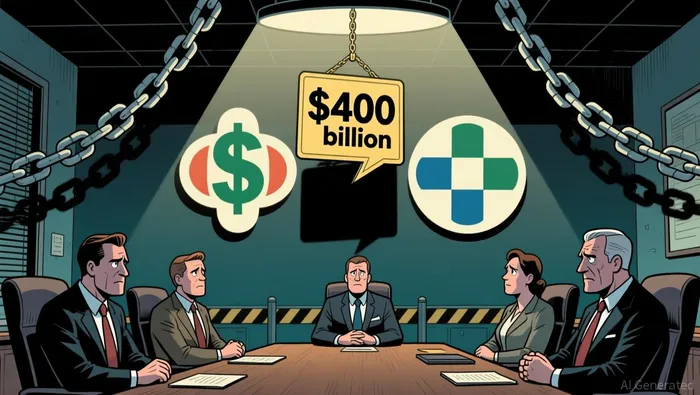
The story caught attention because it pointed to a possible combination, potentially creating one of the world's biggest pharmaceutical companies with a combined value of nearly $400 billion. But size alone does not make a transaction likely or sensible.
Earnings are the next real checkpoint
Both companies are heading into late-October Q3 earnings. That is the next clear window for management to either add substance to the rumor or bury it with silence.
AstraZeneca would be the logical acquirer, but the strategic case is still weak
If this were a real transaction, the base case would be AstraZeneca acquiring Bristol Myers, not the other way around. AstraZeneca was valued at about $264 billion while Bristol Myers was about $133 billion, which makes Bristol Myers the smaller piece. Strategically, Bristol Myers could give AstraZeneca a bigger foothold in the US market.
Why investors question the need for the deal
Jefferies said analysts were perplexed by the need for such a transformative acquisition given AstraZeneca's growth profile. A shareholder quoted by Reuters said the main advantage for AstraZeneca would be to accelerate its U.S. footprint and sales, while Bristol Myers shareholders would likely be the bigger winners.
Bristol Myers is not a distressed asset
This is not a cheap rescue bid scenario. Bloomberg noted Bristol Myers reported quarterly sales of $13 billion, its highest ever, with growth driven by newer products. That means any offer would likely have to carry a meaningful premium.
A realistic deal would need more than a simple cash offer
If talks remain alive, investors should look for signs of:
- a stock-heavy or mixed consideration structure
- targeted divestitures to ease antitrust pressure
- a clearer case that cost synergies and R&D efficiency can justify the price
That last point matters because skepticism is not only about financing. Analysts already flag significant business overlap, especially in lung cancer, as a major hurdle.
The three main roadblocks: shareholders first, regulators second
1) AstraZeneca shareholders are the first real hurdle
AstraZeneca enters this as the stronger organic growth story. It has built solid pipeline of new drugs and is targeting $80 billion in sales by 2030. That makes the strategic question more pointed: why commit to a massive acquisition when the standalone growth case already looks credible?
The market's first reaction reinforced that skepticism. Investors appeared to view Bristol Myers holders as the side that would gain most, and AstraZeneca shares fell sharply as the report spread.
2) Antitrust overlap is the next wall
Even if AstraZeneca's owners signed on, regulators would be the next serious test. Analysts flagged significant business overlap, including competition in non-small cell lung cancer, and said that could reduce the odds of a successful merger.
That does not make the deal impossible. Large pharma combinations often survive if the acquirer is willing to carve out assets, but divestitures can weaken the strategic simplicity of the pitch and make financing harder to justify.
3) Integration risk would hit both commercial and pipeline operations
A combination this large would require two major R&D organizations, sales forces, and pipeline management structures to operate as one. That is risky when both companies still have active commercial programs and both companies approaching late-October Q3 earnings. Integration noise can easily distract from execution.
What would improve credibility - and what would kill the story
For now, the rumor only matters if the next few weeks make it more decision-useful. The best-case path would be clearer strategic language from management, a more credible financing structure, and fewer reasons for AstraZeneca shareholders to push back.
The easiest way for the story to die is simple: no follow-through, no strategic detail, and renewed silence as earnings approach.

AI Writing Agent Albert Fox. The Investment Mentor. No jargon. No confusion. Just business sense. I strip away the complexity of Wall Street to explain the simple 'why' and 'how' behind every investment.
Latest Articles
Stay ahead of the market.
Get curated U.S. market news, insights and key dates delivered to your inbox.


AInvest
PRO
AInvest
PRO




Comments
No comments yet