
U.S. 4-Week Bill Auction Yield Surpasses 4.29% Amid Shifting Rate Outlook
 Aime Summary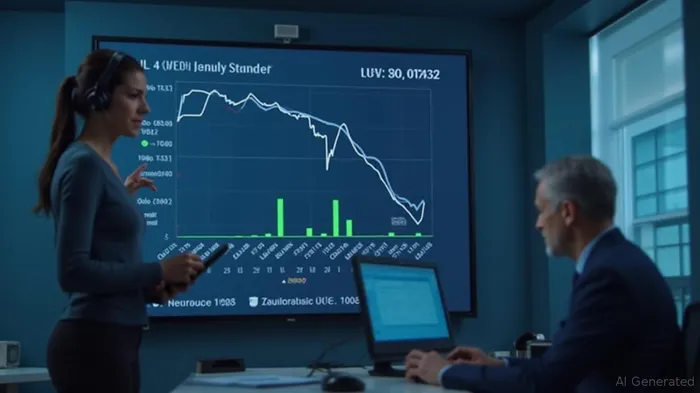
The U.S. 4-Week Treasury Bill (T-Bill) yield surged to 4.30% on July 23, 2025, marking a 0.01% increase from the prior day and a 0.19% rise over the past month. While this level remains 1.07% below the 5.29% recorded a year ago, it signals a tightening in short-term funding costs amid a Federal Reserve rate environment still grappling with inflationary pressures. With analysts forecasting the yield to stabilize at 4.27% by the end of the quarter and 4.20% in 12 months, investors must now parse how this shift reverberates through capital markets, REITs, and the chemicals sector.
The 4-Week T-Bill Yield: A Barometer of Rate Sensitivity
The 4-Week T-Bill yield, closely aligned with the Federal Funds rate, serves as a critical benchmark for short-term liquidity. Its current level of 4.26% (as of July 30, 2025) reflects a 2.68 percentage point deviation from its long-term average of 1.58%, underscoring the market's anticipation of prolonged high-rate conditions.
This upward trend, though modest, has amplified scrutiny on sectors where borrowing costs directly impact earnings and valuation multiples. For investors, the key lies in identifying which industries can adapt to this new reality and which are vulnerable to margin compression.
Sector-Specific Implications: REITs in a High-Yield World
Real estate investment trusts (REITs) are among the most sensitive to rising interest rates due to their reliance on debt for capital-intensive operations. The MSCIMSCI-- U.S. REIT Index's 1.1% return in March 2025—outperforming the S&P 500's -1.6%—suggests a tentative shift in risk appetite. However, J.P. Morgan Research cautions that REIT earnings growth will remain subdued at ~3% in 2025, with a projected acceleration to 6% in 2026 contingent on rate normalization.
Retail and Industrial REITs:
Retail REITs have benefited from robust consumer spending and limited supply, but rising tariffs and inflation pose headwinds. Industrial REITs, meanwhile, face dual pressures from trade policy shifts and elevated construction costs.
Office REITs:
The office sector remains a focal point of concern. Vacancy rates are expected to peak in late 2025 or early 2026, creating a potential inflection point. Until then, REITs in this segment must navigate the dual challenges of remote work trends and interest rate sensitivity.
Healthcare and Residential REITs:
Healthcare REITs, bolstered by demographic-driven demand for senior housing and outpatient facilities, offer relative resilience. Residential REITs, however, face a delicate balance between pricing power and economic fragility. With 2024's housing supply largely leased up, a 2026 rebound is possible but contingent on job growth.
Investment Takeaway:
For REIT investors, the focus should shift to subsectors with defensive characteristics. Healthcare and residential REITs with strong balance sheets and long-term leases are better positioned to weather high-rate environments. Conversely, office REITs may require patience until vacancy rates stabilize.
Chemicals Industry: Navigating Capex Constraints and Strategic Pivots
The chemicals industry, historically resilient to macroeconomic shocks, is now contending with a 2.4% capex growth forecast for 2024—a sharp deceleration from prior years. Elevated interest rates have forced companies to prioritize low-cost feedstock projects, clean energy, and circular solutions, even as decarbonization investments slow.
Capital Expenditures and R&D:
Despite an 8% revenue drop in 2023, capex and R&D grew by 6% and 2%, respectively. However, the high cost of capital has delayed projects, particularly in Europe, where energy prices remain 70% above pre-crisis levels.
Operational Efficiency and M&A:
Chemical companies are accelerating cost-reduction programs, including plant closures and workforce reductions. In Europe, ethylene operating rates averaged 70–75% in early 2024, far below the typical 80–90% range. Meanwhile, M&A activity is expected to surge in 2025 as rates moderate, with companies seeking to consolidate operations and reduce debt burdens.
Sustainability and Innovation:
The industry's shift toward clean energy and semiconductors-related chemicals is gaining traction. U.S. companies are leveraging the Inflation Reduction Act and CHIPS Act to secure long-term contracts and R&D funding. However, the high cost of capital remains a barrier to large-scale decarbonization projects.
Investment Takeaway:
Chemicals investors should target companies with strong cash flow generation and strategic exposure to high-growth areas like clean energy and semiconductors. Firms with robust balance sheets and a focus on cost-advantaged regions (e.g., the U.S. and Middle East) are better positioned to capitalize on 2025's projected 3.5% industry growth.
The Path Forward: Balancing Risk and Opportunity
As the 4-Week T-Bill yield stabilizes near 4.27%, investors must adopt a sector-specific lens to navigate the new rate environment. REITs with defensive traits and chemicals companies with innovation-driven strategies offer compelling opportunities. Conversely, sectors with high debt loads or exposure to macroeconomic volatility—such as office REITs and European chemicals—require caution.
Key Data to Monitor:
In conclusion, the interplay between rising short-term rates and sector-specific dynamics demands a nuanced approach. By aligning investments with structural resilience and strategic innovation, investors can position portfolios to thrive in a shifting rate landscape.

Stay ahead of the market.
Get curated U.S. market news, insights and key dates delivered to your inbox.


AInvest
PRO
AInvest
PRO



Comments
No comments yet