
3I/ATLAS Sparks Debate on Technological Origins Amid Unprecedented Trajectory
 Aime Summary
Astronomers and physicists are casting their attention towards a rare interstellar object known as 3I/ATLAS, which has recently been observed passing through our solar system. This fascinating celestial visitor was first detected using the Asteroid Terrestrial-impact Last Alert System (ATLAS) telescope in Chile, marking only the third such interstellar object identified in our territory. As researchers analyze its characteristics, debates arise as to whether it might be more than just a regular comet, potentially possessing attributes that suggest technological origins.
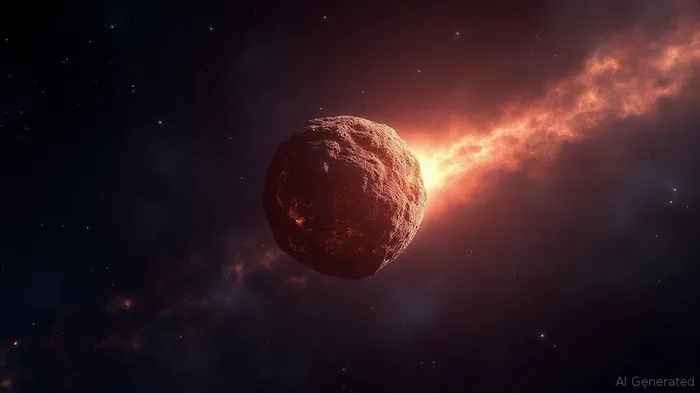
The Harvard physicist Avi Loeb has been vocal about the peculiarities of 3I/ATLAS and its possible implications. He points out that this massive object demonstrates an unexpected trajectory that aligns improbably well with the orbits of the planets in our solar system. Such precision could suggest that the object is on a deliberately planned reconnaissance mission. Loeb further highlights that the object exhibits anomalous features, including an unprecedented glow situated in front of the comet, contrary to the tail typically trailing behind comets, described as "quite surprising."
Previous observations have indicated that the object, measuring approximately 20 kilometers across, is unusually bright for its observed distance. Analysts are questioning its alignment, as calculated probabilities suggest its arrival aligned with key planetary orbits at one in 500, and even less likely near encounters with Mars, VenusXVS--, and Jupiter at one in 20,000.
The Hubble Space Telescope has set its sights on capturing detailed images, offering an unparalleled view of this enigmatic visitor. Through its observations, astronomers have identified a teardrop-shaped cocoon of dust emanating from the icy nucleus of the comet. The exact dimensions of this nucleus are yet undetermined, with estimates suggesting it could be as large as 3.5 miles or as small as 1,000 feet across.
Further observations are shedding light on the comet's composition and activity. Ground-based telescopes, alongside those in space such as the James Webb Space Telescope and others, are working to understand its chemical makeup. Notably, the tail of 3I/ATLAS is releasing a significant amount of water and gases, even from regions distant from the sun, which could point to its origins from a star system markedly older than our own. Such behavior is similar to comets found within the outer solar system, yet distinctly atypical for its interstellar nature.
As experts speculate on its provenance, they are also weighing the reactions to its presence. Loeb has suggested that humanity might consider messaging the object, theoretically engaging with potential intelligence onboard. He presents this as an opportunity, albeit with the caution that such communication must account for the possibility of encountering an advanced technological entity. However, the notion of engagement prompts critical considerations about the unknown intentions of such an interstellar visitor.
The debates surrounding 3I/ATLAS are multifaceted, with significant efforts being made to monitor its trajectory and any environmental changes it might undergo as it approaches the sun. It is important for astronomers and physicists globally to align and deepen policies surrounding such potential extraterrestrial discoveries. By examining 3I/ATLAS with the array of advanced observational tools at our disposal, the scientific community is poised to gain essential insights into the origins and nature of interstellar objects.
As the world watches, 3I/ATLAS challenges existing knowledge of interstellar objects, inspiring continued exploration and study. It is a reminder of the vast unknowns still present in our universe, encouraging collaborative scientific advancement to unravel the mysteries beyond our solar neighborhood.

Stay ahead of the market.
Get curated U.S. market news, insights and key dates delivered to your inbox.






Comments
No comments yet