
The 3D Printing Industry's Black Friday Surge: A Tipping Point for Consumer Adoption?


 Aime Summary
The Black Friday Catalyst: Pricing Strategies and Product Launches
Black Friday 2025 has emerged as a strategic battleground for 3D printer manufacturers, with Elegoo leading the charge. The company's Saturn 4 Ultra resin printer, priced at $419.99 during the sale-a 35% discount from its usual $624-has become a flagship product. This model's 16K monochrome LCD, 19-micron resolution, and AI-powered features such as smart tank heating and tilt-release technology underscore its appeal to both hobbyists and professionals. Elegoo's promotional tactics, including "Win a Free Machine" contests and bulk resin discounts, further amplify its reach.
Such pricing strategies are not isolated. According to market data, the broader market saw a 15% year-over-year increase in entry-level 3D printer shipments in Q1 2025, driven by fears of U.S. tariffs on Chinese-made devices. Chinese brands, including Elegoo, Bambu Lab, and Creality, accounted for 95% of these shipments, leveraging their cost advantages to capture market share.
Market Dynamics: Tariffs, Consumer Behavior, and Growth Projections
The surge in Black Friday sales is part of a larger narrative shaped by macroeconomic and technological forces. Tariff concerns have accelerated pre-emptive purchases, with consumers and businesses stockpiling devices to avoid potential price hikes. This trend is particularly pronounced in the resin 3D printing segment, which is growing at 15-20% annually due to its applications in miniatures, jewelry, and dental modeling.
Post-Black Friday data reveals a shift in consumer behavior toward value-seeking and quality prioritization. A survey by MediaMarktSaturn found that 65% of German shoppers participated in Black Week deals, with many allowing promotions to inspire purchases. In the U.S., 42% of consumers discussed deals with friends and family before buying, reflecting a heightened emphasis on informed decision-making. For 3D printers, this means buyers are increasingly prioritizing features like AI integration and eco-friendly materials.
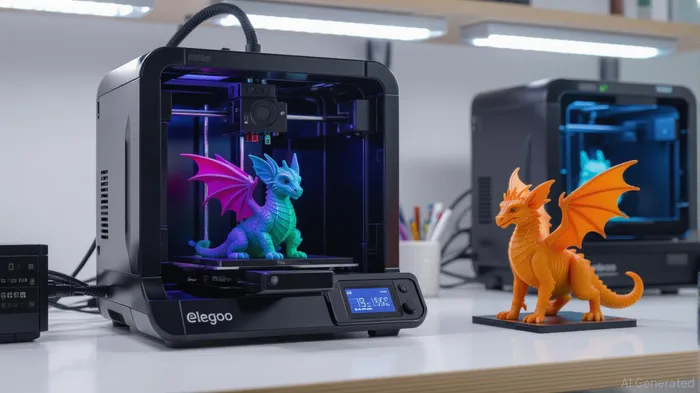 The resin 3D printing market, valued at $1.2 billion in 2024, is projected to reach $3.8 billion by 2033 at a CAGR of 13.5%. This growth is fueled by AI-driven software that optimizes design accuracy and reduces material waste, as well as cloud-based printing solutions that enable remote monitoring.
Hardware-Software Ecosystem Expansion: The New Frontier
The Saturn 4 Ultra exemplifies the industry's shift toward integrated hardware-software ecosystems. Its AI camera enables real-time monitoring, warp detection, and timelapse recording, while its self-developed system with 8G ROM ensures stable file transfers and faster computing. These features are complemented by slicing software like SatelLite and ChituBox, which offer advanced model repair and Boolean operations without paywalls.
Software advancements are equally transformative. OTA firmware upgrades, Wi-Fi cluster printing, and AI-powered failure detection are becoming standard, enhancing productivity for users managing multiple printers. Meanwhile, cloud-based platforms are enabling remote operation, a critical feature for small businesses and hobbyists seeking flexibility.
Investment Implications: Opportunities and Risks
For investors, the 3D printing sector presents a compelling mix of growth and risk. The resin printer market's projected expansion to $3.8 billion by 2033 suggests long-term potential, particularly for companies that dominate both hardware and software ecosystems. Elegoo's strategic focus on AI integration and user-friendly design positions it as a key player, but competition from rivals like Bambu Lab and Anycubic remains intense.
However, challenges persist. Resin printers require careful handling of toxic materials and adequate ventilation, which may limit adoption in certain markets. Additionally, economic uncertainty could dampen discretionary spending, though the shift toward value-driven purchases -evidenced by Black Friday trends-suggests resilience.
Conclusion: A Tipping Point for Mainstream Adoption
Black Friday 2025 has accelerated the 3D printing industry's transition from niche to mainstream. By combining aggressive pricing, technological innovation, and ecosystem expansion, manufacturers like Elegoo are addressing barriers to adoption while tapping into growing demand for precision manufacturing. For investors, the key lies in identifying companies that can sustain these advancements while navigating regulatory and economic headwinds. As the hardware-software ecosystem matures, the industry may well reach a tipping point where 3D printing becomes an indispensable tool for creators, businesses, and consumers alike.

Delivering real-time insights and analysis on emerging financial trends and market movements.
Latest Articles
Stay ahead of the market.
Get curated U.S. market news, insights and key dates delivered to your inbox.


AInvest
PRO
AInvest
PRO



Comments
No comments yet