
U.S. 3-Month Bill Yield Dynamics: Navigating Sector Rotation in a Shifting Rate Landscape
 Aime Summary
The U.S. 3-month , a critical barometer of short-term monetary policy and investor sentiment, has seen a gradual decline in 2025, . While this trend reflects a softening in short-term borrowing costs, the broader picture remains nuanced. Analysts project a modest rebound to 3.79% by year-end, . This volatility underscores the need for sector-specific strategies to capitalize on shifting rate dynamics.
The Dual Forces of Rate Volatility
. Rising rates historically favor financials and industrials, while falling rates bolster utilities and consumer staples. However, the 2025 trajectory complicates this dichotomy. The yield's decline suggests accommodative monetary conditions, yet forward-looking models hint at potential tightening. Investors must prepare for both scenarios.
Sector Rotation in a Rising Rate Environment
If the Fed signals a pivot toward rate hikes in 2026, as some models suggest, the following sectors could outperform:
1. Financials: Banks and insurance companies benefit from higher net interest margins. For example, JPMorgan ChaseJPM-- (JPM) and American ExpressAXP-- (AXP) have historically outperformed during rate hikes.
2. : Cyclical sectors tied to economic growth, such as aerospace and construction, gain as borrowing costs rise. .
3. Materials: Commodity-linked equities, including copper and steel producers, often thrive in inflationary or rate-tightening cycles.
Conversely, a continuation of the current low-yield environment favors:
1. Utilities.
2. : Companies such as Procter & Gamble (PG) and Coca-Cola (KO) provide consistent cash flows in uncertain rate climates.
3. Healthcare: Long-duration assets like UnitedHealth Group (UNH) or Medtronic (MDT) benefit from low discount rates.
Hedging Against Rate Uncertainty
Given the mixed signals in the yield curve, a diversified approach is prudent. Consider:
- : Use tools like the Financial Select Sector SPDR (XLF) or Consumer Staples Select Sector SPDR (XLP) to rotate efficiently.
- : Shorten bond portfolios to mitigate rate risk while maintaining liquidity.
- : Balance cyclical and defensive sectors to hedge against rate surprises.
Strategic Recommendations
- Monitor Fed Signals: Watch for inflation data and employment reports that could trigger a rate pivot.
- Rebalance Proactively: Shift allocations toward rate-sensitive sectors if the Fed signals tightening.
- Leverage Derivatives: Use Treasury futures or interest rate swaps to hedge exposure in volatile environments.
The U.S. 3-month bill yield's trajectory is a microcosm of broader macroeconomic forces. While the 2025 decline suggests a pause in tightening, the forward curve hints at potential reversals. Investors who align their portfolios with these dynamics—whether through sector rotation, duration adjustments, or hedging—can navigate the uncertainty with confidence.
In conclusion, the key to thriving in a shifting rate landscape lies in agility. By dissecting yield trends and aligning them with sector-specific fundamentals, investors can transform volatility into opportunity.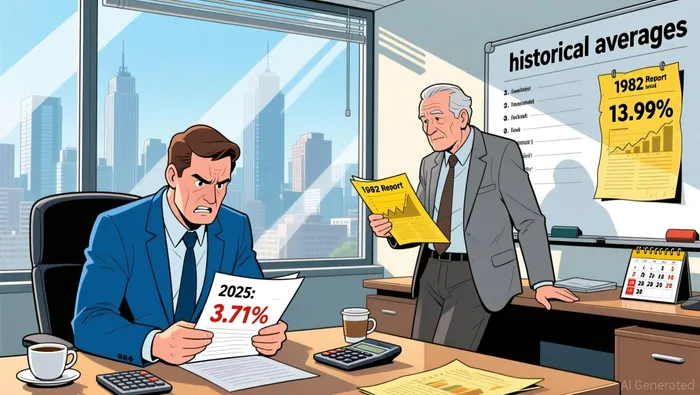

Stay ahead of the market.
Get curated U.S. market news, insights and key dates delivered to your inbox.




Comments
No comments yet