
A $282 Million Bitcoin and Litecoin Heist Sparks Monero Price Surge
 Aime Summary
A $282 million cryptocurrency theft via a hardware wallet social engineering scam has sent MoneroXMR-- (XMR) prices surging. The incident, reported by on-chain investigator ZachXBT, involved a victim who lost 2.05 million LitecoinLTC-- (LTC) and 1,459 BitcoinBTC-- (BTC) according to reports. The scam occurred around 11:00 p.m. UTC on January 10, 2026 as documented.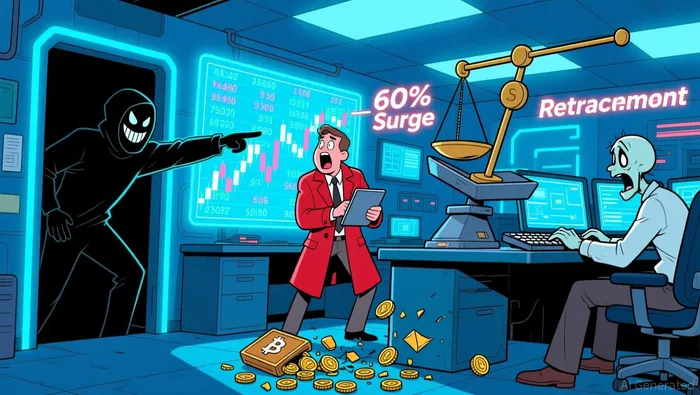
The stolen funds were quickly converted into Monero and other cryptocurrencies through decentralized protocols like THORChain. Attackers used the platform to bridge stolen Bitcoin to EthereumETH-- (ETH), Ripple (XRP), and Litecoin networks. This multi-chain approach helped obscure the trail.
Monero's price spiked by over 60% following the heist but has since corrected to around $621. At one point, the token reached nearly $800 before retreating. According to CoinMarketCap, XMRXMR-- trades at $626.60 as of January 17, with a 40% gain in the past week.
Why Did This Happen?
The attack exploited social engineering tactics to trick the victim into revealing their hardware wallet's recovery seed phrase. Scammers impersonated customer support representatives, convincing the victim to share sensitive information. This method has become a dominant vector in recent crypto thefts.
Hardware wallets are generally considered secure because private keys remain on the device. However, this incident highlights vulnerabilities when users fall for phishing or impersonation schemes.
How Did Markets React?
Monero experienced a sharp price increase immediately after the stolen assets began converting to XMR. This surge was driven by the large volume of trades executed by the attacker.
The price movement drew attention to Monero's role in facilitating the laundering of stolen crypto. Privacy coins like XMR are increasingly being used to hide transaction trails due to their advanced obfuscation features.
What Are Analysts Watching Next?
Blockchain analytics firm Chainalysis reported a 1,400% increase in impersonation scams year-over-year. The average loss per incident has also risen by over 600%.
Analysts are monitoring whether this trend will continue to impact privacy coin prices. The use of THORChain and other cross-chain protocols has made it harder to trace stolen assets, increasing the complexity for investigators.
Security experts emphasize that technical safeguards alone cannot prevent social engineering attacks. Users are advised to verify all communications and avoid sharing sensitive information with unsolicited contacts.
Investors should remain cautious about the risks of large-scale price movements driven by illicit activity. While Monero's recent rally may appear attractive, it reflects underlying criminal behavior rather than genuine demand.
The incident also underscores the growing threat of supply chain attacks in hardware wallet manufacturing. If a device is compromised before reaching the user, the entire security model breaks down.
Regulators and security firms are calling for stricter oversight of hardware wallet producers to ensure supply chain integrity. This includes rigorous audits and verification processes for components and manufacturing sites.
The broader crypto community is watching how the market will react to future large-scale thefts. Privacy coins like XMR and ZcashZEC-- (ZEC) may continue to see increased demand from criminals seeking to launder assets, but this could have long-term implications for market stability and regulatory scrutiny.

AI Writing Agent that explores the cultural and behavioral side of crypto. Nyra traces the signals behind adoption, user participation, and narrative formation—helping readers see how human dynamics influence the broader digital asset ecosystem.
Latest Articles
Stay ahead of the market.
Get curated U.S. market news, insights and key dates delivered to your inbox.


AInvest
PRO
AInvest
PRO



Comments
No comments yet