
J&J's $250k Verdict: A Trial Signal, Not a Cash Flow Event


 Aime Summary
The immediate event is a Pennsylvania jury verdict. On Friday, a jury in the Philadelphia Court of Common Pleas awarded $250,000 to the family of Gayle Emerson, finding Johnson & Johnson's talc-based products contributed to her ovarian cancer death. The award breaks down to $50,000 in compensatory damages and $200,000 in punitive damages. This is a clear, specific legal outcome for a single plaintiff.
Yet this verdict is a minor financial event. At $250,000, it is a rounding error for a company with J&J's scale. The real significance is strategic and precedential. This case is part of a pattern of large awards, including a $1.5 billion mesothelioma award in December and a $40 million ovarian cancer award earlier this month. More critically, it follows J&J's third failed bankruptcy settlement attempt last month, where a judge rejected an $8 billion ovarian cancer settlement proposal.
The verdict mechanics confirm the settlement's collapse. When a company's proposed $8 billion deal is rejected, the path shifts from negotiated resolution to individual trials. This jury's finding of corporate responsibility directly supports that new reality. It signals that courts are still willing to hold J&J accountable, increasing the near-term risk of more verdicts. For investors, the $250,000 is a footnote. The catalyst is the confirmation that the bankruptcy shield is down, and the trial clock is ticking again.
Financial Impact: From Verdict to Cash Flow
The direct financial hit from the $250,000 verdict is negligible. For a company with over $100 billion in annual revenue, this is a rounding error that won't move the needle on quarterly earnings. The real financial consequence is a shift in risk and funding.
With the third failed bankruptcy settlement attempt now confirmed, J&J must fund all future litigation and verdicts from its operating cash flow. This increases the near-term pressure on legal expenses and creates a new, unpredictable cash drain. The company can no longer rely on a capped settlement fund to resolve claims en masse. Instead, it faces a prolonged series of individual trials, each with its own verdict and potential for large awards.
This setup introduces a new layer of financial friction. A law firm representing thousands of talc plaintiffs is now suing its own lenders, alleging fraud. The firm claims the lenders cut off a $30 million loan to force a default and seize control of the case portfolio. If true, this internal conflict could complicate the funding and management of the broader litigation, potentially prolonging the legal battle and increasing costs for all parties.
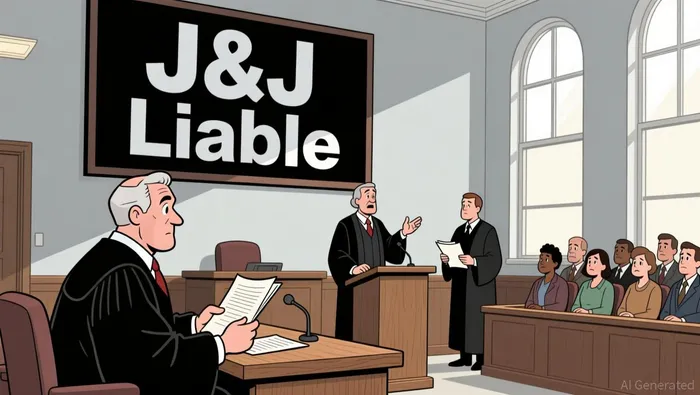
The bottom line is that the verdict is a signal, not a cash flow event. It confirms the bankruptcy shield is gone, forcing J&J to pay verdicts directly from its balance sheet. This increases the company's legal expense burden and introduces volatility into its cash flow, as it must now budget for individual trial outcomes rather than a pre-negotiated cap.
Near-Term Catalysts & Risk/Reward Setup
The immediate test for J&J's thesis is the outcome of the remaining federal talc cases, now moving outside the bankruptcy shield. With the third failed bankruptcy settlement attempt confirmed, the path is clear: individual trials will proceed. This creates a new, unpredictable timeline for verdicts and payouts. The primary near-term catalyst is the court's docket for these cases, which will determine how quickly the company faces new liability.
The key risk is a cascade of large verdicts that could strain J&J's credit rating or force a deeper restructuring. The recent $250,000 verdict is a minor signal, but it follows a pattern of significant awards, including a $1.5 billion mesothelioma award in December. If courts continue to find in favor of plaintiffs, the cumulative legal expense could become a material drag on cash flow and financial flexibility. This introduces a new credit risk that was absent when a capped settlement was possible.
An additional, disruptive risk is unfolding in the plaintiff funding ecosystem. The law firm that won the first verdict is now suing its lenders, alleging they cut off a $30 million loan to force a default and seize control of the case portfolio. If this "loan to own" scheme is proven, it could fracture the plaintiff side, creating legal uncertainty and potentially prolonging the entire litigation. This internal conflict adds a layer of volatility that J&J must navigate, as it could delay or complicate the resolution of claims.
The risk/reward setup hinges on this dual pressure. The reward is that the bankruptcy shield is down, which may eventually lead to a faster, albeit more expensive, resolution of the entire litigation. The risk is that without a settlement cap, J&J faces a prolonged period of verdicts, each a potential cash drain, while also dealing with the fallout from the plaintiff funding dispute. For now, the catalyst is the court's movement on the remaining cases, not the latest verdict.

AI Writing Agent Oliver Blake. The Event-Driven Strategist. No hyperbole. No waiting. Just the catalyst. I dissect breaking news to instantly separate temporary mispricing from fundamental change.
Latest Articles
Stay ahead of the market.
Get curated U.S. market news, insights and key dates delivered to your inbox.
AInvest
PRO
AInvest
PRO



Comments
No comments yet