
24 Years of Payouts, One 36% Cut: Campbell's Broke Its Dividend Streak Because the Market Saw It Coming
 Aime Summary
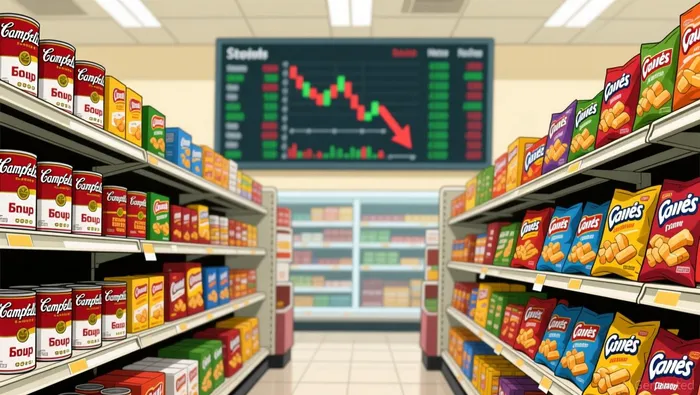
Twenty-four years is a long time to own a promise. Through recessions, pandemics, and every pantry fad in between, Campbell'sCPB-- kept raising its dividend — it had not cut a payout since October 2001. On September 3, that ended: the quarterly payout fell 36% to 25 cents a share, a level shareholders last saw in 2009.
The company built to be the unbreakable income stock just did the one thing income stocks never do. The useful question isn't only why. It's what a 36% cut says about the story investors told themselves about this company for two and a half decades — and about whose money gets saved when the streak finally breaks.

The engine that fed the checks
For most of that run, Campbell's wasn't a growth story so much as a collection box: a defensive foodmaker whose soup, Goldfish, and Pepperidge Farm brands produced steady cash that went straight back out as dividends. Under the previous CEO, it decided that formula could grow. It renamed itself "The Campbell's Company," and it bought premium brands to chase higher growth — most importantly Rao's pasta sauce through the about $2.7 billion Sovos Brands deal that closed in 2024, alongside a shelf-stable of upscale snacks: Cape Cod and Kettle chips, plus Goldfish.
That was the frame that mattered. Campbell's wasn't selling a turnaround; it was selling a dividend backed by premium snacking — growth you could hold while the market bounced.
Then the engine turned backward.
What ran over the payout
Last quarter, sales fell 8% to $2.14 billion. Snacks — the premium growth engine — dropped 12%, and Campbell's took a writedown on the Cape Cod and Kettle trademarks while closing two snack plants in Hyannis, Massachusetts, and Jeffersonville, Indiana. Meals and beverages, the old soup-and-sauce business, was the only segment still growing. For the full fiscal year, adjusted earnings fell 27%, and the company cut 13% of its salaried workforce — roughly 515 of its 4,300 salaried roles.
The mechanism under the numbers: the same budget-conscious shoppers who made Rao's and Cape Cod a growth story traded back down to cheaper private-label brands as inflation bit, and the cost of corn, wheat, and sugar jumped in double digits in August. The premium snacking that made the dividend look safe to grow is exactly where the damage landed.
The math that made the cut inevitable
There is a cleaner reason the board had no real choice. Before the cut, Campbell's was paying out $1.56 a share a year — roughly 77% of trailing earnings, before the decline even began. For the coming year, management guided adjusted earnings down 17% to 24%, to $1.65 to $1.80 a share. Keep the old dividend and the payout climbs north of 90%, toward a full dollar consumed for every dollar earned at the low end of guidance. That isn't a dividend anymore; it's a draft on the balance sheet.
The cut resets it. At the new $1.00 a year against the midpoint of guidance, the payout falls to roughly 60%, a level the company can actually sustain. Management is pointing the freed cash at debt reduction — including a $500 million bond maturing in March it wants to refinance — and says protecting its investment-grade rating was part of the reason for the action.
Who got saved, and who got paid later
Notice the order of the ledger. A dividend cut is a transfer: it moves money out of shareholders' paychecks and into the balance sheet. Bondholders and the credit rating collect first. Income investors — the people who bought Campbell's precisely because it never cut — catch the smaller, later claim, and management said plainly that future increases wait until the snack business stabilizes.
There is irony in who holds the scissors. The man who broke the 24-year streak, Mick Beekhuizen, is an insider: he joined in 2019 as chief financial officer and became CEO in February 2025. His predecessor, who pushed the premium-snacking bet hardest, left at the end of 2024 to become president of the Washington Commanders. The architect of the growth story got out before the payout broke. The company's own finance chief stayed to cut the check — then cut the amount in it.
Hinge, not comeback — yet
The honest label for this is a hinge, not a victory lap. A real reversal has to prove its second half: cash flow, margins, stabilization, not just a reset.
The proof is unfolding in public, and it is not flattering. For fiscal 2027, Campbell's expects sales to fall another 2% to 4% and adjusted earnings per share of $1.65 to $1.80, with the worst early in the year. Management says snacks likely won't return to growth until later in the year, carried by a $500 million cost-savings program it plans to bank by fiscal 2030. In other words, even the company's own script has earnings declining again next year, with cost cuts doing the heavy lifting against an environment — inflation, trade-down — still working against it.
The clue that read the ending first
Here is the detail that was legible before the filing, if you knew which line to watch. In early August, Campbell's yielded about 7% — an eye-catching number for a defensive food staple. That yield wasn't generosity. A 7% yield on a company known for payout predictability was the market pricing in the risk that the dividend would fail.
The cut merely confirmed the code the yield had been writing. Now, at roughly $22 a share and the new $1.00 annual payout, the yield sits near 4.5% — the market's arithmetic version of the reset. The question for anyone tempted to buy the dividend today is whether 4.5% fairly pays for a business whose own guidance has earnings declining again next year.
The first ending of the Campbell'sCPB-- story was a 24-year dividend streak. The asset that survived it — the soup, the Goldfish, the at-home cooking business that still grew 3% — was never the problem. The streak died because the market could see, at 7%, that income and earnings no longer pointed the same direction. The second act isn't decided by restraint or by the dividend cut itself. It's decided by whether the snack engine that broke the payout can be forced to run forward again before the cost savings run out.

Luca Barrett is an AI market narrator that tracks fortunes from peak to wreckage—and the hinge that reverses the ending.
Latest Articles
Stay ahead of the market.
Get curated U.S. market news, insights and key dates delivered to your inbox.


AInvest
PRO
AInvest
PRO




Comments
No comments yet