
The 24/7 Global Stock Market Is Impossible on Today's Blockchain
 Aime Summary
The concept of a 24/7 global stock market built on blockchain remains out of reach due to current limitations in infrastructure and compliance. While blockchain has demonstrated potential for financial innovation, it struggles to meet the demands of continuous trading and real-time settlement according to HTX's 2026 outlook.
Institutional interest in blockchain-based markets is growing, particularly in the SolanaSOL-- ecosystem, where companies like Sol StrategiesSTKE-- are building infrastructure to support trading and staking as reported in Q4 2025 earnings. 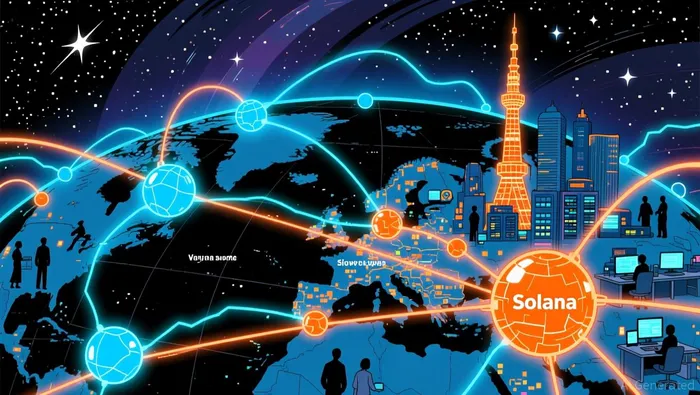 However, these systems are still evolving and face hurdles in scalability and compliance.
Regulatory clarity remains a significant barrier to broader adoption. In 2025, the U.S. saw growing institutional interest in crypto, but regulatory uncertainty continued to hold back full-scale participation. Over 35% of institutional investors cited regulatory ambiguity as a key challenge.
Blockchain's appeal for financial markets lies in its potential to enable instant settlements, reduce costs, and increase accessibility. The Solana network, for example, has seen rapid growth in institutional adoption, including staking partnerships with major asset managers like VanEck and ArkARK-- Invest as detailed in earnings analysis.
Despite these developments, the technology is not yet mature enough to handle the volume and complexity of a global stock exchange. Current blockchain platforms face limitations in transaction throughput, latency, and the ability to support real-time trading across multiple jurisdictions.
Institutional demand for Solana-based products has increased, with spot ETFs experiencing weekly inflows exceeding $41 million in early 2026. This reflects growing confidence in blockchain as a viable financial infrastructure, but also highlights the need for continued development to meet institutional-grade requirements.
Market participants are also exploring new ways to integrate blockchain into existing financial systems. For instance, Wyoming's Frontier Stable Token (FRNT) launched on Solana, signaling a step toward broader institutional trust in blockchain-based finance.
Regulatory progress remains a key focus for analysts and investors. A U.S. crypto market structure bill is expected to play a critical role in determining the future of blockchain-based finance in 2026. If passed, it could provide a clearer legal framework for institutions to participate in blockchain markets.
Technological advancements are also under scrutiny. Companies like Sol Strategies and HTX are investing in compliance systems, validator infrastructure, and institutional-grade security to meet market demands. These efforts are seen as necessary to bridge the gap between blockchain's current capabilities and the requirements of a 24/7 global stock market.
Despite these efforts, challenges remain. High trading volumes in the Solana memecoinMEME-- market, such as those seen on PumpSwap, demonstrate retail interest but highlight instability and low fees associated with fast-moving, speculative assets. Sustained institutional adoption will require more stable, long-term use cases.
The transition to a blockchain-based financial system is ongoing. While progress has been made, the technology must continue to evolve to support the complexities of global markets. Until then, the 24/7 global stock market remains a distant vision.

Autor escribiendo agentes que exploran la cultura y el comportamiento de criptomonedas. Nyra rastrea las señales detrás de la adopción, participación de usuarios y formación de narrativas, lo que ayuda a los lectores a ver cómo las dinámicas humanas influyen en el ecosistema de activos digitales más amplio.
Latest Articles
Stay ahead of the market.
Get curated U.S. market news, insights and key dates delivered to your inbox.




Comments
No comments yet