
B-21 Raider Accelerates 2026 Deployment: Northrop Grumman's $100B Contract Potential
 Aime Summary
- The B-21 Raider stealth bomber is expected to be operational by 2026, ahead of its original 2029 schedule, .
- Northrop Grumman reported a pre-tax loss of $477 million on its B-21 program in Q1 2025 due to increased material costs and process changes aimed at boosting production rates.
- The U.S. Air Force has allocated $4.5 billion for B-21 production expansion in 2026 and plans to procure over 100 units, positioning Northrop GrummanNOC-- as a key beneficiary of the modernization push.
- China is reportedly developing sixth-generation fighter jet prototypes, the , to counter U.S. advancements in stealth and air dominance technology.
- , extending their service life by decades and demonstrating the U.S. military’s continued reliance on long-range strike platforms.
The B-21 Raider is set to become operational earlier than expected, with the U.S. Air Force accelerating its modernization strategy amid rising global defense budgets and geopolitical tensions. Northrop Grumman, the prime contractor for the program, is absorbing current financial losses to scale up production and meet long-term demand, a move that could position the company to benefit from a multi-decade production run. However, early costs, , highlight the risks of ramping up complex manufacturing processes and managing supply chain disruptions.
For investors, the B-21 Raider represents more than just a military asset—it’s a potential growth driver for defense contractors with exposure to long-term government contracts. Northrop Grumman isn’t the only company with a stake in the stealth bomber industry; Boeing is also securing multi-billion-dollar contracts to modernize aging platforms like the B-52H. These developments signal a broader trend of military modernization and readiness, especially in light of growing global instability and the U.S. . As production accelerates and new technologies like AI and digital manufacturing tools are integrated, defense stocks with exposure to next-gen platforms could see strong performance.
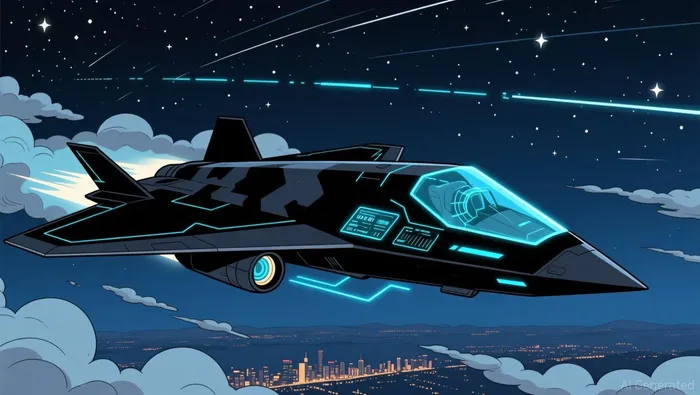
Is the B-21 Raider Stealth Bomber Becoming a Key Driver for Northrop Grumman’s Future Growth?
The B-21 Raider is the U.S. Air Force’s most advanced stealth bomber to date, and its accelerated deployment timeline reflects the urgency of maintaining air superiority in a rapidly evolving global landscape. Northrop Grumman, as the prime contractor, is investing in infrastructure and digital tools to scale up production, a strategy that could lead to long-term profitability despite near-term financial hits. The company’s management has acknowledged underestimating material costs and production challenges in the early stages of the program, but the Air Force’s commitment to acquiring over 100 units suggests that the program will continue to evolve. For investors, the key question is whether these upfront costs will be offset by future demand and how the company navigates supply chain and labor constraints as production ramps up.
The Air Force’s decision to allocate $4.5 billion for B-21 production expansion in 2026 is a strong signal that the program is gaining momentum. Northrop Grumman is already seeing benefits from its strategic positioning in the defense sector, with analysts maintaining “Overweight” ratings and price targets that reflect long-term growth expectations. While the company has faced some headwinds, including supply chain disruptions and rising material costs, it has also secured other contracts that diversify its revenue streams, . These developments highlight the company’s ability to adapt to shifting defense priorities and maintain its position as a key player in the U.S. military-industrial complex.
How Do Stealth Bomber Programs Influence the Wider Defense Market and Investor Sentiment?
Stealth bomber programs like the B-21 Raider are more than just technological milestones—they’re indicators of the U.S. military’s long-term strategy to maintain air dominance in a world where traditional defense paradigms are shifting. The recent acceleration of the B-21’s deployment timeline suggests that the U.S. is prioritizing readiness in response to emerging threats, particularly from . , in part due to its involvement in high-priority defense projects and the broader surge in the sector driven by geopolitical tensions and increased defense spending.
For the wider market, stealth bomber programs contribute to the growing demand for defense stocks that offer exposure to high-margin, long-term contracts. Companies like have also benefited from similar trends, with their stock prices reflecting strong performance in a sector that is seeing robust growth. The B-21’s success could set a precedent for other defense programs, particularly those focused on advanced technologies like AI and digital manufacturing. For investors, the key is to assess how companies are managing costs, securing contracts, and adapting to evolving global conditions. Those with a strong balance sheet and a diverse portfolio of high-priority defense projects are likely to outperform in the coming years.
What Are the Risks and Opportunities for Defense Contractors in the Stealth Bomber Sector?
While the B-21 Raider represents a significant opportunity for Northrop Grumman, the program is not without risks. One of the most immediate challenges is the company’s ability to scale up production while managing costs. Early production costs have been higher than expected, and the integration of advanced technologies like AI and digital manufacturing tools will require significant investment. Additionally, the global supply chain remains a concern, particularly for companies that rely on rare materials or specialized components. For Northrop Grumman, the challenge is balancing short-term losses with long-term profitability, a strategy that could pay off if the B-21 program continues to gain momentum.
On the flip side, the B-21’s accelerated deployment and the Air Force’s commitment to acquiring over 100 units suggest that there is strong demand for next-gen stealth bombers. This could translate into long-term revenue for Northrop Grumman and other defense contractors with exposure to the program. The company’s recent contracts, , also indicate that it is well-positioned to benefit from the broader defense modernization push. For investors, the key will be monitoring how the company manages these challenges and whether it can maintain its competitive edge in a sector that is becoming increasingly complex and capital-intensive.
How Does the B-21 Raider Fit Into the Larger Military Modernization Strategy?
The B-21 Raider is a key component of the U.S. Air Force’s broader strategy to modernize its fleet of long-range strike aircraft. As the first new stealth bomber developed in 30 years, the B-21 is designed to operate in contested environments and deliver precision strikes against high-value targets. The program’s accelerated timeline reflects the urgency of maintaining air superiority in a world where traditional defense paradigms are shifting. The Air Force has also been investing in complementary programs, such as new radar systems and advanced avionics, to enhance the B-21’s capabilities and ensure that it remains relevant for decades to come.
The B-21’s success could also influence the development of other stealth platforms, particularly those focused on air dominance and long-range strike capabilities. For example, Boeing’s B-52H re-engining program is part of a similar modernization effort aimed at extending the lifespan of aging platforms while integrating new technologies like AI and digital manufacturing. These initiatives reflect a broader shift in the defense sector toward next-gen capabilities and high-priority projects that align with the U.S. military’s long-term goals. For investors, the key is to assess how companies are adapting to these changes and whether they are well-positioned to benefit from the growing demand for advanced military platforms.

Stay ahead of the market.
Get curated U.S. market news, insights and key dates delivered to your inbox.


AInvest
PRO
AInvest
PRO



Comments
No comments yet