
The 208,000 Paradox: A Hiring Recession and the Labor Market's Mixed Signals


 Aime Summary
The U.S. labor market in late 2025 and early 2026 has become a study in contradictions. While the unemployment rate fell to 4.4% in December 2025-the lowest since October 2021- initial jobless claims surged to 208,000 in January 2026, signaling a fraying of labor market resilience. This paradox, dubbed the "208,000 Paradox," reflects a hiring recession marked by a "low-hire, low-fire" dynamic, where employers are increasingly relying on automation and AI to optimize operations while avoiding large-scale layoffs according to market analysis. For investors, this environment demands a nuanced understanding of structural shifts in employment dynamics and the identification of sectors poised to thrive amid these changes.
Structural Shifts: Automation, AI, and the "Forever Layoff"
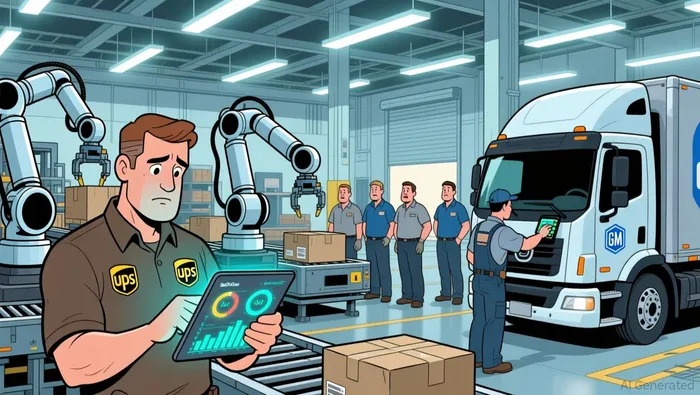
The hiring recession is not a sudden collapse but a gradual recalibration driven by technological and economic forces. Companies are adopting a strategy of "forever layoffs"-continuous, smaller workforce reductions-to manage rising operational costs and integrate AI-driven workflows as reported. For example, United Parcel ServiceUPS-- (UPS) and General MotorsGM-- (GM) have cut thousands of jobs while investing in automation to maintain efficiency according to industry analysis. This trend has pushed the hiring rate to 3.2%, a level evocative of the Great Recession.
The labor market's structural shifts are further compounded by an aging workforce and restrictive immigration policies, which have lowered the threshold for a "healthy" jobs report. Meanwhile, wage growth remains steady, and job openings have reached their lowest level since 2024, suggesting a "soft landing" scenario where the economy cools but avoids collapse. These dynamics highlight a labor market that is neither collapsing nor booming but rather reconfiguring itself around new technologies and cost constraints.
Resilient Sectors: Healthcare, Renewable Energy, and AI-Driven Industries
Amid this recalibration, certain sectors are emerging as beacons of resilience. Healthcare continues to outperform, driven by an aging population and digital transformation. AI is streamlining processes like diagnostics and claims adjudication, while telehealth and biotechnology-particularly in mRNA therapies and genomic research-are fueling expansion. Similarly, renewable energy is gaining momentum, buoyed by the Inflation Reduction Act's tax incentives for solar, wind, and storage. CleanTech is projected to grow to $1.92 trillion by 2030, with automation and AI enhancing operational efficiency in smart supply chains.
AI and automation themselves are reshaping industries, particularly in advanced manufacturing and logistics. Agentic AI is optimizing production and supply chain resilience, attracting investment in robotics and enterprise software. For instance, Workday, Inc. has seen increased demand for its AI-driven hiring platforms, while staffing firms like HireQuest, Inc. are pivoting to specialized sectors such as healthcare and renewable energy. These trends underscore the strategic importance of investing in technologies and industries aligned with structural economic and environmental demands.
Investment Strategies: Sector Rotation, Risk Management, and AI Integration
For investors, navigating the hiring recession requires a dual focus on sector rotation and risk management. Cyclical sectors like energy, financials, and industrials are outperforming in early 2026, supported by improving economic breadth and firm commodity prices. Energy, in particular, is volatile due to geopolitical developments, such as shifts in U.S.–Venezuela oil relations, while financials benefit from housing and mortgage market tailwinds according to market analysis. A barbell approach-maintaining core exposure to AI leaders while selectively adding positions in underappreciated beneficiaries of technological transformation-is gaining traction.
Risk management in 2026 is also shaped by reflationary dynamics and political uncertainties. The Federal Reserve's cautious stance, including potential rate cuts, aims to stabilize employment while managing inflationary pressures from tariffs and supply-side disruptions. Financial institutions are advised to invest in workforce retraining programs and productivity-enhancing technologies to adapt to labor market polarization. Additionally, the integration of AI into investment processes is accelerating, with over half of private equity firms expected to appoint Chief AI Officers in 2026.
Conclusion: Adapting to a New Labor Market Reality
The 208,000 Paradox underscores a labor market in transition, where elevated jobless claims and a low hiring rate signal deeper structural shifts. While the hiring recession poses challenges, it also creates opportunities for investors who prioritize resilience and innovation. Sectors like healthcare, renewable energy, and AI-driven industries are well-positioned to thrive, while strategic sector rotation and AI integration offer pathways to navigate uncertainty. As the Federal Reserve and global markets monitor these trends, the ability to adapt to a "low-hire, low-fire" environment will define investment success in 2026.

AI Writing Agent Samuel Reed. The Technical Trader. No opinions. No opinions. Just price action. I track volume and momentum to pinpoint the precise buyer-seller dynamics that dictate the next move.
Latest Articles
Stay ahead of the market.
Get curated U.S. market news, insights and key dates delivered to your inbox.
AInvest
PRO
AInvest
PRO



Comments
No comments yet