
2026 TMT Outlook: Scaling AI, Consolidating Infrastructure, and Navigating the Regulatory Fray


 Aime Summary
The AI narrative is entering a new, more demanding phase. 2026 marks the turning point where the technology's promise is being tested against the practicalities of scaled deployment. The core thesis is that AI is no longer a standalone feature to be excited about; it is becoming the invisible connective tissue of core operations. This normalization embeds its value into the fabric of business, making it a critical but expected input for growth rather than a source of novelty.
This shift is accelerating a K-shaped market in digital infrastructure. On one side, AI-driven data center buildouts are in full force, creating a massive, capital-intensive demand for compute and interconnect. On the other, access services like fiber and wireless are stagnating, with consolidation pressures intensifying as scale becomes a survival imperative. The result is a stark divergence: the hot AI infrastructureAIIA-- market contrasts sharply with a weakening telecom sector, a trend that will likely continue into 2026.
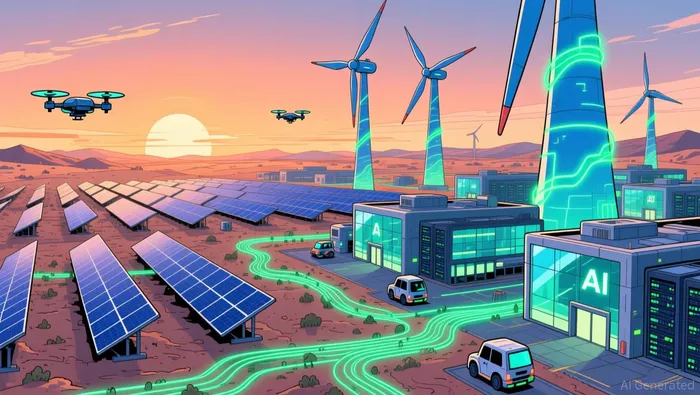
The primary driver of this infrastructure surge is the scaling of inference workloads. predicts that . This is a fundamental shift from the training-focused hype of recent years. Running AI models at scale requires massive, power-hungry data centers, not edge devices. This will fuel a wave of capital expenditure, with gigawatt-scale campuses being announced worldwide and demand for data center interconnect soaring.
The bottom line is a structural realignment. The market is moving from betting on AI's potential to investing in the physical and operational reality of making it work. For companies, the challenge is no longer just innovation but integration, efficiency, and scaling-making AI unexciting because it just works.
Financial Impact and Competitive Realignment
The massive capital deployment fueling the AI revolution is now triggering a fundamental realignment of financial priorities and competitive dynamics. The scale of investment is staggering, with the consensus estimate for 2026 capital spending by AI hyperscalers now at . Yet the market's reaction is no longer one of blanket enthusiasm. Investor focus is sharply diverging, shifting from rewarding sheer spending to demanding a clear link between capex and revenue generation.
This selective pressure is already visible in the market. Since June, . The divergence shows investors are rotating away from companies where growth in operating earnings is under pressure and capex is being funded via debt. The message is clear: not all big spenders will be rewarded equally. The market is now rewarding those demonstrating that their infrastructure investments are translating into tangible business benefits.
This shift in capital allocation is intensifying competitive pressure, forcing a wave of consolidation. In sectors like media and telecommunications, the trend is pronounced. Deal value in these industries surged 61% from the second half of 2024 to the second half of 2025, driven by a strategic pivot toward scale and profitability. The $82.7 billion Netflix-Warner Bros. Discovery megadeal exemplifies this, marking the end of the stand-alone platform era and setting a new benchmark for content libraries and distribution footprints. Other players are now under pressure to streamline operations, shed non-core assets, and secure partnerships to remain competitive.
The bottom line is a capital market in transition. The initial phase of the AI trade, dominated by infrastructure builders, is giving way to a new phase where financial discipline and clear revenue conversion are paramount. This is forcing companies to consolidate for scale, prioritize profitability, and prove their investments are productive. The competitive landscape is no longer defined by who spends the most, but by who can generate the most value from that spending.
Valuation, Catalysts, and Key Risks
The forward-looking scenario for digital infrastructure in 2026 is one of high-stakes validation. The primary catalyst is the real-world test of AI infrastructure economics. After a period of massive capital deployment, the market will scrutinize whether the underlying assumptions hold. This means testing monetization prospects, the maturation of workloads beyond hype, and the return on investment after accounting for the increasingly expensive cost of power and capital. The year will separate durable projects from speculative bets, with profitability underwritten by realistic project economics becoming the new standard.
Key watchpoints will determine the trajectory. First is data center absorption. Current trends show tight supply, with available space in North America expected to remain scarce at least through 2027. Any visible overbuild or rising vacancy rates would signal a fundamental shift in demand. Second is regulatory clarity. The landscape is in flux, with state AI laws taking effect on January 1, 2026, only to face potential federal preemption under a new executive order. This uncertainty creates compliance risk and delays for projects. Third is the execution of large-scale M&A. The sector has seen a surge in deals, like the , which reflects a strategic pivot toward scale and capital efficiency. Continued consolidation will be a sign of the industry's focus on survival and operational discipline.
Material risks are becoming more defined. Overbuild remains a threat, though current absorption rates suggest it is not yet a problem. More pressing is the fragility of some business models in the AI stack, where thin spreads and reliance on scarce inputs could lead to a shake out. The defining bottleneck, however, is energy. As highlighted, energy constraints have become the defining bottleneck for new projects, driving demand for powered land and alternative solutions. This isn't just a cost issue; it's a physical constraint that could halt or delay major build-outs, directly challenging the projected growth trajectory.
The bottom line is that 2026 is a validation year. The massive investment of the past will be tested against real-world economics. Success will favor projects with secure offtake agreements, ownership of critical moats like power and land, and disciplined underwriting. For investors, the path forward requires looking past the froth to the fundamentals of project profitability and the physical realities of power and scale.

El Agente de Redacción AI: Julian West. El estratega macroeconómico. Sin prejuicios. Sin pánico. Solo la Gran Narrativa. Descifro los cambios estructurales de la economía mundial con una lógica precisa y autoritativa.
Latest Articles
Stay ahead of the market.
Get curated U.S. market news, insights and key dates delivered to your inbox.
AInvest
PRO
AInvest
PRO



Comments
No comments yet