
2026 IRS Refund Delays and Changes Could Affect Your Tax Strategy
 Aime Summary
The 2026 tax season will see a projected increase in IRS refund delays due to staffing cuts and complex tax law changes from the One Big Beautiful Bill.
Taxpayers who do not provide direct deposit information may face longer wait times to receive their refunds compared to those who do.
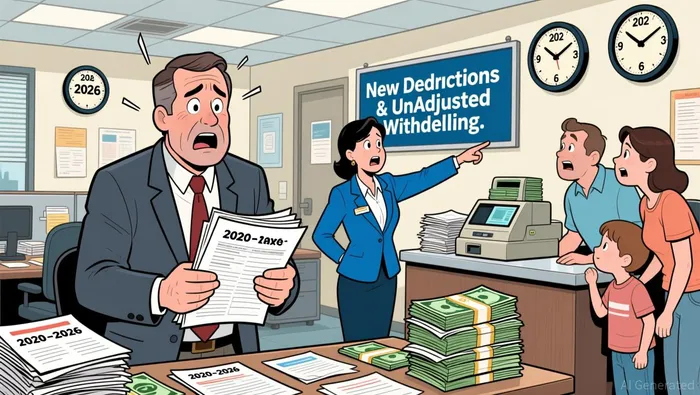
The average tax refund for 2026 could be $300 to $1,000 higher than a typical year due to changes in tax deductions and unadjusted withholding.
The IRS faces significant operational challenges this tax season, including staffing reductions and the implementation of more than 100 tax code changes introduced in the One Big Beautiful Bill. These changes, including new deductions for tip income, overtime pay, and interest on auto loans, have created additional complexity in the tax filing process. The National Taxpayer Advocate highlighted the need for better resource allocation and legislative changes to reduce delays and improve service quality for taxpayers.
At the same time, the average tax refund is expected to be significantly higher in 2026 due to the expanded deductions and unadjusted withholding. The standard deduction for 2025 increased to $15,750 for single filers and $31,500 for joint filers, and the SALT deduction cap was quadrupled to $40,000. These changes, combined with many taxpayers not adjusting their withholding, are likely to result in higher refunds.
The IRS is also transitioning away from paper refund checks for 2026 as part of its modernized payments initiative. Direct deposit will be the primary method for issuing refunds, with limited exceptions for taxpayers without access to traditional banking services. Taxpayers who file without direct deposit information may receive a CP53E notice from the IRS, allowing them to provide the information or request a paper check waiver.
How Will the 2026 IRS Refund Changes Impact Taxpayers?
The 2026 tax season introduces new rules and potential delays in receiving refunds, especially for those who don’t provide direct deposit information. The IRS is encouraging taxpayers to include their bank details when filing to ensure faster processing. For those without access to traditional banking, the IRS has established limited exceptions, though these are expected to be rare.
The complexity of the One Big Beautiful Bill has also raised concerns about the IRS's ability to manage the increased workload. The National Taxpayer Advocate has recommended legislative changes to reduce processing delays and improve taxpayer rights, including expanding access to online accounts and streamlining dispute resolution processes.
Why Is the Average IRS Refund Higher in 2026?
The average tax refund for 2026 is expected to be $300 to $1,000 higher than a typical year due to the combined effect of expanded deductions and unchanged withholding. Many taxpayers did not adjust their withholding based on the new rules, which has led to higher refunds for those who itemized their deductions or benefited from the increased standard deduction according to analysis.
The SALT deduction cap increase from $10,000 to $40,000 will primarily benefit high-income taxpayers in high-cost areas. Additionally, a new senior-specific deduction of $6,000 will benefit over 30 million elderly Americans. These changes, combined with the introduction of new tax-advantaged accounts like the Trump account for children, are reshaping how Americans save for the future.
What to Watch in the 2026 Tax Season
Taxpayers should monitor the IRS's progress in implementing the new rules and improving service quality. The transition to direct deposit and the move away from paper checks will be critical in ensuring that refunds are processed efficiently. Taxpayers who have not adjusted their withholding should review their pay stubs to avoid future underpayment issues.
Legislators may also be watching the situation closely, as the National Taxpayer Advocate has recommended legislative changes to improve taxpayer rights and reduce refund delays. Investors and financial advisors should keep an eye on any developments in tax law that could affect the broader economy or individual tax planning strategies.
In the coming months, the IRS will likely issue more guidance on the 2026 tax season, including how taxpayers can access online accounts and resolve disputes more efficiently. Taxpayers who itemize deductions or are eligible for the new senior-specific deduction should stay informed about how these rules apply to their specific situations.

Stay ahead of the market.
Get curated U.S. market news, insights and key dates delivered to your inbox.


AInvest
PRO
AInvest
PRO



Comments
No comments yet