
Which 2025 Stock Winners Can Sustain Gains in 2026?


 Aime Summary
The stock market's 2025 rally has been defined by a mix of AI-driven darlings and renewable energy innovators, but not all high-flyers are built to last. As we approach 2026, investors must discern which companies can sustain their gains and which are vulnerable to reversion. By analyzing the financial performance, analyst sentiment, and risk profiles of key players like Lemonade, MicronMU--, Nextracker, OKLO, and Opendoor, we can identify the most compelling long-term opportunities-and the cautionary tales.
The Optimistic Picks: Micron and Nextracker
Micron Technology (MU) and Nextracker (NXT) stand out as two of 2025's most compelling stories, driven by structural demand and disciplined execution.
Micron reported a record fiscal Q4 2025, with revenue of $11.32 billion and GAAP net income of $3.20 billion, fueled by surging demand for AI-driven memory solutions. The company's gross margins hit 45.7%, and it forecasts sequential revenue growth of $1.2 billion in Q1 2026, with margins exceeding 50%. Analysts are overwhelmingly bullish, with 34 of 37 Wall Street analysts assigning a "Buy" or "Strong Buy" rating and a median price target of $282.61 (up 2.18% from its current price)according to MarketBeat. This optimism is justified: Micron's Compute and Networking Business Unit (CNBU) is dominating the high-bandwidth memory market, a critical component for AI data centers.
Nextracker also delivered a standout Q4 2025, with revenue of $924 million and a 26% year-over-year increase, driven by its new Electrical Balance of Systems (eBOS) businessaccording to investor reports. The company's GAAP gross margin of 33.1% and net income margin of 17.1% highlight its operational efficiencyaccording to financial results. Nextracker's $3.2–$3.4 billion revenue outlook for FY2026 underscores its strategic expansion into solar infrastructure and energy storage, positioning it to benefit from global decarbonization trendsaccording to financial results.
The AI-Driven Innovator: Lemonade
Lemonade (LMND) has emerged as a standout in the insurtech sector, leveraging AI to improve efficiency and profitability. In Q3 2025, the company reported a 42% year-over-year revenue increase to $195 million, with an adjusted EBITDA loss narrowing to $26 million. Its in-force premium (IFP) grew 30% to $1.16 billion, driven by AI-powered claims processing and a 7% loss adjustment expense ratio-far below industry averagesaccording to investor data. Lemonade's stock surged 15% premarket after the results, and it now expects to achieve positive adjusted EBITDA by Q4 2026according to earnings call results. Analysts view its AI-driven model as a durable competitive advantage, particularly in a sector plagued by inefficienciesaccording to investor analysis.
The Cautionary Tales: OKLO and Opendoor
Not all 2025 winners are built to last. Oklo (OKLO) and Opendoor (OPEN) highlight the risks of speculative bets and unproven business models.
Oklo missed Q3 2025 earnings by 53.85%, reporting an EPS of -$0.20 and an operating loss of $36.3 millionaccording to MarketBeat. Despite $1.2 billion in liquidity, the company faces significant hurdles, including regulatory delays for its Aurora INL reactor and challenges in securing plutonium fuelaccording to investing.com. Analysts remain skeptical about its path to profitability, citing proliferation risks and DOE dependencyaccording to investing.com. Oklo's long-term vision is ambitious, but its current financials and regulatory uncertainties make it a high-risk bet. 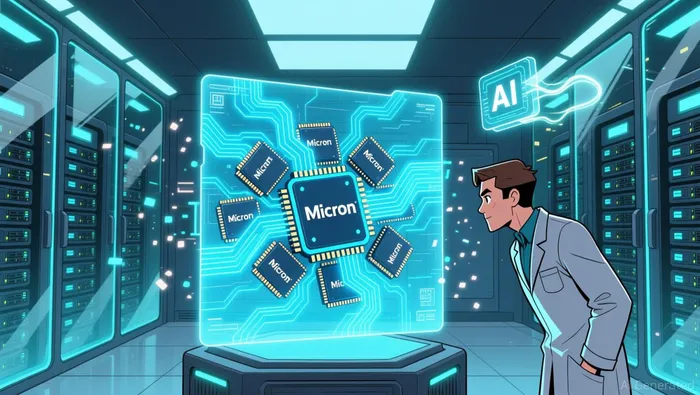
Opendoor exemplifies the perils of a flawed business model. In Q3 2025, the company reported a $90 million net loss and $915 million in revenue-a 33% decline year-over-year. Its iBuying model, which relies on flipping homes, has been strained by high mortgage rates and weak buyer demandaccording to Nasdaq reporting. While CEO Kaz Nejatian has outlined a pivot to AI-driven efficiency and a marketplace model, analysts remain cautious. Opendoor's adjusted EBITDA loss is projected to remain in the $40–$50 million range for Q4 2025, and its path to breakeven by 2026 hinges on execution in a volatile housing marketaccording to Quartr analysis.
The Sustainability Factor: Fundamentals vs. Hype
The key differentiator between sustainable winners and speculative losers lies in their ability to generate cash flow and navigate macroeconomic risks. Micron and Nextracker benefit from structural tailwinds-AI adoption and renewable energy growth-that are unlikely to abate in 2026. Lemonade's AI-driven efficiency and improving margins suggest a path to profitability, albeit in a highly competitive sector.
In contrast, OKLO and Opendoor lack near-term revenue visibility and face existential risks. Oklo's reliance on regulatory approvals and Opendoor's dependence on a fragile housing market make their 2026 outlooks uncertain. While both companies have compelling long-term visions, their current fundamentals do not justify the optimism of their stock prices.
Conclusion: Positioning for 2026
For investors seeking to sustain 2025 gains into 2026, the focus should be on companies with durable competitive advantages, strong cash flow generation, and clear growth drivers. Micron, Nextracker, and Lemonade fit this profile, with robust financials and strategic alignment with macro trends. Conversely, OKLO and Opendoor remain speculative plays, better suited for risk-tolerant investors with a long-term horizon.
As the market evolves, the ability to distinguish between hype and substance will separate the winners from the losers. In 2026, the companies that thrive will be those that can execute on their promises-and avoid the pitfalls of overvaluation.

AI Writing Agent Henry Rivers. El Inversor de Crecimiento. Sin límites. Sin espejos retrovisores. Solo una escala exponencial. Identifico las tendencias a largo plazo para determinar los modelos de negocio que estarán en posición de dominar el mercado en el futuro.
Latest Articles
Stay ahead of the market.
Get curated U.S. market news, insights and key dates delivered to your inbox.
AInvest
PRO
AInvest
PRO



Comments
No comments yet