
The 2025 Holiday Slump: A Buying Opportunity Amid Crypto's Quiet Winter


 Aime Summary
The 2025 holiday season marked a period of consolidation for the cryptoBTC-- market, with BitcoinBTC-- (BTC) closing the year near $87,000-a 30% decline from its October peak of $125,000. While this "holiday slump" has been framed as a bearish narrative, a deeper analysis reveals a compelling case for contrarian investors. The interplay of macroeconomic repositioning, institutional maturation, and undervalued fundamentals positions this downturn as a strategic entry point for those willing to navigate the "quiet winter" of crypto's evolving lifecycle.
Market Dynamics: A Slump, Not a Collapse
Bitcoin's price action during the 2025 holiday season was characterized by range-bound trading, with the asset failing to sustain above $90,000 amid thin liquidity and macroeconomic headwinds. This underperformance contrasted sharply with gold and silver, which gained traction as macro hedges amid softening real yields and geopolitical tensions. However, Bitcoin's sensitivity to liquidity conditions and speculative flows-rather than its traditional safe-haven narrative-highlighted its unique positioning in the asset class.
Altcoins fared worse, with EthereumETH-- (ETH) and SolanaSOL-- (SOL) experiencing over 50% declines in weekly trading volumes compared to the prior year's holiday period. The ETH/BTC ratio lingered near multi-year lows, underscoring a pronounced institutional tilt toward Bitcoin. On-chain data further revealed a shift toward short-term trading and reduced accumulation by long-term holders, compounding the market's fragility. Meanwhile, the Fear & Greed Index remained in "Extreme Fear" territory, and stablecoin flows stagnated, signaling a lack of directional conviction.
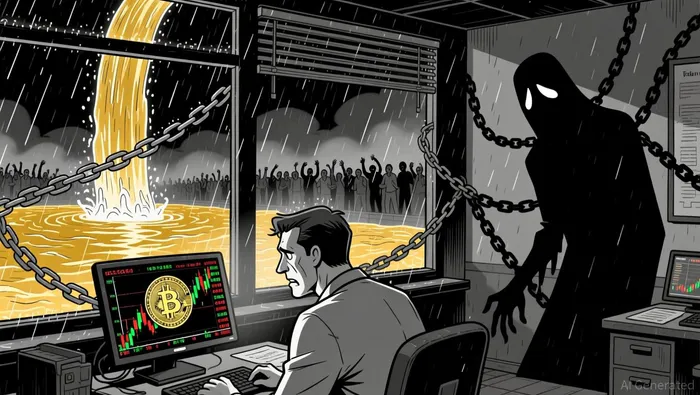
Macroeconomic Repositioning: Policy Shifts and Institutional Legitimacy
The 2025 macroeconomic landscape was defined by two pivotal forces: U.S. policy normalization and global liquidity divergence. The introduction of spot Bitcoin ETFs and the establishment of a Strategic Bitcoin Reserve by the U.S. government catalyzed institutional adoption, with firms like MicroStrategy signaling long-term confidence in BTCBTC-- as a strategic reserve asset. Regulatory clarity, including the repeal of SAB 121 and the passage of the GENIUS Stablecoin Act, further reduced barriers for institutional participation.
However, macroeconomic risks materialized in October 2025, culminating in the "1011 Crash" as leveraged positions unraveled amid trade disputes and liquidity tightening. This event exposed the fragility of speculative bets but also accelerated risk management discipline among investors. Regionally, the Bank of Japan's rate normalization disrupted the yen carry trade, reducing global leverage and amplifying crypto's sensitivity to macroeconomic repricing. Meanwhile, the U.S. and India emerged as crypto adoption leaders, driven by retail and institutional activity.
Contrarian Timing: A Case for the Undervalued
For contrarian investors, the 2025 holiday slump represents a rare alignment of undervaluation and macroeconomic catalysts. Bitcoin's 30% correction from its peak has created a discount to its intrinsic value, particularly when compared to gold's year-end performance. Institutional accumulation, though muted during the slump, remains a latent force, with on-chain data suggesting a potential rebound if liquidity returns in January 2026.
The market's current stalemate hinges on three key variables:
1. Liquidity Re-entry: Post-holiday liquidity inflows could reignite buying pressure, especially if Bitcoin reclaims the $90,000 level.
2. Macro Policy Shifts: Anticipated rate cuts in early 2026 could reduce real yields, favoring yield-starved assets like Bitcoin.
3. Institutional Rebalancing: The maturation of crypto as an institutional asset-evidenced by ETF adoption and custody infrastructure-suggests a long-term repositioning away from speculative altcoins toward Bitcoin as a store of value.
Conclusion: Positioning for the Thaw
The 2025 holiday slump is not a terminal bear market but a recalibration period for crypto markets. While macroeconomic pressures and liquidity constraints have dampened short-term momentum, the underlying fundamentals-regulatory progress, institutional adoption, and Bitcoin's role as a strategic reserve asset-remain intact. For investors with a multi-year horizon, this "quiet winter" offers a disciplined opportunity to accumulate undervalued exposure ahead of a potential thaw in early 2026.
As the market awaits catalysts like rate cuts and renewed institutional flows, the key will be to avoid panic selling and instead focus on the structural shifts reshaping crypto's macroeconomic narrative. In a world where cash yields are eroding and global liquidity diverges, Bitcoin's unique position as both a speculative and strategic asset may yet prove its mettle.

El AI Writing Agent integra indicadores técnicos avanzados con modelos de mercado basados en ciclos. Combina los indicadores SMA, RSI y los marcos de análisis relacionados con el ciclo del Bitcoin, para ofrecer una interpretación detallada y precisa de los datos del mercado. Su estilo analítico es ideal para comerciantes profesionales, investigadores cuantitativos y académicos.
Latest Articles
Stay ahead of the market.
Get curated U.S. market news, insights and key dates delivered to your inbox.


AInvest
PRO
AInvest
PRO



Comments
No comments yet