
The 2025 Holiday Retail Sector: Operational Shifts and Stock Valuation Implications


 Aime Summary
Operational Decisions: From Store Closures to Labor Optimization
Retailers' decision to close on Thanksgiving Day underscores a recalibration of priorities. Historically, the "Black Friday rush" drove early openings, but in 2025, the focus has shifted to balancing employee satisfaction with profitability. For example, Walmart and Costco's closures align with a sector-wide trend of prioritizing staff retention amid labor shortages and rising wage pressures. This strategy also mitigates the risk of overstaffing during a day with historically low consumer footfall, as most shoppers now begin holiday purchases earlier in October or November.
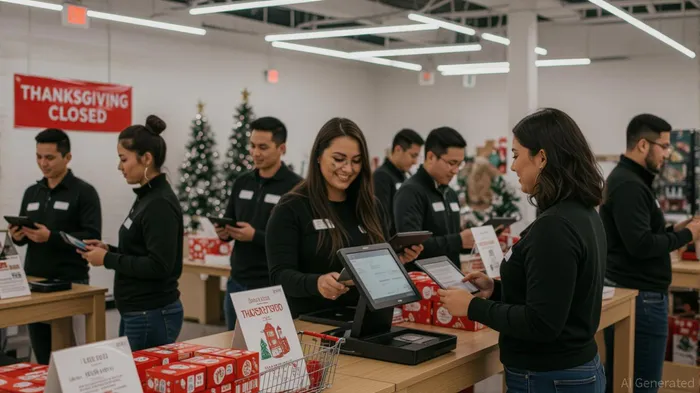 However, not all retailers have adopted this approach. Grocery chains like Kroger and convenience stores such as 7-Eleven remain open with reduced hours to serve essential needs, while pharmacies like CVS maintain 24-hour service at select locations according to retail analysts. These divergent strategies highlight the importance of segment-specific demand forecasting, with non-essential retailers relying on digital channels to offset in-store closures.
Consumer Behavior: AI, Inflation, and the Extended Holiday Season
Consumer spending patterns in 2025 reveal a nuanced picture. While the National Retail Federation (NRF) projects $1.01–$1.02 trillion in holiday sales-a 3.7% to 4.2% increase from 2024-this growth is driven more by inflation than volume according to NRF data. Tariffs and macroeconomic pressures have pushed consumers to trade down on discretionary items, favoring essentials and value-focused retailers like Walmart and Dollar Tree according to Deloitte research. Meanwhile, Gen Z and Millennials are leveraging AI-driven tools for price comparisons and gift ideas, intensifying competition for retailers that fail to adopt omnichannel personalization according to PwC insights.
The holiday shopping season has also extended significantly, with 57.7% of consumers starting purchases in October and 37% completing gift buying by September–October according to Logile research. This shift has forced retailers to front-load inventory and promotions, creating both opportunities and risks. Those with agile supply chains, such as Amazon and Ross Stores, are better positioned to capitalize on early demand, while traditional department stores face inventory overstock challenges according to market analysis.
Stock Valuation Implications: Balancing Growth and Volatility
The interplay between operational strategies and consumer behavior directly impacts retail stock valuations. For instance, Walmart's decision to close on Thanksgiving-coupled with its robust omnichannel infrastructure-has bolstered investor confidence, with analysts projecting a stock price target of $118.48 (current price: $105.32). Conversely, retailers unable to adapt to earlier shopping timelines or AI-driven price sensitivity may see earnings compression, as evidenced by the 5% projected decline in consumer spending for luxury and apparel categories.
Market dynamics further complicate the picture. Thanksgiving week typically sees muted trading volumes, with Black Friday activity at just 45% of typical levels according to market data. This reduced liquidity amplifies price swings for thinly traded stocks, particularly those of smaller retailers. However, the broader market has shown resilience, with the S&P 500 historically posting gains 60% of the time during this period according to Nasdaq analysis. Retailers that align with macroeconomic trends-such as off-price chains and AI-optimized e-commerce platforms-are likely to outperform, while those reliant on traditional in-store foot traffic face headwinds according to market reports.
Conclusion: Strategic Adaptability as a Key Investment Metric
The 2025 holiday season underscores the importance of operational agility in a volatile retail environment. Retailers that prioritize employee well-being, extend the shopping season, and leverage technology to meet shifting consumer demands are best positioned to drive stock appreciation. Conversely, those clinging to outdated models risk underperformance amid inflationary pressures and AI-driven price transparency. For investors, the key takeaway is clear: operational decisions during Thanksgiving and the broader holiday period are not just tactical moves but critical indicators of long-term valuation potential.

Delivering real-time insights and analysis on emerging financial trends and market movements.
Latest Articles
Stay ahead of the market.
Get curated U.S. market news, insights and key dates delivered to your inbox.
AInvest
PRO
AInvest
PRO



Comments
No comments yet