
The 2025 Gold and Silver Rally: Geopolitical Turmoil, Inflation Fears, and the Case for Precious Metals


 Aime Summary
The 2025 gold and silver rally has captured global attention, with prices surging to record highs amid a perfect storm of geopolitical instability, inflationary pressures, and shifting central bank policies. Gold, which nearly doubled in less than two years to reach $4,412.94 an ounce by late 2025, and silver, which climbed to $68.88 an ounce, reflect a profound reallocation of capital toward tangible assets in a world increasingly skeptical of fiat currencies and traditional financial systems
according to financial reports. This analysis explores the drivers behind the rally, the strategic implications for institutional and individual investors, and the evolving role of precious metals in portfolio management.
Geopolitical Turmoil and Central Bank Policies: A Catalyst for Demand
The surge in gold and silver demand is inextricably linked to geopolitical tensions and central bank actions. Emerging market central banks, particularly in China and other regions, have
aggressively accumulated gold reserves to hedge against currency devaluation and geopolitical risks. By 2025, these institutions had
purchased over 1,000 tonnes of gold since 2023, signaling a structural shift in global reserve management. This trend is driven by a loss of confidence in the U.S. dollar and the broader fiat system, as nations seek to diversify their holdings and reduce exposure to Western-dominated financial networks
according to analysis.
Meanwhile, the U.S. Federal Reserve's anticipated rate cuts and the "debasement trade"-a strategy where investors flee depreciating currencies-have further amplified the appeal of gold and silver
according to market analysis. Analysts at J.P. Morgan and Goldman Sachs argue that central banks will continue to prioritize gold in 2026 as global diversification from the dollar accelerates 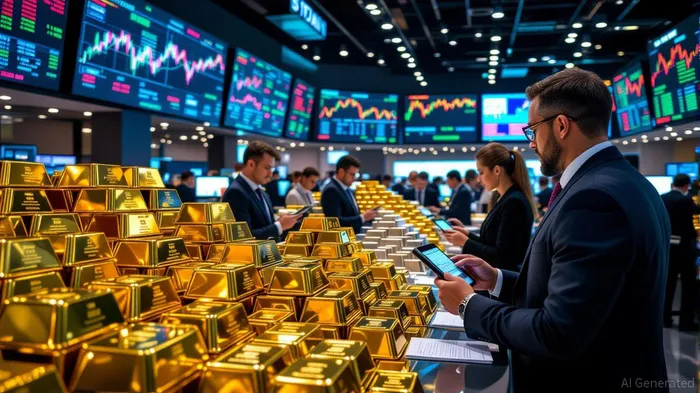 according to research.
Inflation Dynamics and the Role of Precious Metals
Inflation remains a critical driver of the 2025 rally. With global monetary expansion and persistent supply-side constraints, investors are increasingly turning to gold and silver as hedges against currency erosion. Gold's historical role as a store of value has been reinforced by its low correlation to equities and bonds, making it a key tool for reducing portfolio volatility
according to research. For example, adding 10% gold to a $1 million portfolio could reduce crisis losses by over $17,000,
according to Morgan Stanley.
Silver, while more volatile, has also gained traction due to its dual role as both a monetary metal and an industrial commodity. Demand from sectors like solar energy and electric vehicles has surged, while supply constraints in key trading hubs-such as London and Shanghai-have exacerbated price pressures
according to market data. The gold-silver ratio, currently at 83.3, highlights silver's potential for outperformance as industrial demand and speculative flows converge
according to analysis.
Strategic Asset Reallocation: Institutional Strategies in a Volatile Environment
Institutional investors are rethinking traditional portfolio allocations in response to macroeconomic uncertainties. The once-dominant 60/40 equity-bond model is being replaced by a 60/20/20 framework, with 20% allocated to gold and silver as a hedge against inflation and currency instability
according to research. This shift is supported by empirical research, which demonstrates that gold can enhance portfolio resilience during geopolitical crises and currency devaluation episodes
according to data.
For example, Morgan Stanley and other financial institutions now recommend a 20% allocation to precious metals to replace traditional bond allocations
according to analysis. Academic studies further suggest optimal gold weightings between 6% and 25%, depending on risk tolerance and market conditions
according to research. Silver, meanwhile, is often allocated at 4–6% within diversified portfolios, leveraging its industrial demand and price elasticity
according to market trends.
Case studies illustrate this reallocation in action. Central banks in emerging markets have prioritized gold purchases for reserve diversification, while institutional investors are favoring mining projects in stable jurisdictions, such as Canada's Queensway Project or the U.S.-based Palito Complex in Brazil
according to industry reports. These projects benefit from advanced technologies like automated ore sorting, which improve efficiency and align with ESG standards
according to technical analysis.
Investment Vehicles and Tax Considerations
Investors have multiple avenues to access gold and silver, each with distinct advantages and risks. Physical ownership offers direct exposure but requires secure storage and incurs higher transaction costs
according to investment guides. Exchange-traded funds (ETFs) provide liquidity and professional storage but carry counterparty risk
according to financial analysis. Mining stocks, while offering leveraged exposure, introduce operational and geopolitical risks tied to specific companies
according to market reports.
Tax strategies also play a critical role. The IRS classifies physical precious metals as collectibles, subjecting them to a 28% long-term capital gains tax rate
according to IRS guidelines. Holding these assets in a Roth IRA can mitigate this burden, allowing tax-free growth and withdrawals
according to financial advice.
Future Outlook: A Bullish Case for Precious Metals
Analysts remain bullish on gold and silver for 2026 and beyond. J.P. Morgan projects gold prices could reach $5,000 an ounce, driven by sustained central bank demand and inflationary pressures
according to market forecasts. Silver, with its industrial applications and supply constraints, is expected to outperform gold, particularly as green energy transitions accelerate
according to industry analysis.
The Oxford Economics study commissioned by the Silver Institute supports a 30% allocation to silver within a metals portfolio for investors with moderate-to-high risk tolerance
according to research. This aligns with broader trends in institutional reallocation, where gold and silver are increasingly viewed as structural hedges rather than cyclical plays
according to analysis.
Conclusion
The 2025 gold and silver rally underscores a fundamental realignment in global asset allocation. As geopolitical tensions, inflation, and central bank policies reshape financial markets, precious metals are emerging as indispensable tools for portfolio resilience. Strategic reallocation toward gold and silver-whether through physical holdings, ETFs, or mining equities-offers a compelling case for preserving capital and capturing upside potential in an era of uncertainty. For investors, the message is clear: in a world of volatile macroeconomic conditions, tangible assets remain the ultimate safeguard.

Stay ahead of the market.
Get curated U.S. market news, insights and key dates delivered to your inbox.


AInvest
PRO
AInvest
PRO



Comments
No comments yet