
20 Stocks That Could Be the Main Victims of Trump's Aggressive Reciprocal Tariffs—More Headwinds Ahead
Trump's long-awaited reciprocal tariff plan has finally been unveiled, introducing a 10% baseline tariff. While this is lower than the widely expected 20% rate, the far more aggressive tariffs targeting manufacturing-heavy Asian countries have sparked panic. With major industries such as Apple's product assembly, semiconductor foundries, furniture, and apparel production heavily reliant on the region, the policy is set to significantly increase costs for U.S. consumers and further strain an already fragile economy. Here are the 20 stocks to be cautious about with a bumpy road ahead.
Although many countries may seek exemptions through negotiations, China and the EU are expected to retaliate, setting the stage for a potential tit-for-tat trade war. As a result, several major corporations are at risk, and further downside pressure on their stocks may lie ahead.
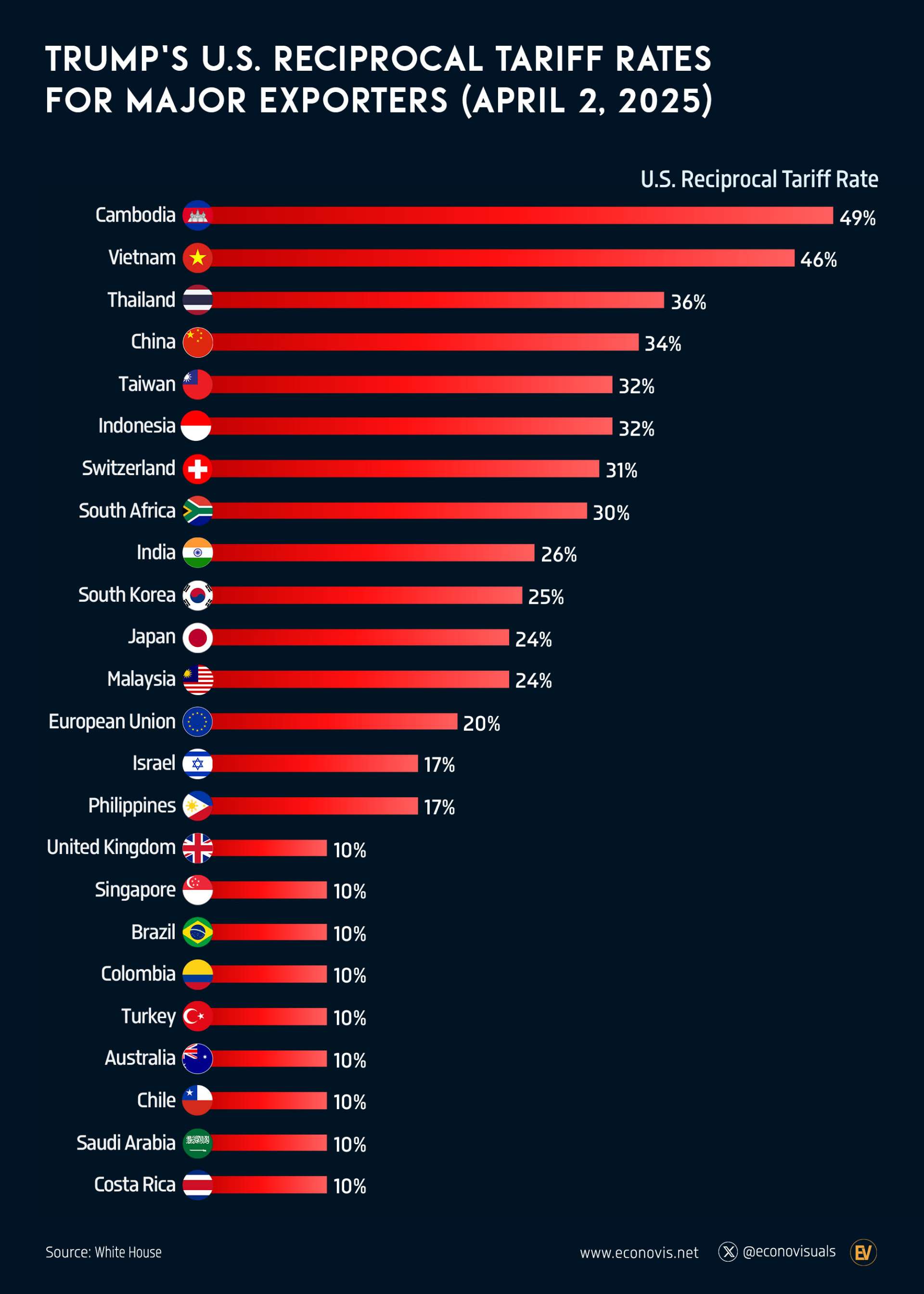
The new tariff framework reflects Trump's emphasis on reducing the U.S. trade deficit and restoring domestic manufacturing independence. However, the burden of these tariffs will ultimately fall on multinational corporations and American consumers.
China: Additional 34% Tariff Brings Total to ~74%
On Wednesday, Trump announced a 34% tariff on Chinese imports, set to take effect on April 9. This is in addition to the 10% tariffs imposed in both February and March, bringing the total to approximately 54%. For comparison, the average tariff during the Biden administration was around 20%, meaning the overall tariff rate on Chinese imports will now stand at ~74%.
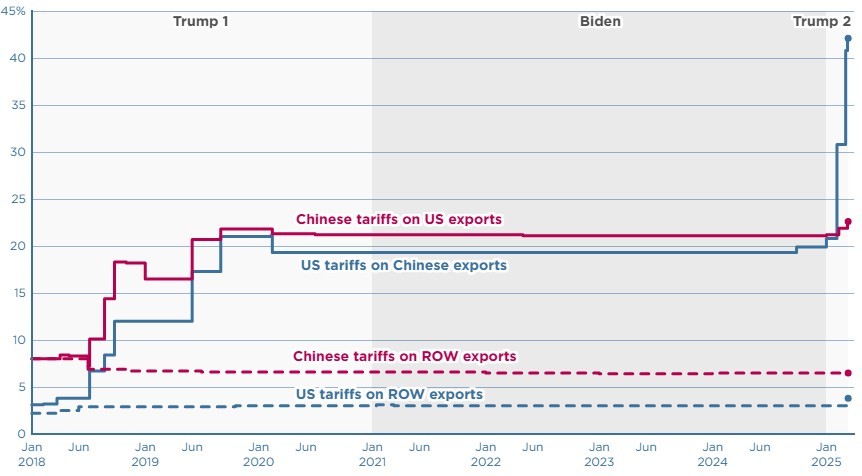
(Latest +34% Not Included)
China's key exports to the U.S. include broadcasting equipment (TVs, smartphones, etc.), computers, and furniture.
Key Victims:
Apple (AAPL): AppleAAPL-- assembles most of its iPhones, iPads, and MacBooks in China, maintaining deep and long-term supplier relationships. Unlike in his first term, Trump appears unwilling to grant Apple exemptions, meaning the sharp increase in costs could raise concerns about demand and margins.
Best Buy (BBY): China is BBY's largest single source of merchandise imports, making electronics prices particularly vulnerable.
Walmart (WMT), Costco (COST): Retail giants will not be safe havens this time, with over 70% of Walmart's non-grocery products sourced from China. Costco is similarly exposed, and Dollar Tree (DLTR) relies on China for about 40% of its value product imports.
PDD, Shopify (SHOP): Trump also signed an order closing the de minimis loophole, which previously allowed low-value packages from China and Hong Kong to enter the U.S. duty-free. This is a major blow to small and medium-sized Chinese manufacturers, many of which supply Temu (PDD-affiliated) and Shopify merchants. Amazon could also see a hit, as Chinese third-party sellers contribute 12% of its total sales.
Taiwan: 32% Tariff—A Nightmare for U.S. Tech
Taiwan is facing a 32% tariff, a severe blow to the U.S. tech industry, which relies heavily on TSMC's cutting-edge chip foundries. Key semiconductor designers—including Nvidia (NVDA), Broadcom (AVGO), Qualcomm (QCOM), AMD, and Micron (MU)—could be among the biggest casualties.
Despite TSMC's $100 billion investment commitment in the U.S., building domestic chip foundries will take years, leaving American tech firms exposed in the short term.
Vietnam: 46% Tariff—No Safe Haven for Outsourced Manufacturing
For years, companies have shifted production from China to Vietnam to avoid tariffs, but Trump has now slapped a 46% tariff on Vietnam for the first time.
Key Victims:
Nike (NKE): About 50% of Nike's footwear is manufactured in China and Vietnam, with Vietnam accounting for roughly 25%. The increased tariffs will further pressure margins amid already sluggish sales.
Skechers (SKX), Urban Outfitters (URBN): Both brands rely on Southeast Asian countries for low-cost imports and will be hit hard by the tariff hike.
South Korea & Japan: ~24% Tariffs
South Korea and Japan are now facing 25% and 24% tariffs, respectively. While not as extreme as the rates imposed on China and Vietnam, the impact is still notable.
Key Victims:
Sony (SONY): The Japanese conglomerate manufactures most of its TVs, cameras, and other hardware in Japan, China, and Malaysia, making its supply chain vulnerable.
Indirect Impacts:
Meta (META): China remains a key customer for Meta's ad business, accounting for 11% of total sales. If Trump imposes stricter tariffs, Chinese companies may reduce their ad spending.
Tesla (TSLA): Although Tesla manufactures vehicles in the U.S., China, and Germany, a Trump-Musk alliance could still lead to further protests against the company. Additionally, rising living costs from tariffs may make consumers hesitant to make big-ticket purchases, affecting broader demand for EVs.
Airlines (DAL, UAL): Delta Air Lines (DAL) and United Airlines (UAL) could see lower travel demand amid rising geopolitical uncertainty and slowing consumer spending.
The growing tension between the U.S., China, and the EU could spark regulatory investigations into American tech giants under the guise of antitrust enforcement or retaliatory levies. This would pose a new layer of risk for companies like Apple, Amazon, and Meta.
Trump's sweeping tariffs—particularly those targeting Asia—could throw the economy into chaos, forcing major corporations to absorb higher costs and weighing on already fragile demand. The outlook remains highly uncertain, and a quick reversal seems unlikely.

Independent investment research powered by a team of market strategists with 20+ years of Wall Street and global macro experience. We uncover high-conviction opportunities across equities, metals, and options through disciplined, data-driven analysis.
Latest Articles
Unlock Market-Moving Insights.
Subscribe to PRO Articles.
Already have an account? Sign in
Unlock Market-Moving Insights.
Subscribe to PRO Articles.
Already have an account? Sign in
Stay ahead of the market.
Get curated U.S. market news, insights and key dates delivered to your inbox.




