
Over 2,400 Unregulated Mines in Mainland Southeast Asia Threaten River Systems and Public Health
 Aime Summary
Toxic mining activity is spreading across mainland Southeast Asia, . These operations are concentrated near the Mekong, Salween, and Irrawaddy rivers, .
The U.S.-based has released the first comprehensive analysis of mining activity in the region, , , . These operations are linked to the extraction of gold, tin, silver, nickel, copper, and manganese. Cyanide, mercury, , with downstream consequences for communities and ecosystems.
One affected resident, , . The river, which originates in Myanmar and flows into Thailand, has been central to agriculture in the region. “It’s like half of me has died,” she said, reflecting the deep personal and economic impact of losing a reliable water source.
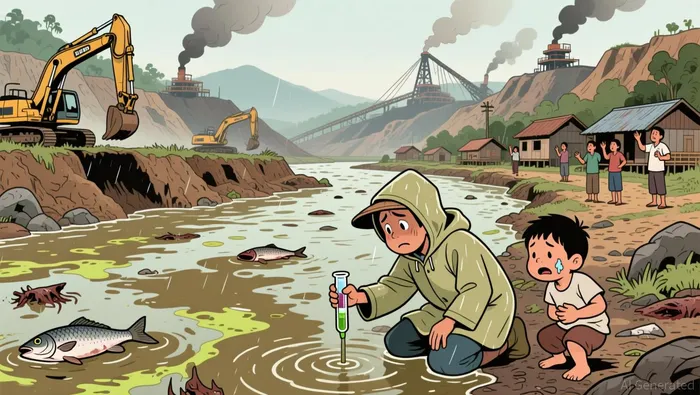
The Stimson report highlights that many of these operations exist in areas where governance is weak, enabling large-scale, unregulated mining. , a senior fellow at the think tank, noted the striking scale of the issue. “Because so much of the Mekong Basin is essentially ungoverned by national laws and sensible regulations, the basin is unfortunately ripe for this kind of unregulated activity.”
The study warns that heavy metals like arsenic, dysprosium, , linked to rare earth and gold mining. . Eyler emphasized that many supermarket items in the U.S. originate from the Mekong Basin, including rice, fish, and shrimp.
Chinese nationals are involved in managing and technical operations at many of the mines, with some activities backed by China’s growing rare earths industry. These materials are essential for high-tech manufacturing and defense systems. China’s dominance in processing rare earths means the global supply chain could be affected if contamination levels rise further.
Thai officials have taken early steps to address the crisis, . However, local farmers continue to call for decisive action to shut down upstream operations. “I just want the Kok River to be the way it used to be—where we could eat from it, bathe in it, play in it, and use it for farming,” said Tip Kamlue.
The situation remains urgent, . The Stimson Center’s findings underscore the need for stronger regional cooperation and stricter regulation of mining activity to protect both the environment and public health.

Stay ahead of the market.
Get curated U.S. market news, insights and key dates delivered to your inbox.


AInvest
PRO
AInvest
PRO



Comments
No comments yet