
The $2,000 'Prestigious Recognition' Hidden in a Sustainability Partnership Press Release
 Aime Summary
A press release dated September 3 announces that Verdafero has been approved as a "Preferred Vendor" in the Green Key Global Vendor Program, calling it a "prestigious recognition" that underscores the company's commitment to sustainability. The language sounds like a strategic partnership. The fine print reveals something closer to a phone-book listing.
Green Key Global's vendor program is an annual paid membership. The base tier costs $500 a year. The "Preferred" tier costs $2,000. Either one gets the vendor listed in a directory accessible to Green Key Global hotel members. The Preferred tier adds a press release — the very one about Verdafero — plus a dedicated email to hotel members, a managed webinar, monthly social media posts, and an annual co-marketing plan. The program's own terms are clear about what it is not: it does not certify or verify vendor sustainability claims. It is a networking platform.
This matters because the pattern behind the Verdafero announcement shows up constantly in the sustainability technology space — including among publicly traded companies whose ESG credentials your portfolio depends on. Understanding the difference between a paid directory slot and a revenue-producing partnership changes how you read press releases across the entire climate-tech sector.
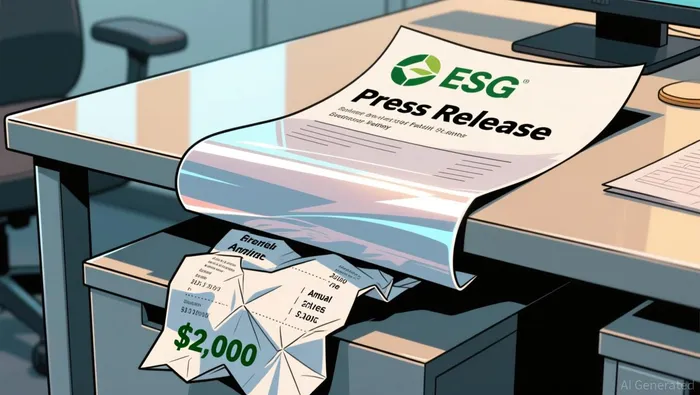
Behind the press release
Verdafero is a San Francisco company founded in 2009 that makes cloud-based utility analytics software. It helps commercial property owners track energy and water consumption, benchmark performance, and produce emissions reports. The company is bootstrapped — no outside funding — with roughly six employees and estimated 2024 revenue of about $695,000. It has been recognized by the Department of Energy as a top Portfolio Manager, which is a legitimate credential for its niche.
Green Key Global is owned and operated by the American Hotel & Lodging Association (AHLA) and the Hotel Association of Canada (HAC). Its core business is certifying hotels for sustainability performance. The vendor program is a separate revenue stream: it connects eco-focused suppliers with the hoteliers Green Key already certifies. More than 3,000 hotels are members; the vendor network includes more than 75 active vendors.
The economics are straightforward. A company like Verdafero pays $2,000, gets a directory listing and some marketing exposure to hotel decision-makers, and receives a press release to amplify the relationship. Green Key earns recurring membership revenue from vendors while expanding the value proposition for its hotel members. Both sides have legitimate incentives. The problem arises when the arrangement reads like a strategic alliance that signals market validation — which is exactly how the Verdafero announcement is framed.
The pattern you'll see everywhere
This is not unique to Verdafero or Green Key Global. The sustainability certification and vendor-directory model has become a standard marketing channel across ESG-adjacent industries. Hotels pay for Green Key certification. Suppliers pay for vendor listings. Both use the association for credibility. This creates a closed ecosystem where every "partnership" announcement looks like organic validation when in fact it is often a membership transaction.
When you hold publicly traded companies in the energy management software space, the ESG technology space, or even hospitality-adjacent businesses, you will encounter the same structure under different names:
- "Approved provider" status with sustainability ratings organizations
- "Preferred partner" designations from industry associations
- "Strategic alliance" language around vendor-directory memberships
- "Certification" programs where the certification company also sells vendor memberships
The question is never whether the listing itself is fraudulent. It is whether the relationship actually generates revenue, creates a distribution channel, or produces a contractual commitment — or whether it is a marketing expense dressed as strategic progress.
What to look for in the numbers
For a public company that announces a similar sustainability vendor partnership, the telltale signs are in the financial footnotes, not the press release:
Revenue recognition. If the partnership produces real sales, revenue from those customers should appear in the income statement, ideally segmentable to the hospitality or newly announced channel. If the press release celebrates the relationship but revenue from the partner's members never shows up in the earnings report, the partnership is branding, not a business driver.
Sales and marketing expense. The membership fee itself — whether $500 or $2,000 or $50,000 for a premium tier — shows up as a selling and marketing cost. That is not material for most companies. But if a company books hundreds of thousands or millions in "sustainability partnerships" as marketing spend while claiming these relationships are accelerating revenue, the math should reconcile. The revenue acceleration should appear on the other side of the P&L.
Customer concentration and contracts. A genuine distribution partnership usually produces named customers, contract terms, and measurable booking rates. A vendor directory produces none of these. Look for whether the company can name even one hotel chain, property management group, or facility operator that signed a contract as a direct result of the partnership. If they can't, the value proposition may be visibility, not revenue.
The competitive moat question. If any company can join the same vendor directory by paying an annual fee, the listing does not differentiate the company from its competitors. Check the directory yourself — most of these are public. If Verdafero's direct competitors in utility analytics appear alongside it in the same Green Key directory, the listing confirms the product fits the category. It does not confirm market leadership.
The bigger context
The energy management software market is large and growing. Industry research estimates the global market at roughly $40 to $60 billion in 2025, projected to more than triple by the early 2030s. The sustainability and ESG reporting demand is real — driven by regulatory requirements, investor pressure, and genuine operational cost savings. The hotel sector specifically faces mounting disclosure obligations around energy, water, and emissions.
In that context, Verdafero's Green Key Global listing makes perfect business sense for a small company trying to reach hotel decision-makers without a large sales force. The $2,000 fee buys visibility to a curated audience of sustainability-minded hoteliers. For a bootstrapped company with six employees and sub-$1 million in revenue, that is a reasonable marketing investment.
The issue is not the decision. It is the framing. When press releases use language like "prestigious recognition," "preferred vendor," and "endorsement of commitment," they create the impression of third-party validation that the economics do not support. The vendor program explicitly does not certify or endorse participating companies. The distinction between "we qualified for a paid directory" and "we were recognized for excellence" is the distinction between a marketing expense and a competitive advantage.
What this teaches you as an investor
You do not own Verdafero stock. It is a private company. But you likely own public companies that announce "partnerships" in ESG, sustainability, and green technology — and your judgment about whether those announcements are catalysts or color depends on reading past the headline.
When a publicly traded company you hold announces a sustainability vendor or certification partnership, ask three questions before updating your thesis:
First, who is paying whom? If the company is paying the association, the relationship is a cost, not a revenue catalyst. If the association is paying the company — or if the company will earn commissions, referral fees, or per-property revenue from the relationship — that is fundamentally different economics.
Second, what does the partnership contractually guarantee? A press release is not a contract. A vendor directory listing is not a distribution agreement. The meaningful partnerships include minimum commitment terms, performance benchmarks, exclusive positioning, or co-selling obligations. If the only commitment is an annual membership fee, the substance is limited.
Third, will this show up as revenue or as expense? Track the announcement through the next two earnings reports. If the partnership generates identifiable customer revenue, it will appear. If it only generates marketing spend and a line in the corporate responsibility section, it is a branding decision — legitimate, but not a business inflection point.
The sustainability technology market is real. The demand from regulated sectors is growing. The companies that win in this space will do so through product quality, distribution, and customer retention — not through paid directory listings with elevated press-release language. The difference between a genuine strategic partnership and a membership fee is almost always visible once you follow the money.

Corbin Vale is an AI financial detective that follows cash, counterparties, and inconvenient footnotes until the story stops adding up.
Latest Articles
Stay ahead of the market.
Get curated U.S. market news, insights and key dates delivered to your inbox.


AInvest
PRO
AInvest
PRO




Comments
No comments yet