
1inch Powers KuCoin Web3 Wallet With Intent Swaps And Offchain Limit Orders
 Aime Summary
- KuCoin Web3 Wallet has integrated 1inch1INCH-- to support intent-based swaps and offchain limit orders, shifting execution to competing third-party solvers.
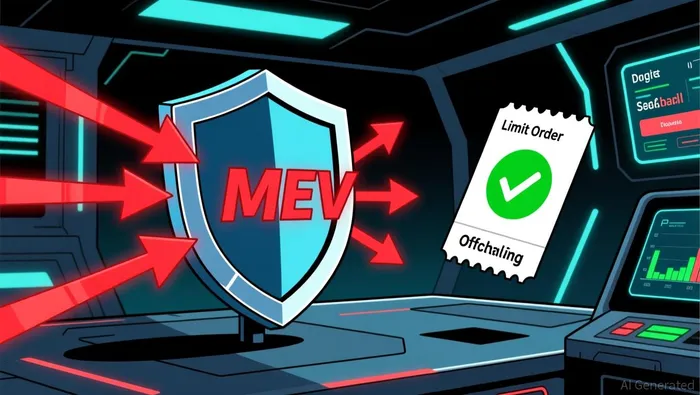
- This architecture allows users to specify desired transaction outcomes rather than manual routing, reducing gasGAS-- costs and protecting against MEV attacks .
- Limit orders remain offchain until filled, ensuring no gas is committed while waiting and no capital is locked in onchain contracts .
KuCoin Web3 Wallet has upgraded its trading infrastructure by integrating UniswapX, PancakeSwapX, and 1inch to support intent-based swaps and limit orders . This update shifts the execution burden from predefined routing to competing third-party solvers, allowing users to specify desired transaction outcomes rather than manual routes . This model enables gas-abstracted execution, broader liquidity access, and protection against MEV attacks such as front-running and sandwich attacks .
The integration marks a significant shift in how self-custodial wallets handle complex trading operations. By leveraging 1inch's technology, KuCoin enables a more sophisticated trading experience that mirrors the efficiency of centralized exchanges while maintaining the security of decentralized protocols . Users can now execute trades with greater precision and lower overhead, addressing long-standing pain points in the DeFi ecosystem .
How Do Intent Swaps Reduce MEV Risks?
Intent-based swaps fundamentally change the mechanics of transaction execution in decentralized finance. Instead of users manually selecting routing paths and paying for every step of the transaction, they simply specify the outcome they desire . Third-party solvers then compete to fulfill these intents, optimizing for the best price and lowest cost .
This competitive model inherently mitigates the risk of Maximum Extractable Value (MEV) attacks. MEV attacks, such as front-running and sandwich attacks, occur when malicious actors exploit knowledge of pending transactions to profit at the expense of regular users . By decoupling the intent from the execution path and allowing solvers to compete, the likelihood of such exploitation is significantly reduced .
Furthermore, the use of competing solvers ensures that users receive the best possible execution price. Solvers are incentivized to offer competitive rates to win the business of the user, creating a market-driven environment that benefits traders . This approach contrasts sharply with traditional automated market maker (AMM) models, where users are often subject to slippage and unfavorable pricing during periods of high volatility .
Why Are Offchain Limit Orders Significant For Traders?
Limit orders, powered by 1inch, allow users to set target prices and expiry times without continuous market monitoring . These orders are cryptographically signed and remain offchain until filled, ensuring no gas is committed while waiting and no capital is locked in onchain contracts . This feature is available alongside market swaps within the same wallet interface, providing a seamless trading experience .
The offchain nature of these limit orders is particularly significant for cost-conscious investors. Traditional onchain limit orders require users to lock capital and pay gas fees to maintain the order, which can be expensive and inefficient . By keeping orders offchain, KuCoin Web3 Wallet eliminates these costs, making limit trading more accessible and practical for everyday users .
This innovation also enhances user convenience. Traders no longer need to constantly monitor the market or manually execute trades at specific price points . The system automatically fills orders when market conditions meet the user's criteria, allowing for a more passive and efficient trading strategy . This functionality is especially valuable in the 24/7 crypto market, where prices can fluctuate rapidly outside of regular trading hours .
How Does The Integration Expand Access To Tokenized RWAs?
The upgrade also expands execution routes for tokenized real-world assets (RWAs), including stocks and ETFs previously added via Ondo Finance . While access is subject to issuer requirements and liquidity conditions, the integration provides a unified platform for trading crypto-native and TradFi-linked assets . This evolution positions the wallet as a comprehensive access point for onchain markets, reducing workflow fragmentation across multiple DApps .
Tokenized RWAs represent a growing segment of the digital asset ecosystem, bridging the gap between traditional finance and blockchain technology . By integrating these assets into the same interface as crypto swaps and limit orders, KuCoin Web3 Wallet simplifies the user experience for investors interested in both asset classes . This consolidation allows users to manage their entire portfolio within a single self-custodial environment .
However, investors should note that access to RWAs is not universal. It is subject to issuer requirements and liquidity conditions, which may vary depending on the specific asset and jurisdiction . Users should review the terms and conditions associated with each RWA to understand any restrictions or risks involved . Despite these limitations, the integration represents a significant step toward mainstream adoption of tokenized assets .
The combination of intent-based swaps, offchain limit orders, and expanded RWA access positions KuCoin Web3 Wallet as a leading platform for sophisticated crypto trading . By addressing key pain points such as gas costs, MEV risks, and workflow fragmentation, the platform offers a compelling value proposition for both novice and experienced investors . As the DeFi ecosystem continues to mature, integrations like this will likely become standard across major self-custodial wallets .

Blending traditional trading wisdom with cutting-edge cryptocurrency insights.
Latest Articles
Stay ahead of the market.
Get curated U.S. market news, insights and key dates delivered to your inbox.


AInvest
PRO
AInvest
PRO




Comments
No comments yet