

On August 20, SharkNinjaSN-- director Peter Feld sold 5,000 shares at $180.00, an open-market trade that pulled in roughly $900,000 and left him holding 5,328 shares, recorded on a Form 4 filed the next day. On its face the filing is routine — a disclosed sale by a director, nothing in the numbers that screams scandal. But it is the wrong kind of routine.
The trade was discretionary, not automated. It was not run through a Rule 10b5-1 plan — the standing schedule insiders set up in advance so that later sales are shielded from insider-trading questions. Feld’s was a live decision: the person at the center of the business choosing to sell, on that day, at that price.
Reconstruct the arithmetic and the trim is bigger than a rounding error. He holds 5,328 shares after selling 5,000. Add them and the pre-trade position was about 10,328 shares — so the sale retired roughly half the stake in a single discretionary move.
Follow that same dollar forward and the timing starts to carry weight. As of September 10 the stock trades at $163.33, about 12% below its level 20 days earlier and about 6.5% below five days ago — beneath the $180 the director printed on his way out.
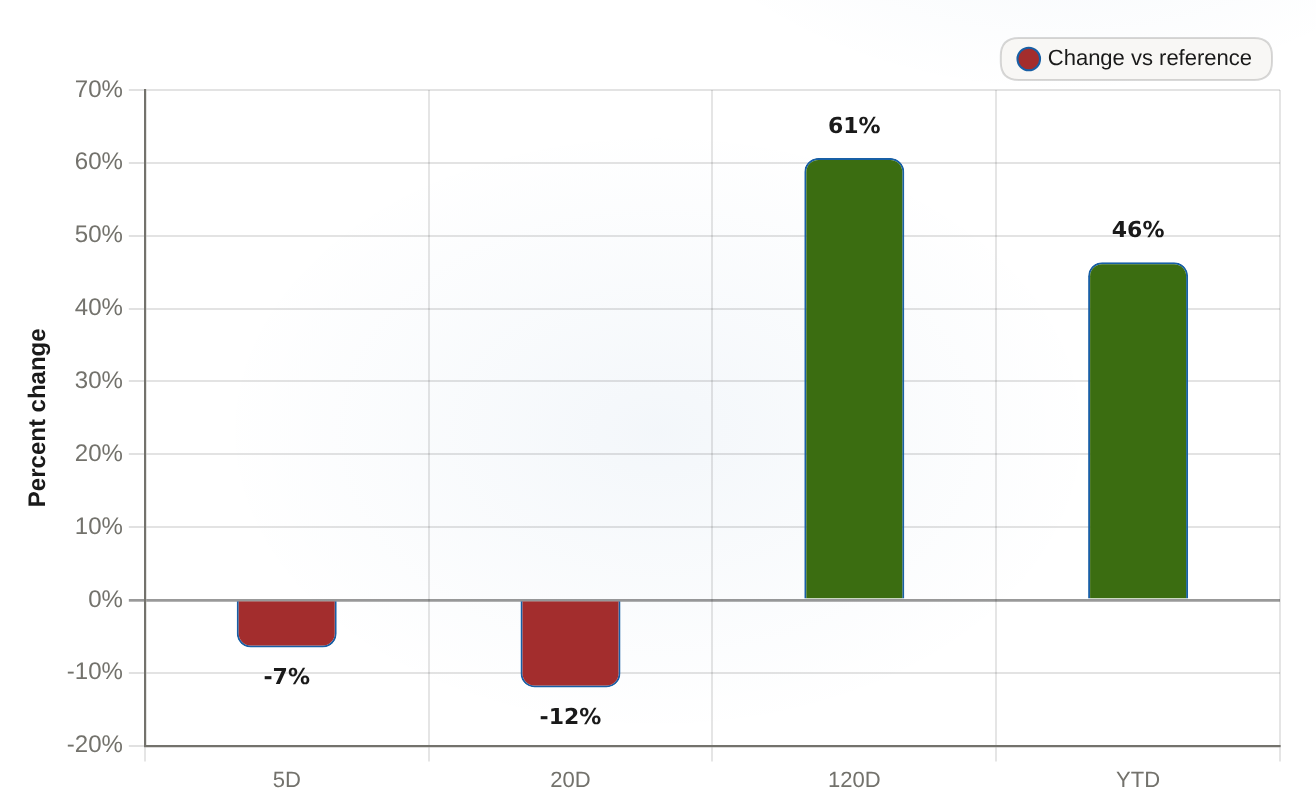
SharkNinja's short-term giveback is sharply negative (5D -6.5%, 20D -12%) even as longer-term momentum stays strongly positive (120D +61%, YTD +46%).
| Period | Change vs reference |
|---|---|
| 5D | -6.543 |
| 20D | -12.01 |
| 120D | 60.68 |
| YTD | 46.37 |
The giveback is recent, and the longer run that made the print remarkable is still on the tape: SharkNinja remains up about 46% year to date and about 61% over four months, near the momentum that carried the stock to a 52-week high of $194.54. The pullback is a crack in that run, not the end of it — which is exactly what makes Feld’s choice worth a second look. He monetized at $180 when the open market, three weeks later, could only fetch about $163.
Here is the strain of holding those two facts in the same frame. AInvest data puts SharkNinja’s market cap near $23 billion and its trailing price-to-earnings ratio near 33 — a rich multiple on a celebrated growth story. Against that backdrop $900,000 is pocket change. That cuts both ways. It is why this is not a fraud story: the amount is immaterial to the company’s economics, no regulatory finding or company response exists, and nothing in the filing explains why Feld sold. The dollar is not evidence of a broken business. It is evidence of a better-timed exit than the market’s.

For a shareholder holding SharkNinja through the 33-times-earnings celebration, the distinction matters. The insider’s $180 print sits about 9% above today’s price — the person closest to the operations got a price the public market can no longer get, at a moment the stock was near its high. Demanding more of the story is not the same as proving it false. But when a top insider cashes out roughly half his position and the market then marks the stock down 12%, the celebration earns a check, not a shrug.
What would settle it is a price and a filing, not a theory: whether SharkNinja reclaims and holds above $180 on real volume, or whether further open-market Form 4 sales appear from senior insiders in the weeks ahead. A clean recovery would relabel Feld’s sale as routine profit-taking — personal liquidity, not conviction. Another discretionary sale after this pullback, or a print that keeps failing below the tell-tale $180, answers the other way. Neither the motive nor the multiple is settled here. What is settled is the invoice: the insider already took his price.








Comments
No comments yet