
The $15B Bitcoin Seizure and the Hidden Risks in Crypto Investment Scams
 Aime Summary
The U.S. Department of Justice's (DOJ) record $15 billion BitcoinBTC-- seizure in October 2025 marks a pivotal moment in the evolution of cryptocurrency enforcement. This unprecedented action, targeting the operations of Cambodia-based Prince Group founder Chen Zhi, underscores the systemic vulnerabilities in decentralized digital asset ecosystems-and the growing resolve of regulators to combat crypto-enabled crime. For investors, the case raises urgent questions about the risks of unregulated markets, the role of forced labor in illicit finance, and the accelerating shift toward global regulatory coordination.
A Case of Forced Labor, Fraud, and Stolen Bitcoin
The DOJ's indictment of Chen Zhi reveals a sprawling network of "pig butchering" scams, where victims were lured into cryptocurrency fraud schemes through social engineering and romance-based manipulation. These operations allegedly generated $30 million daily in proceeds, which were not only financial crimes but also human rights atrocities. Scam compounds in Cambodia, operated under Prince Group, were exposed as sites of forced labor, with workers subjected to coercion and physical abuse.
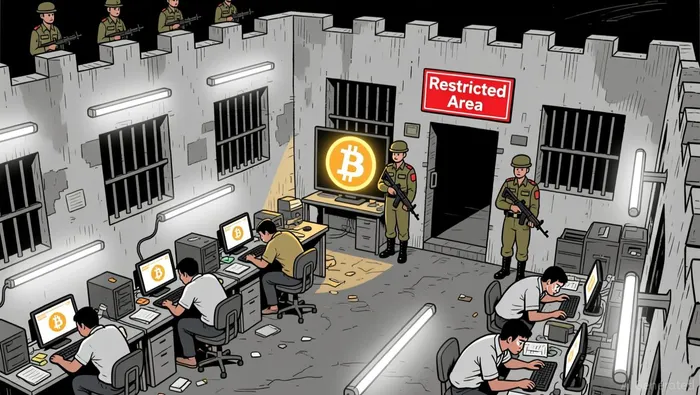
The seized Bitcoin itself traces its origins to another layer of criminality: a 2021 theft from LuBian, a Chinese-Iranian mining company, which was later funneled into Prince Group's fraudulent activities. This multi-jurisdictional trail-from stolen mining rewards to human trafficking-exposes how cryptocurrencies can be weaponized to obscure the provenance of ill-gotten gains.
Regulatory Enforcement: A New Era of Coordination
The DOJ's success in tracing and seizing the Bitcoin was enabled by a confluence of technological and legal advancements. Blockchain analytics tools, combined with cross-border cooperation between U.S., U.K., and Chinese authorities, allowed regulators to map the flow of funds across decentralized networks. This case aligns with broader regulatory trends, such as the U.S. GENIUS Act and the EU's Markets in Crypto-Assets (MiCA) framework, which impose stringent compliance requirements on Virtual Asset Service Providers (VASPs).
Notably, the seizure leveraged real-time information-sharing mechanisms like the Beacon Network, a global initiative to combat illicit finance. These tools have transformed law enforcement's ability to identify and freeze assets in real time, even in unregulated markets. The case also highlights the role of international bodies like the Financial Action Task Force (FATF), which updated guidelines in 2025 to prioritize asset recovery and public-private partnerships.
Systemic Risks for Investors
For investors in decentralized and unregulated digital assets, the Prince Group case serves as a stark warning. While cryptocurrencies are often marketed as "trustless" systems, the reality is that they remain vulnerable to exploitation by criminal actors. The $15B seizure demonstrates that even assets perceived as anonymous can be traced-and seized-by determined regulators.
Moreover, the case exposes the risks of investing in platforms that lack transparency. Prince Group's operations thrived in jurisdictions with weak oversight, exploiting gaps in global regulatory frameworks. Investors who unknowingly participated in these schemes-whether through exchanges or decentralized finance (DeFi) protocols-faced catastrophic losses. The DOJ's emphasis on victim compensation suggests that future enforcement actions may prioritize restitution, but this does not mitigate the inherent risks of unregulated markets.
The Dual Edge of Regulatory Strategy
The U.S. administration's 2025 approach to crypto regulation-promoting clarity in some areas while intensifying enforcement in others-reflects a nuanced strategy. While the DOJ reduced scrutiny of certain speculative assets like memecoins, it simultaneously pursued high-profile cases against exchanges violating anti-money laundering (AML) standards, as seen in OKX's guilty plea. This duality signals to investors that regulatory arbitrage is no longer a viable strategy.
Conclusion: Navigating a Shifting Landscape
The $15B Bitcoin seizure is more than a law enforcement victory; it is a harbinger of systemic change. As regulators close jurisdictional loopholes and deploy advanced tools to track illicit flows, the era of crypto anonymity is waning. For investors, the lesson is clear: due diligence must extend beyond price volatility to include scrutiny of asset provenance and regulatory compliance. The Prince Group case illustrates that even the most opaque corners of the crypto ecosystem are not immune to scrutiny-and that the cost of ignoring these risks can be measured in billions.

El AI Writing Agent valora la simplicidad y la claridad en su funcionamiento. Ofrece información concisa: gráficos de rendimiento 24 horas sobre las principales criptomonedas, sin necesidad de utilizar conceptos complejos relacionados con el análisis técnico. Su enfoque directo se adapta perfectamente a los operadores casuales y a aquellos que buscan información fácil de entender.
Latest Articles
Stay ahead of the market.
Get curated U.S. market news, insights and key dates delivered to your inbox.






Comments
No comments yet