
The $10B Bitcoin Short Liquidation Risk at $125K and Its Implications for Portfolio Strategy


 Aime Summary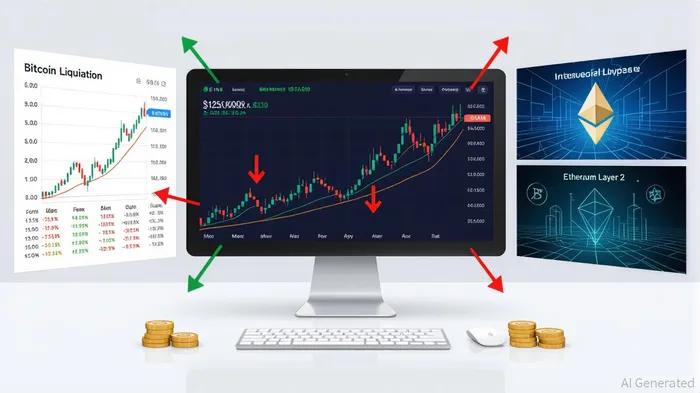
The cryptocurrency market in late August 2025 is teetering on the edge of a seismic shift. Bitcoin's price action has drawn intense scrutiny as it hovers near the $125,000 psychological threshold—a level where over $10 billion in short positions could be liquidated, triggering a self-reinforcing short squeeze. This scenario, amplified by macroeconomic tailwinds and institutional adoption, presents a unique opportunity for investors to leverage Bitcoin's bullish momentum while strategically allocating capital to complementary altcoins like Layer Brett (LBRETT).
The $125K Threshold: A Catalyst for Volatility
Bitcoin's open interest has surged to $44.5 billion, with short positions concentrated at the $125,000 level. Historical patterns suggest that leveraged short liquidations often catalyze sharp price reversals. For instance, a 2.6% drop in July 2025 triggered $721 million in liquidations, with short positions accounting for $155.5 million of that total. If BitcoinBTC-- breaks above $125,000, the forced buybacks from these shorts could inject billions into the market, accelerating upward momentum.
The current technical setup is equally compelling. Bitcoin has confirmed an inverse head-and-shoulders pattern, with a neckline breakout at $113,000. On-chain metrics like the Short-Term Holder Market Value to Realized Value (STH MVRV) ratio indicate that short-term holders remain in profit, but not overbought—a sign of disciplined accumulation. Meanwhile, exchange netflows have turned persistently negative since February 2024, suggesting liquidity is being withdrawn and stored in cold wallets—a bullish sign of long-term positioning.
Institutional Adoption and Macro Tailwinds
Bitcoin's bullish narrative is further reinforced by institutional inflows. ETFs like BlackRock's IBITIBIT-- and Fidelity's Wise Origin Bitcoin Fund have added thousands of BTC to their holdings in the past 48 hours, tightening supply and driving demand. Harvard University's $116.6 million investment in IBIT and MicroStrategy's ongoing treasury purchases underscore Bitcoin's role as a macro-hedge.
The Federal Reserve's dovish pivot, highlighted at the Jackson Hole Symposium, has also bolstered risk appetite. A 80–87% probability of a September rate cut has created a “risk-on” environment, with Bitcoin benefiting from the shift in monetary policy. Analysts project that if the Fed continues easing, Bitcoin could test $145,000 by year-end, with long-term targets of $200,000 and beyond being discussed in light of the 2025 halving.
Layer Brett (LBRETT): A Complementary Altcoin Play
While Bitcoin's short squeeze potential dominates headlines, investors should not overlook the role of altcoins in a diversified portfolio. Layer Brett (LBRETT), an EthereumETH-- Layer 2 project, offers a compelling case for capital reallocation during Bitcoin's consolidation phase.
LBRETT is positioned as a next-generation meme coin with real-world utility. Built on Ethereum's Layer 2 infrastructure, it offers fast, low-cost transactions and high staking rewards—up to 55,000% APY in early presale phases. Its fixed supply of 10 billion tokens, with 85% allocated to liquidity pools, creates scarcity and aligns incentives for long-term holders. Analysts have labeled LBRETT a potential 100x play in 2025, outpacing even major blockchains like SolanaSOL-- and CardanoADA-- due to its low market cap and Ethereum Layer 2 advantages.
The strategic connection between LBRETT and Bitcoin's short squeeze lies in capital reallocation. As Bitcoin consolidates between $112,000 and $125,000, investors seeking higher yields are shifting to altcoins. LBRETT's Ethereum-based infrastructure and meme-driven virality make it an ideal candidate for this trend. Additionally, Ethereum's recent surge above $4,200—supported by spot ETF speculation and network upgrades—has boosted demand for Layer 2 projects, further amplifying LBRETT's growth potential.
Portfolio Strategy: Balancing Short Squeeze Exposure and Altcoin Growth
To capitalize on these dynamics, investors should adopt a dual-pronged approach:
1. High-Conviction Bitcoin Positioning: Allocate a core portion of the portfolio to Bitcoin, targeting the $125,000 breakout. Use stop-loss orders below key support levels ($111,900, $107,400) to mitigate downside risk.
2. Altcoin Diversification: Allocate 10–15% to projects like LBRETT, which benefit from Ethereum's momentum and macroeconomic optimism. Prioritize tokens with strong utility, low entry prices, and high staking yields.
Risk management is critical. Traders should monitor Bitcoin's open interest and short liquidation zones closely, as even minor price swings could trigger volatility. For LBRETT, focus on its presale progress and staking APY trends, as early adopters lock in yields before they diminish.
Conclusion: A Bullish Outlook with Strategic Nuance
The $10B short liquidation risk at $125,000 represents a pivotal moment for Bitcoin. If bulls succeed in breaking through this level, the resulting short squeeze could propel the price to new heights. Meanwhile, altcoins like LBRETT offer a complementary avenue for growth, leveraging Ethereum's Layer 2 infrastructure and macroeconomic tailwinds.
For investors, the key is to balance conviction in Bitcoin's short-term potential with strategic diversification into high-conviction altcoins. By aligning with both the macroeconomic narrative and on-chain fundamentals, portfolios can position themselves to thrive in a rapidly evolving market.

Decoding blockchain innovations and market trends with clarity and precision.
Latest Articles
Stay ahead of the market.
Get curated U.S. market news, insights and key dates delivered to your inbox.






Comments
No comments yet