
$100 to $1,333: Polymarket Is Paying 13-to-1 on Iran's Regime Collapsing -- and the Supreme Leader Is Already Dead
 Aime Summary
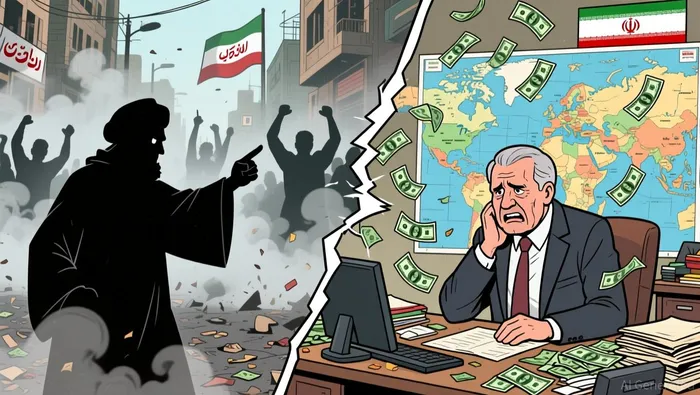
The Supreme Leader of Iran was killed in a decapitation strike five months ago. The regime's surviving leaders are now publicly feuding -- hardliners demanding total war, pragmatists begging for a deal. The crowd says there's a 93% chance the Islamic Republic survives the year. At 7.5 cents a share, the "Yes" bet on regime change pays 13-to-1. This is not a normal political risk trade. It's a bet on whether a 47-year-old autocracy, decapitated, divided, and bleeding, can hold together six more months.
Here's the thing about revolutions: nobody sees them coming until the building is already on fire. In February 2026, an operation involving US intelligence and Israeli execution killed Iran's Supreme Leader Ali Khamenei and multiple senior commanders in Tehran. The regime lurched into war, its command structure in chaos, its 47-year-old political theology suddenly without its architect.
Since then, the war has ground on. Oil is above $90. The Strait of Hormuz has been disrupted. And inside Tehran, the surviving leadership is tearing itself apart over what comes next.
On one side, the Paydari Front -- ulta-hardliners who want total victory, no negotiations, and a religious crackdown at home. On the other, President Masoud Pezeshkian and parliament speaker Mohammad Bagher Ghalibaf, who see military pressure as a path to a negotiated deal with the US, driven by fear of the war's crushing economic toll. This isn't backroom disagreement -- it's a structural fracture that the war has blown wide open.
This is the bet: a regime that has lost its Supreme Leader, cannot agree on its own survival strategy, and is hemorrhaging economically against a US-led military campaign -- can it hold?
Polymarket says yes, with 92.5% confidence. The "No" shares -- regime survives -- trade at 92.5 cents. The "Yes" shares -- regime falls before 2027 -- cost just 7.5 cents.
Here's the board:
Let's do the math, because it matters.
At 7.5 cents, $100 buys roughly 1,333 shares of "Yes." If the regime falls or is replaced before December 31, 2026, each share resolves to $1. Your $100 becomes $1,333 -- a $1,233 profit. That's 13.3-to-1.
If it doesn't happen, the $100 goes to zero. That's the deal. No pretending otherwise.
But here's why that 7.5-cent price might be the market's biggest blind spot.
Trump just paused strikes on Iran, claiming a deal is near. Tehran immediately rejected his account. That's the pattern: the US offers an off-ramp, the hardliners block it, the negotiations stall, and the war drags on. Each failed deal weakens the pragmatists' position and strengthens the Paydari faction that would rather fight to the death than compromise.
Meanwhile, Iran is investigating the killing of its former Supreme Leader, signaling cross-border accountability moves that escalate rather than de-escalate. The economy is in tatters. The rial is under pressure. A population that has endured decades of sanctions, a pandemic, and now a war is watching its leadership bicker while the country burns.
The base case -- regime survives -- is still the favorite at 92.5%. Iran has weathered worse, or so the argument goes. But "worse" is doing a lot of work here. Iran has never lost its Supreme Leader mid-war. It has never had its command structure decapitated in a single afternoon. It has never fought a war where its leadership was this publicly divided about whether the war should even continue.
The crowd is pricing this like a long shot. It might be. But long shots win when the structure underneath them is cracking faster than anyone wants to admit.
The window: The market resolves December 31, 2026. That's five months. Five months of war, negotiation, internal power struggles, and economic freefall. Five months for a single breaking point -- a lost battle, a failed deal, a protest wave, a coup within the regime -- to tip the balance.
At 7.5 cents, you're not betting that the regime will fall. You're betting that the crowd is underestimating how fast a decapitated, divided, war-stressed autocracy can come apart.
History suggests that when the crowd is this confident about political stability in a country whose leader was just assassinated, the crowd is usually wrong.
See the live odds and trade on Polymarket ->
Summary
Iran's regime has lost its Supreme Leader, is publicly split between hardliners and negotiators, and is fighting a devastating war. Polymarket gives "regime falls before 2027" a 7.5% probability. A $100 bet on "Yes" pays $1,333 if it happens. The risk: the regime holds, and the stake is lost. Five months left on the clock.
Disclaimer
Prediction markets involve financial risk. This is not financial advice. You can lose your entire stake. All odds are as of publication and will move with trading. Do your own research.
_43ca838f1775813865579.png?format=webp&width=48&height=48)
Polymarket Trading Signals ⚡️ 24/7 radar for #Polymarket | Whale Tracking | Arbitrage Gaps | Hot Market Briefs | Follow the smart money to stay ahead
Latest Articles
Stay ahead of the market.
Get curated U.S. market news, insights and key dates delivered to your inbox.


AInvest
PRO
AInvest
PRO




Comments
No comments yet