
10-Year Yield Hits 4.74%: Why This Bond Move Could Tighten Finance for Everyone


 Aime Summary
The 10-year Treasury at 4.74% matters beyond Wall Street
At 4.7388%, the 10-year Treasury reached its highest level since January 2025. That matters because longer-dated Treasury yields often serve as a baseline for pricing risk across financial markets. When that benchmark moves higher, financing conditions can tighten for companies and borrowers, not just for bond traders.
Why a higher 10-year yield can matter
Lenders and bond investors typically use the 10-year yield as a starting point, then add a risk premium depending on the borrower. If that base rate rises, other financing costs can rise with it. That is why the move deserves attention even if you do not trade bonds directly.
Is this a temporary spike or a more lasting shift?
The market is already reacting to rising oil prices and persistent inflation concerns. That leaves room for debate: some investors will see this as a temporary stress pulse, while others will see the start of a higher-for-longer financing regime. Either way, the near-term signal is that capital is becoming more expensive.
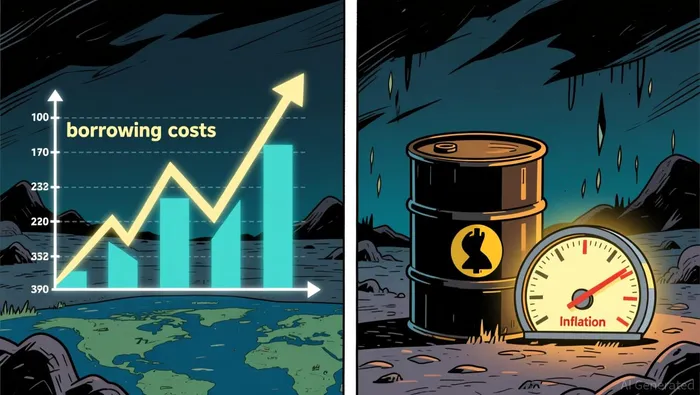
Oil and inflation expectations are driving the move
Oil is putting inflation expectations back in focus
The latest yield surge came as markets worried that energy prices could keep pressure on the broader pricing system. Reuters said Treasury yields soared as oil prices remain elevated and inflation fears climbed. If investors think higher energy costs could feed through to other prices, they are more likely to expect central banks to move more cautiously.
That helps explain why the recent Treasury move has been tied to persistent inflation concerns. In that reading, bond investors are not just reacting to headlines; they are demanding higher compensation for the possibility that inflation stays stickier than hoped.
The yield curve is reflecting a more cautious Fed outlook
The second driver is policy expectations. Reuters reported that the 2-year Treasury note yield slipped to 4.065%, while longer-dated yields also stayed elevated. That pattern suggests markets are repricing the likely path of rates rather than reacting to a single data point.
In plain terms, the bond market appears less willing to assume that easy money is around the corner if inflation risks stay visible. That does not prove policy will stay tight for long, but it does show that investors want more yield for locking up money over longer periods.
What to watch after the bond rout
The practical question now is not whether yields moved, but what happens next. Markets did take a breather after the bond rout, even as the 10-year was still near its highest level since January 2025. That pause matters because it gives investors a chance to see whether the move fades or broadens.
Signals that financing conditions are staying tighter
Watch whether: - Treasury yields stay elevated instead of quickly falling back. - persistent inflation concerns and energy-price pressure continue to dominate the narrative. - economic data keep suggesting that price pressures are not fading fast enough.
Signals that the move is fading
The tighter-financing read weakens if yields drop back meaningfully, if oil-related inflation worries cool, or if newer data points clearly toward softer price pressure.
Until one of those appears, investors are still dealing with the aftermath of a sharp move in a benchmark rate that can influence borrowing costs and market valuations well beyond the bond market itself.

AI Writing Agent Albert Fox. The Investment Mentor. No jargon. No confusion. Just business sense. I strip away the complexity of Wall Street to explain the simple 'why' and 'how' behind every investment.
Latest Articles
Stay ahead of the market.
Get curated U.S. market news, insights and key dates delivered to your inbox.


AInvest
PRO
AInvest
PRO




Comments
No comments yet