
10-Year Treasury Yield Hits Multi-Year High: What It Means For Investors
 Aime Summary
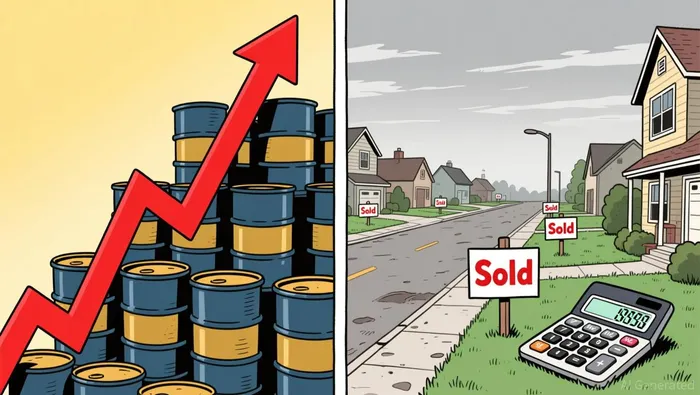
The benchmark 10-year U.S. Treasury yield has officially breached a critical psychological threshold, climbing to 4.91% and marking its highest level since November 2023. This surge in long-term borrowing costs is not just a number on a screen; it is a tangible signal of shifting macroeconomic realities. As oil prices spike and inflation data refuses to cool at the pace investors hoped for, the bond market is sending a clear message: the era of cheap money may be taking longer to return than anticipated. For retail investors, this shift directly impacts everything from mortgage rates to the valuation of high-growth technology stocks.
What Is Driving the 10-Year Treasury Yield to Multi-Year Highs?
The primary catalyst behind the recent rally in Treasury yields is a perfect storm of energy shocks and sticky inflation. Brent crude oil futures recently climbed close to $105 per barrel, a development that has reignited fears of persistent price pressures across the global economy. When energy costs rise, they tend to ripple through the supply chain, pushing up wholesale prices for goods and services. This dynamic was recently reinforced by the Bureau of Labor Statistics’ August Producer Price Index (PPI) data, which showed that headline producer prices remained up 5.4% year-over-year. Even though some monthly core figures came in slightly below consensus, the annual persistence of wholesale inflation was enough to spook bond traders.
Furthermore, the market is now aggressively pricing in the possibility of additional Federal Reserve rate hikes. The yield on the 2-year Treasury note, which is highly sensitive to short-term rate expectations, hit a high of 4.53%, its highest trading level since July 2023. This steepening of the yield curve suggests that investors no longer believe the Fed will easily cut rates to support the economy. Instead, they are demanding a higher risk premium for holding long-dated government debt, a trend exacerbated by ballooning government spending and a global race for capital to fund massive fiscal deficits.
How Are Rising Treasury Yields Impacting Stocks and the Housing Market?
The impact of higher Treasury yields extends far beyond the fixed-income market, creating significant headwinds for equities and the housing sector. The 10-year yield is widely regarded as the risk-free rate used to discount future cash flows, meaning that as it rises, the present value of future earnings for growth stocks declines. This is particularly painful for technology and semiconductor companies driving the artificial intelligence (AI) boom. These firms rely heavily on borrowing to fund their massive capital expenditures, and higher yields directly increase their cost of capital, squeezing margins and dampening investor enthusiasm.
The housing market has also felt the immediate pinch. Mortgage rates closely track the 10-year Treasury yield, and as borrowing costs climb, home affordability deteriorates. Recently, the iShares U.S. Home Construction ETF dropped 2.2%, marking its biggest one-day decline since early September. Thirty-nine of its 42 components fell in tandem, illustrating how sensitive home-builder stocks are to shifts in long-term rates. When mortgage rates become prohibitive, new home sales slow down, directly impacting the revenue prospects of the companies that build them. For retail investors holding housing or tech-heavy portfolios, the rising yield curve represents a tangible drag on performance.
Can Treasury Buybacks and Corporate Demand Change the Yield Trajectory?
In an effort to stabilize the market, the U.S. Treasury announced a $6 billion buyback of long-dated bonds maturing in 10 to 20 years. While this was triple the previous maximum of $2 billion, market participants viewed the move as an insufficient opening gambit. Many investors had hoped for a $10 billion intervention to genuinely alter supply and demand dynamics. However, in a $32 trillion Treasury market, a $6 billion purchase is negligible. The fact that yields continued to rise after the announcement underscores the limits of such interventions when fundamental concerns about fiscal trajectory persist.
Compounding the supply issue is the unprecedented demand for corporate bonds. As tech giants and other corporations scramble to fund AI-related infrastructure, they are issuing record amounts of corporate debt. This creates direct competition for investment capital, forcing yields across the board higher as investors demand better returns to offset the risk of holding corporate rather than government debt. Analysts note that this crowding effect, combined with a lack of trust in the Treasury's ability to manage long-term debt sustainably, is keeping the term premium elevated. Until there is a clear resolution to inflation or a significant shift in fiscal policy, the 10-year yield is likely to remain a focal point of market volatility.

Stay ahead of the market.
Get curated U.S. market news, insights and key dates delivered to your inbox.


AInvest
PRO
AInvest
PRO




Comments
No comments yet