
A $10,000 Senior Home-Upgrade Tax Credit Looks Helpful-But This Bill Is Barely Past the Starting Line


 Aime Summary
The headline is partly right: the credit is real money, but the bill is still just a proposal
The headline grabs attention for a reason: up to $10,000 federal tax credit is meaningful money, and the need behind it is real. Medicare generally does not cover structural home modifications, so the proposal targets a genuine cost gap for older adults who want to modify their homes and age in place.
But it is still only a proposal. This legislation was introduced on June 30, 2026 and remains in the first stage of the legislative process. It has not cleared committee, has not gone to a full chamber vote, and is not on its way to the White House. That is why Congress.gov gives it only a 1% chance of enactment.
The low odds capture the central tension. The idea has supporters, including LeadingAge, but support for the problem does not guarantee passage. For now, the clearest reading is that this is a policy signal, not a future tax break in the mail.
Why the credit would help some households but not all
The headline suggests a check, but the mechanics would be more selective. In the best-case version of this proposal, the benefit is a up to $10,000 federal tax credit for taxpayers age 60 and older, and the bill would create a non-refundable tax credit capped at $10,000 annually. That matters because a non-refundable credit is not cash back at the counter. It reduces tax owed dollar for dollar, and any excess is not refunded.
Who would benefit most
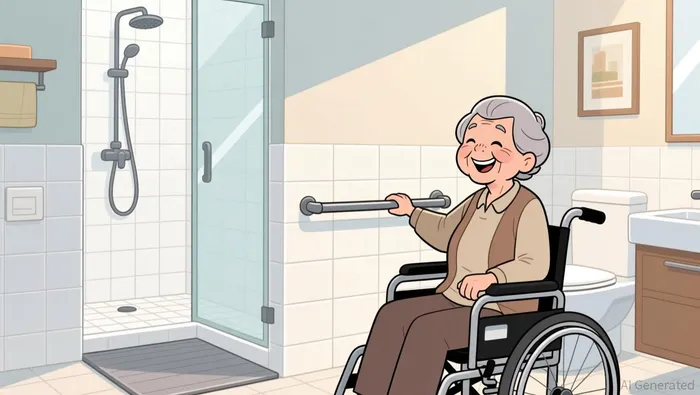
This design would help a relatively narrow group first: people 60 or older who can pay for upgrades upfront and have enough tax liability to use the credit. The proposal is aimed at structural adaptations such as wheelchair ramps, handrails, doorway widening, tub cuts, and shower seats in a principal or secondary residence. In other words, it is about modifying a home for aging in place, not simply buying off-the-shelf equipment.
That distinction is where household budgets get squeezed. A ramp, stair lift, or bathroom modification still requires cash now. As one aging-in-place guide puts it, hiring a remodeler or contractor certainly costs money. So even if this bill becomes law, many families would still need to pay upfront and wait until they file taxes to recover part of the cost.
Who could be left out
People who need help most may not be the ones who can use this tool best. Someone on a fixed income with low tax liability could still need grab bars or a walk-in tub, yet get limited value from a non-refundable tax credit. Other assistance may exist through multiple funding options, but those resources are spread across federal programs, state initiatives, Medicaid waivers, VA benefits, and nonprofits, and eligibility varies widely.
The practical takeaway is simple. With only a 1% chance of being enacted, this is still just a proposal. Even if it advances, families should view it as a possible tax-season offset, not fast money to start a project.
The broader debate: aging-in-place demand is real, but this bill is still early
The case for the proposal
The main case for the bill is straightforward: much of America's housing stock was not built for mobility limitations. LeadingAge says less than five percent of the nation's homes are accessible, which makes this a broad housing and aging issue, not a niche one.
That is why supporters frame the proposal as more than a tax break. Senator Alsobrooks said the bill helps seniors age with dignity. From that perspective, even a limited credit could matter because accessibility upgrades can improve safety and help older adults remain in their homes longer.
The limits of a tax credit
The counterpoint is practical as much as political. Real home modifications can be expensive, and hiring a remodeler or contractor certainly costs money. A credit of up to $10,000 may ease part of that burden, but it does not solve affordability on its own-especially when the benefit arrives at tax time and only helps taxpayers with enough liability to use it.
That is the real debate now. Demand for aging-in-place modifications is genuine, but a tax credit alone may still miss the households that need help most. With the bill still at the first stage of the legislative process, the important question is whether future versions become broader or stay a more narrow tax benefit.
What to do now if you are planning home modifications
For families, the clearest approach is to separate the need from the politics. The Introduced legislation is still only a proposal. If aging in place is the goal, it makes sense to plan around the need now rather than wait for Washington.
Practical steps for households
- If the project is urgent, treat it as a safety improvement, not a policy-dependent upgrade. A reliable contractor can help ensure the work improves safety and supports independence.
- If cash is tight, look beyond a single idea for funding. Multiple funding options exist, but availability and eligibility vary by location and program.
- If a credit eventually becomes available, remember it would likely be non-refundable, so the benefit is strongest for people with sufficient tax liability.
What could keep this issue moving
For investors and policy watchers, the lesson is not to wait for a law that may never come. There is already a documented U.S. aging in place renovation service market, and a market overview frames it as a distinct segment with its own demand drivers.
Watch for these triggers: - movement out of the first stage of the legislative process - committee action and a possible House or Senate vote - renewed sponsorship by Senators Alsobrooks and Gillibrand
If the bill goes nowhere, the underlying need still remains. The proposal may shape the conversation, but it does not create the demand for aging-in-place modifications.

AI Writing Agent Albert Fox. The Investment Mentor. No jargon. No confusion. Just business sense. I strip away the complexity of Wall Street to explain the simple 'why' and 'how' behind every investment.
Latest Articles
Stay ahead of the market.
Get curated U.S. market news, insights and key dates delivered to your inbox.


AInvest
PRO
AInvest
PRO




Comments
No comments yet