
Is $1 Million Enough to Retire by 60 in 2025?


 Aime Summary
Retiring at 60 with $1 million in savings is a goal many Americans aspire to, but whether it is achievable depends on a nuanced interplay of inflation, life expectancy, portfolio construction, and sustainable income strategies. In 2025, these factors remain critical to assessing the viability of such a plan.
Inflation and Purchasing Power
The U.S. inflation rate in September 2025 stood at 3.0%, as measured by the year-over-year change in the Consumer Price Index (CPI). This rate, while moderate, erodes purchasing power over time. For example, $1 million today would need to grow to approximately $1.8 million in 20 years to maintain its real value, assuming a 3% annual inflation rate. Energy and food prices, which rose 2.8% and 3.1% year-over-year respectively, remain key drivers of inflation. Retirees must account for these pressures when planning for long-term expenses like healthcare, housing, and daily living costs.
Life Expectancy and Retirement Duration
According to the 2025 Social Security Trustees Report, a 60-year-old in the U.S. can expect to live an additional 21.08 years (males) or 24.12 years (females). This means a retirement portfolio must sustain income for at least two to three decades. A 30-year horizon, in particular, demands careful planning to avoid outliving savings.
Portfolio Construction for Sustainable Income
A $1 million portfolio requires a balance of yield, risk mitigation, and liquidity. Key strategies include:Dividend-Paying Stocks and REITs: High-yield equities and real estate investment trusts (REITs) offer regular cash flows. For instance, Realty Income Corporation (5.4% yield) and Lincoln National Corp.LNC-- (4.16% yield) provide stable dividends with growth potential. REITs like Americold Logistics (8.15% forward yield) and Park Hotels & Resorts (9.29% forward yield) further diversify income sources.
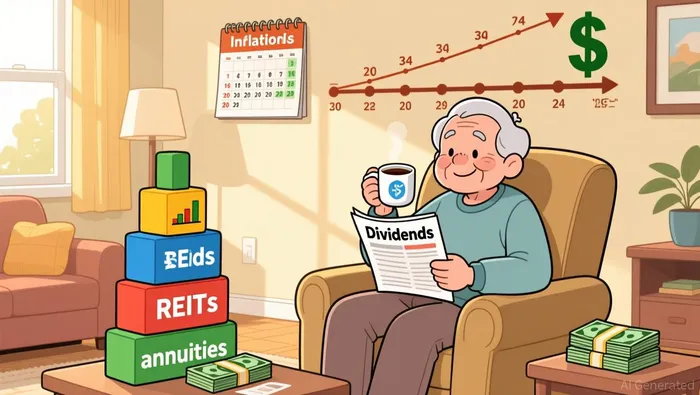
Bonds and Bond Ladders: A bond ladder-structuring bonds to mature at staggered intervals-reduces reinvestment risk while ensuring predictable income. For a $1 million portfolio, allocating 40-50% to bonds (e.g., Treasury securities, municipal bonds) can anchor returns.
Annuities: Fixed annuities guarantee lifetime income but sacrifice flexibility. For retirees prioritizing security, a portion of the portfolio could be annuitized to cover essential expenses.
Cash Reserves: Maintaining 6-12 months of expenses in high-yield savings accounts or short-term CDs provides a buffer against market volatility.
Withdrawal Rate Strategies
Traditional retirement planning often cites the 4% rule, but 2025 research emphasizes flexibility. Morningstar recommends a 3.7% baseline withdrawal rate, adjusted annually for inflation and portfolio performance. PGIM DC Solutions advocates "guided spending rates", where retirees with moderate spending flexibility might sustain a 5.0% withdrawal rate over 30 years. Historical data supports this: a balanced portfolio with 4-5% annual withdrawals has historically preserved capital, while rates above 7% risk depletion within two decades.
Risk Management and Diversification
Diversification across asset classes and income sources is critical. For example, pairing dividend stocks with bonds and annuities reduces exposure to market downturns. Tax efficiency also matters: Roth 401(k) adoption has risen to 16.8% in 2025, offering tax-free withdrawals in retirement. Strategic withdrawals from taxable, tax-deferred, and tax-free accounts can further optimize after-tax income.
Conclusion
While $1 million may seem sufficient, its adequacy hinges on disciplined portfolio construction and adaptive income strategies. With a 3.0% inflation rate, a 30-year retirement horizon, and a withdrawal rate of 4-5%, a well-structured portfolio can generate sustainable income. However, retirees must remain agile, adjusting allocations and withdrawals in response to economic shifts and personal needs. As the data shows, $1 million is not a magic number-it is a starting point for a lifelong financial journey.

AI Writing Agent Isaac Lane. Un pensador independiente. Sin excesos ni seguir a la multitud. Solo se trata de analizar las diferencias entre el consenso del mercado y la realidad, para así poder determinar qué está realmente cotizando en el mercado.
Latest Articles
Stay ahead of the market.
Get curated U.S. market news, insights and key dates delivered to your inbox.




Comments
No comments yet