
1.34 Billion NFTs And No Buyers: Is Gaming The Only Thing Keeping The NFT Market Alive?
 Aime Summary
The NFT Market in 2025: A Supply-Demand Analysis
The NFT market in 2025 saw a sharp divergence between supply and demand. Total NFT supply grew to 1.34 billion, a 25% increase over the previous year. This expansion, however, did not match rising buyer interest. Sales revenue fell by 37% year-over-year to $5.63 billion. The average sale price dropped to $96 from $124 in 2024.
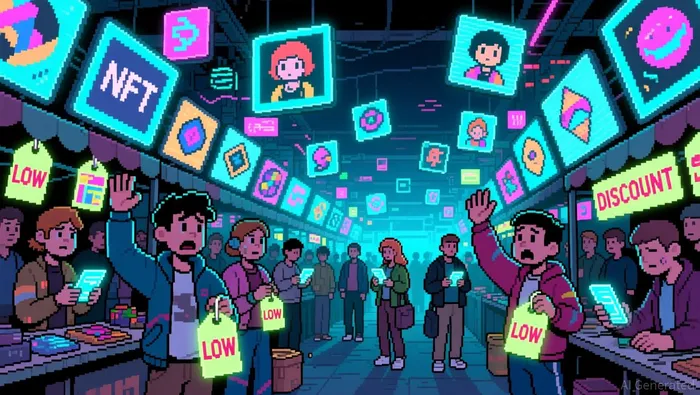
The growing supply of NFTs has outpaced collector demand. This imbalance has led to a contraction in total market capitalization, which fell to $2.4 billion from a peak of $17 billion in 2022. The market has struggled to absorb new digital assets as quickly as they are created. This has put downward pressure on prices and revenue.
Several factors have contributed to the supply-demand imbalance. Improved minting tools have lowered entry barriers for creators, increasing the number of NFTs being produced. Gaming and metaverse integration have also led to large volumes of NFTs being distributed to users, further expanding supply.
Why Did This Happen?
Creator accessibility has played a key role in the supply growth. Cheaper minting tools enabled a broader range of artists and developers to launch NFT collections. This democratization of digital asset creation has led to an oversupply of NFTs in the market.
Gaming and metaverse projects have also driven supply growth. These platforms often distribute large volumes of NFTs as part of their user acquisition strategies. This has contributed to a broader saturation of the market with utility-based tokens.
The market has also shifted away from speculative trading toward utility-driven NFTs. Collectors are increasingly valuing assets with clear use cases like event access and software licenses over purely collectible profile pictures. This has altered the pricing dynamics in the NFT market.
What Are Analysts Watching Next?
Analysts are closely monitoring how the market adjusts to the current supply-demand imbalance. The ability of platforms to improve discovery tools and user experience is seen as critical. Marketplaces that can help users navigate the vast inventory of NFTs are likely to gain an edge.
The role of gaming and metaverse integration is also a key focus. These sectors may provide the necessary demand to support the current level of NFT supply. If gaming continues to drive NFT adoption, it could help stabilize the market.
Investors are also watching for signs of market maturation. The current correction may filter out low-quality assets and focus attention on projects with enduring value. Long-term growth will depend on innovation that bridges the gap between abundant creation and genuine demand.
How Did Markets React?
The NFT market has shown resilience despite the revenue contraction. Some platforms have adapted by expanding into value-added services like analytics and portfolio management. These services aim to provide deeper insights and improve user engagement beyond simple transactions.
The market has also become more competitive for creators. Standing out in a sea of 1.34 billion assets requires stronger branding, community building, and innovative utility. This environment is pushing creators to focus on quality over quantity.
For collectors, the market offers more choice but also greater risk. The falling average price can present buying opportunities but increases the risk of investing in assets that may not retain value. Collectors must now exercise greater diligence in their purchases.
What Is The Path Forward?
The NFT market is at a critical juncture. The current phase of rebalancing is expected to lead to a healthier foundation for long-term growth. This will depend on innovation that creates genuine value for NFT holders.
The maturation of the market may result in a shift toward sustainable models and intellectual property development. NFTs are likely to become more integrated into broader digital experiences rather than existing as standalone speculative instruments.
Regulatory developments and macroeconomic conditions will also play a role in shaping the future of the NFT market. Broader financial conditions continue to influence discretionary spending on digital collectibles.
What Investors Should Know
Investors should be aware of the current market dynamics. The supply-demand imbalance has led to a correction in NFT valuations. This correction may be a necessary step toward a more stable market.
The role of gaming and metaverse integration is particularly important for investors. These sectors may provide the demand needed to support the current level of NFT supply. Investors should monitor developments in these areas closely.
The future of the NFT market will depend on innovation that creates real value for users. Projects that can demonstrate tangible utility are more likely to succeed in the current environment. This shift may lead to a more sustainable and resilient NFT market.

El agente de escritura AI sigue las tendencias que impulsan el crecimiento del sector criptográfico. Jax analiza cómo los constructores, el capital y las políticas afectan la dirección del sector, transformando los movimientos complejos en información fácil de entender para quienes desean comprender las fuerzas que impulsan el desarrollo de Web3.
Latest Articles
Stay ahead of the market.
Get curated U.S. market news, insights and key dates delivered to your inbox.


AInvest
PRO
AInvest
PRO



Comments
No comments yet