
P&G's 1.33% Rally Amid 398th Volume Rank Highlights Dividend Resilience and Market Skepticism
 Aime Summary
Market Snapshot
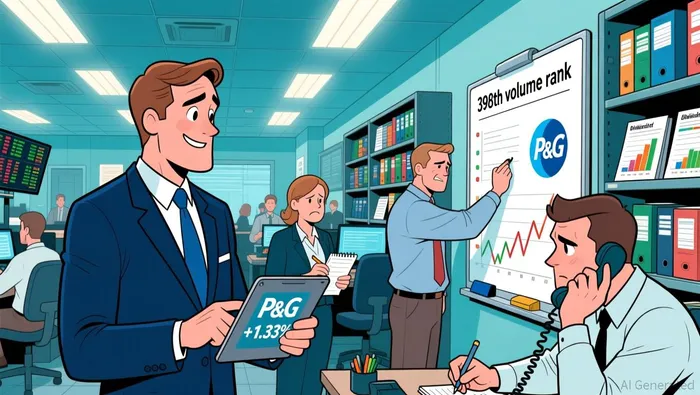
On November 12, 2025, Procter & Gamble (PG) closed with a 1.33% increase, outperforming its peers in a market where its trading volume of $0.28 billion ranked it 398th among U.S. exchange-listed stocks. Despite the positive daily move, the stock remains under pressure from broader market concerns, with its year-to-date total shareholder return at -8%. This performance contrasts with its long-term resilience, as the company has delivered a 19% total return over five years, underscoring its status as a defensive, high-quality dividend payer.
Key Drivers
Earnings Momentum and Market Skepticism
Procter & Gamble’s recent quarterly earnings exceeded Wall Street expectations, driven by revenue and profit growth. However, the stock has continued to decline, reflecting investor unease over rising costs, softer consumer demand, and recent insider selling. The company’s ability to surpass financial forecasts has not translated into sustained price appreciation, highlighting a disconnect between operational performance and market sentiment. Analysts note that while the company’s margin profile and cash flow stability remain robust, concerns about near-term headwinds—such as inflationary pressures and competitive dynamics—have dampened enthusiasm.
Regional Divergence: North America vs. China
The company’s performance is marked by stark regional contrasts. In North America, growth has slowed to below 2% due to cautious consumer spending and aggressive promotional activity, particularly in key categories like Fabric and Baby Care. Conversely, Procter & Gamble is witnessing a rebound in China, where sales rose 5% in fiscal 2026’s first quarter. This growth is attributed to local innovation and the success of premium brands such as SK-II and Olay. The divergent regional trends underscore the company’s reliance on geographic diversification to offset domestic challenges and position itself for long-term resilience.
Digital Transformation and Operational Efficiency
Procter & Gamble is leveraging digital tools to enhance market position and operational efficiency. The company has invested in data-driven insights, agile brand teams, and an automated supply chain to improve responsiveness and customer engagement. These initiatives aim to unlock growth through personalized marketing and product innovation, particularly in high-margin segments. By integrating smart product analytics and online interactions, the company seeks to refine its go-to-market strategies and maintain its edge in a competitive consumer goods landscape.
Valuation Controversy and Legal Risks
The stock’s valuation remains a contentious topic. While some analyses suggest it is overvalued, with fair value estimates at $119.81 versus its current price of $145.50, others argue the market underestimates future cash flows, with a discounted cash flow model projecting a fair value of $185.05. This divergence reflects differing assumptions about margin expansion and growth potential. Additionally, the company faces legal challenges, including a lawsuit over Kids’ Crest toothpaste packaging accused of misleading consumers. The ruling requiring Procter & Gamble to respond to these claims introduces regulatory uncertainty, potentially impacting brand reputation and litigation costs.
Dividend Appeal and Shareholder Returns
Despite recent volatility, Procter & Gamble remains attractive to income-focused investors, offering a 2.8% dividend yield and a 69-year streak of consecutive dividend increases. The company has committed to returning $10 billion to shareholders in fiscal 2026 through dividends and stock repurchases. This strong free cash flow generation and disciplined capital allocation strategy reinforce its appeal as a defensive investment, even as near-term market dynamics create short-term headwinds. The recent shareholder approval of a new equity incentive plan further underscores management’s focus on aligning executive compensation with long-term value creation.
Insider Activity and Market Sentiment
Recent insider transactions, including a purchase by Marjorie Taylor Greene in November 2025, have added nuance to the stock’s narrative. While such activity could signal confidence in the company’s strategic direction, it coincides with broader investor skepticism about valuation and operational challenges. The mixed signals—strong earnings versus declining share price—highlight the tug-of-war between the company’s enduring strengths and evolving risks, leaving the market to balance optimism about its long-term potential with caution about near-term uncertainties.

Stay ahead of the market.
Get curated U.S. market news, insights and key dates delivered to your inbox.
AInvest
PRO
AInvest
PRO



Comments
No comments yet