
0DTE Volatility Driven by Geopolitical Uncertainty and Market Hedging Strategies
 Aime Summary
Geopolitical tensions and trade policy shifts have increased market volatility, leading to active use of options for hedging in early 2026. Investors are using E-mini S&P 500 futures options (ES) to align risk management with specific timeframes and global events. Market positioning shifted from defensive short-term put options to bullish long-term call options in the first quarter of 2026.
Geopolitical tensions have significantly influenced market sentiment and volatility in early 2026. U.S. actions in Venezuela and trade disputes with the EU led to spikes in implied volatility for the E-mini S&P 500 futures options. As a result, investors are increasingly turning to these options to hedge against uncertainty and realign their risk exposure.
The ES options complex allows for continuous risk management and offers around-the-clock liquidity to address global events in real time. This flexibility enables investors to tailor their hedging strategies to specific geopolitical or economic developments, regardless of time zones. For example, short-term options were heavily weighted toward deep out-of-the-money put options in January 2026, indicating defensive positioning.
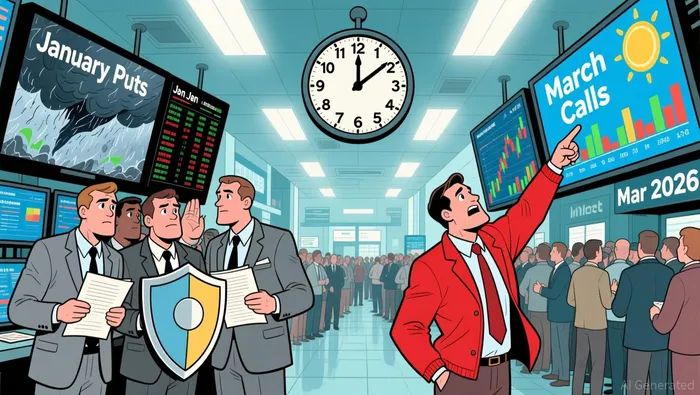
By early March, however, market sentiment began to shift. Call options for the June 2026 expiry showed strong interest for aggressive upside targets, suggesting growing optimism among long-term investors. This transition reflects the dynamic nature of the market as it adapts to both immediate concerns and longer-term economic forecasts.
How Are Investors Leveraging Equity Index Options for Risk Management?
Investors are using the ES options complex to align their hedging strategies with specific geopolitical or economic events. For example, heavy put open interest at deep out-of-the-money strikes in the short term indicates defensive positioning in the face of volatility. This strategy helps manage downside risk without limiting upside potential, particularly in uncertain environments.
Equity index options provide a critical tool for investors to hedge against geopolitical shifts. The ability to hedge in real time, using options with varying expiries, allows investors to navigate short-term volatility and long-term uncertainty. By adjusting their exposure based on timeframes and expected outcomes, investors can balance risk and reward more effectively.
What Drives the Shift in Market Sentiment and Positioning in 2026?
Market positioning in the first quarter of 2026 reflected a clear shift in sentiment. Initially, defensive strategies dominated as investors focused on downside protection. This was evident in the heavy concentration of put options at deep out-of-the-money strikes. However, as the year progressed, a shift toward optimism was visible in the June 2026 options market.
This shift may be attributed to several factors, including early 2026 trade negotiations and geopolitical developments that reduced immediate volatility. Investors began to position for potential upside, as reflected in the strong call interest for the June 2026 expiry. The transition from defensive to optimistic positioning demonstrates the market's adaptability and its capacity to respond to evolving global conditions.
Investors are also reacting to real-time events, such as rising oil prices and U.S.-Iran tensions, which further contribute to market dynamics. These developments underscore the importance of options as tools for continuous risk management in a rapidly changing environment.
What Are the Implications for Long-Term Investor Strategies?
Long-term strategies in the first quarter of 2026 began to reflect a growing emphasis on bullish positioning. The concentration of call options for the June 2026 expiry indicates that investors are preparing for potential upside. This shift from defensive to aggressive positioning suggests a broader market confidence in future economic outcomes.
For long-term investors, this trend highlights the importance of aligning strategies with broader macroeconomic forecasts. As geopolitical tensions ease or trade policies become more stable, markets often transition from defensive to more aggressive positions. The June 2026 expiry data provides an indicator of these potential shifts, enabling investors to adjust their exposure accordingly.
These developments also underscore the need for continuous monitoring of geopolitical and economic indicators. Investors must remain flexible, adjusting their options strategies in response to new information and changing market conditions. This adaptability is crucial for maximizing returns while managing risk effectively in a volatile global environment.

Blending traditional trading wisdom with cutting-edge cryptocurrency insights.
Latest Articles
Stay ahead of the market.
Get curated U.S. market news, insights and key dates delivered to your inbox.


AInvest
PRO
AInvest
PRO



Comments
No comments yet