
Fifth Third's 0.54% Rally Contrasts with 383rd-Ranked Volume Amid Merger Legal Battles
 Aime Summary
Market Snapshot
Fifth Third Bank (FITB) closed on November 18, 2025, , , ranking it 383rd in market activity for the day. While the price gain suggests short-term investor optimism, the sharp drop in volume indicates reduced liquidity or transactional activity, potentially reflecting market uncertainty or reduced speculative interest. The stock’s performance contrasts with its recent merger-related developments, as shareholders prepare to exchange shares under the terms of the pending acquisition by Comerica IncorporatedCMA--.
Key Drivers
The stock’s modest 0.54% rise on November 18 occurred amid a contentious merger process involving Fifth ThirdFITB-- and ComericaCMA--. The proposed all-stock deal, , has sparked multiple legal and investor challenges. , , . However, investor has criticized the transaction as “flawed,” alleging Comerica steered the sale toward Fifth Third without a competitive bidding process. HoldCo has demanded additional disclosures, including the identity of another potential bidder, and warned of potential litigation if Comerica fails to amend its S-4 filing. This scrutiny may have tempered broader market enthusiasm for the merger, contributing to the stock’s muted volume.
Legal firms such as Monteverde & Associates and Halper Sadeh LLC have also launched investigations into the merger, raising questions about compliance with federal securities laws and fiduciary duties. These firms are urging shareholders to consider legal action to secure higher consideration or additional disclosures. The presence of multiple law firms targeting the transaction underscores investor skepticism about its fairness and transparency, which could delay regulatory approvals or force renegotiations. While Fifth Third shareholders stand to gain a controlling stake, the legal challenges may create volatility in the short term, as investors weigh the likelihood of regulatory hurdles or revised terms.
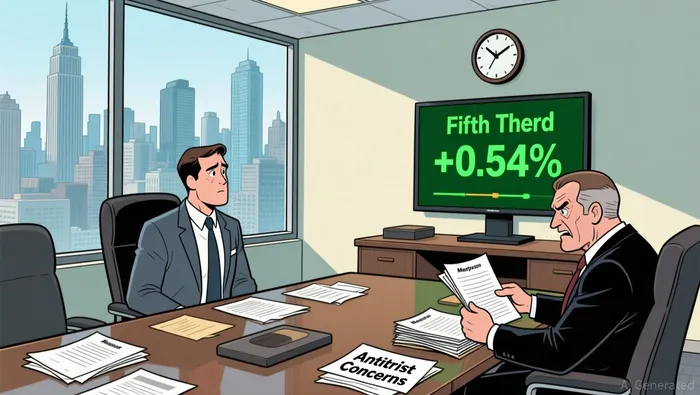
The merger’s timing has also drawn criticism amid broader economic headwinds. Fifth Third’s acquisition of Comerica coincides with slowing economies in key markets like California and Texas, which could complicate integration and reduce the anticipated synergies. Analysts have noted that the deal may be ill-timed, as the combined entity faces higher capital requirements and regulatory scrutiny in a tightening credit environment. This macroeconomic context may explain the limited trading volume, as investors reassess the strategic value of the merger amid broader market uncertainties.
Finally, the merger’s structural terms—specifically the all-stock nature of the deal—have drawn attention for their implications on shareholder value. Comerica shareholders will receive a fixed number of Fifth Third shares, but the deal’s success hinges on the long-term performance of the combined entity’s stock. If the merged company underperforms, Comerica shareholders could see diluted returns compared to a cash transaction. Conversely, Fifth Third shareholders benefit from a larger market share but may face integration risks. These conflicting outcomes have created a polarized investor sentiment, reflected in the stock’s modest price gain and reduced trading activity as stakeholders await further clarity on the transaction’s execution and regulatory outcomes.

Stay ahead of the market.
Get curated U.S. market news, insights and key dates delivered to your inbox.
AInvest
PRO
AInvest
PRO



Comments
No comments yet