
United Airlines CEO Predicts Spirit Airlines Will Go Out of Business Due to Unsustainable Business Model
작성AInvest
2025년 9월 12일 금요일 오후 9:53 ET1분 읽기
UAL--
Spirit's business model, which relies on ultra-low fares coupled with high fees for extras, has been criticized for alienating customers. Kirby argued that this model is no longer viable as rising fuel and labor costs erode already slim margins. Spirit's repeated bankruptcy filings and failed attempts to pivot to premium offerings underscore the airline's financial struggles [1].
Spirit's operational cuts, including the slashing of routes to 11 U.S. cities, signal a retreat that rivals like United are eager to exploit. United has announced expanded flights from Orlando, capitalizing on what it sees as Spirit's impending void [1]. As Spirit grapples with its second bankruptcy, questions swirl about its long-term viability. The airline's stock has plummeted over 90% in the past year, reflecting investor skepticism [1].
Rising operational costs and shifting consumer preferences have made Spirit's business model increasingly unsustainable. The potential demise of Spirit could reshape U.S. air travel, reducing options for budget-conscious flyers and consolidating power among major carriers. Analysts suggest that the exit of inefficient players could lead to healthier competition [1].
United's CEO, known for his data-driven decisions, bases his prediction on economic fundamentals. Spirit's pivot to premium failed because its brand remains synonymous with frugality, not luxury. As Spirit fights for relevance, the industry watches closely, ready to adapt to whatever turbulence follows [1].
Spirit's last-ditch efforts to restructure debt and optimize its fleet face skepticism. Web sources indicate that while the airline burns through cash, competitors are ramping up. United's CEO sees this as inevitable arithmetic: high fees plus low satisfaction equals obsolescence [1].
The potential outcomes for Spirit include acquisition or liquidation. Experts speculate on scenarios ranging from restructuring to liquidation, with shares trading as penny stocks. United's expansion into Spirit's territory signals a strategic shift to capture market share [2].
Ultimately, Kirby's prediction may prove prophetic, highlighting the need for adaptability in the aviation industry. As Spirit fights for relevance, the industry watches closely, ready to adapt to whatever turbulence follows.
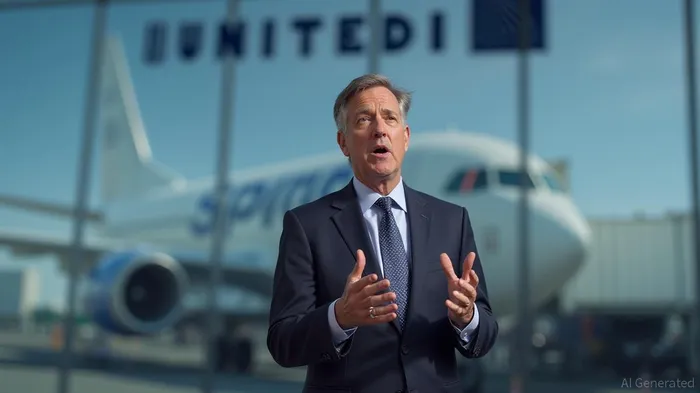
United Airlines CEO Scott Kirby has predicted that Spirit Airlines will likely go out of business due to its unsustainable business model. Kirby believes that Spirit's reliance on low fares and fees for almost everything else is unsustainable and that customers hate the model. The airline filed for bankruptcy again in August and has struggled with rising expenses and shrinking liquidity. If Spirit can't turn things around, consolidation or liquidation will reshape the US airline space.
United Airlines CEO Scott Kirby has predicted that Spirit Airlines is likely headed for extinction due to its unsustainable business model. Kirby's stark assessment, delivered at a U.S. Chamber of Commerce aviation summit, highlighted the challenges facing Spirit, which has filed for bankruptcy twice in 2025.Spirit's business model, which relies on ultra-low fares coupled with high fees for extras, has been criticized for alienating customers. Kirby argued that this model is no longer viable as rising fuel and labor costs erode already slim margins. Spirit's repeated bankruptcy filings and failed attempts to pivot to premium offerings underscore the airline's financial struggles [1].
Spirit's operational cuts, including the slashing of routes to 11 U.S. cities, signal a retreat that rivals like United are eager to exploit. United has announced expanded flights from Orlando, capitalizing on what it sees as Spirit's impending void [1]. As Spirit grapples with its second bankruptcy, questions swirl about its long-term viability. The airline's stock has plummeted over 90% in the past year, reflecting investor skepticism [1].
Rising operational costs and shifting consumer preferences have made Spirit's business model increasingly unsustainable. The potential demise of Spirit could reshape U.S. air travel, reducing options for budget-conscious flyers and consolidating power among major carriers. Analysts suggest that the exit of inefficient players could lead to healthier competition [1].
United's CEO, known for his data-driven decisions, bases his prediction on economic fundamentals. Spirit's pivot to premium failed because its brand remains synonymous with frugality, not luxury. As Spirit fights for relevance, the industry watches closely, ready to adapt to whatever turbulence follows [1].
Spirit's last-ditch efforts to restructure debt and optimize its fleet face skepticism. Web sources indicate that while the airline burns through cash, competitors are ramping up. United's CEO sees this as inevitable arithmetic: high fees plus low satisfaction equals obsolescence [1].
The potential outcomes for Spirit include acquisition or liquidation. Experts speculate on scenarios ranging from restructuring to liquidation, with shares trading as penny stocks. United's expansion into Spirit's territory signals a strategic shift to capture market share [2].
Ultimately, Kirby's prediction may prove prophetic, highlighting the need for adaptability in the aviation industry. As Spirit fights for relevance, the industry watches closely, ready to adapt to whatever turbulence follows.


편집 공시 및 AI 투명성: Ainvest News는 대규모 언어 모델(LLM) 기술을 활용해 실시간 시장 데이터를 통합·분석합니다. 최고 수준의 정직성을 보장하기 위해 모든 기사는 엄격한 "Human-in-the-loop(인간 검증)" 절차를 거칩니다.
AI가 데이터 처리 및 초안 작성을 보조하지만, Ainvest 전문 편집 구성원이 모든 콘텐츠를 독립적으로 검토·팩트 체크·승인하여 정확성과 Ainvest Fintech Inc.의 편집 기준 준수를 확인합니다. 이러한 인간의 감독은 AI 환각을 완화하고 금융 맥락을 확보하기 위한 것입니다.
투자 유의: 본 콘텐츠는 정보 제공 목적으로만 제공되며 전문적인 투자·법률·재무 자문을 구성하지 않습니다. 시장에는 고유한 위험이 있습니다. 의사 결정 전에 사용자는 자체 연구를 수행하거나 자격을 갖춘 재무 고문과 상담할 것을 권장합니다. Ainvest Fintech Inc.는 본 정보를 바탕으로 한 조치에 대한 모든 책임을 부인합니다. 오류를 발견하셨나요?문제 신고


우리에게 연락하십시오
Email: support@ainvest.com, editorial@ainvest.com, corrections@ainvest.com, press@ainvest.com, legal@ainvest.com
Copyright 2026 AInvest Fintech Inc. All rights reserved.



댓글
아직 댓글이 없습니다