
Trump admin considers tariffs on foreign electronics based on number of chips — sources say, proposing duties tied to chips’ value: Reuters
작성Ainvest
2025년 9월 28일 일요일 오전 1:14 ET1분 읽기
Trump admin considers tariffs on foreign electronics based on number of chips — sources say, proposing duties tied to chips’ value: Reuters
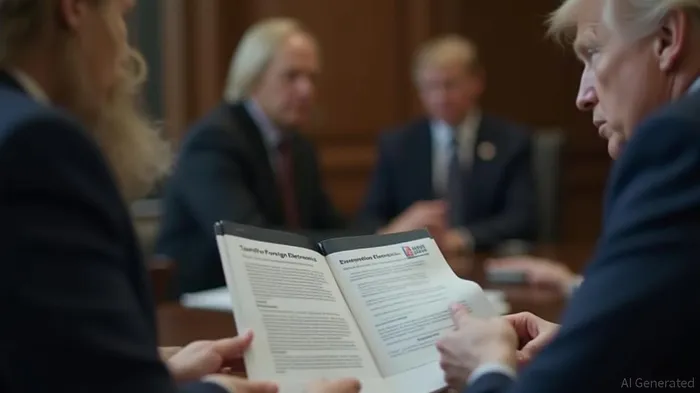
The Trump administration is reportedly exploring the implementation of tariffs on foreign electronic devices based on the number of chips they contain, according to three sources familiar with the matter. The Commerce Department is considering imposing a tariff equal to a percentage of the estimated value of the product's chip content, aiming to encourage companies to shift manufacturing back to the United States .The White House spokesperson, Kush Desai, emphasized the administration's goal to reduce reliance on foreign imports for semiconductor products, which are deemed essential for national and economic security. The proposed tariffs are part of a broader strategy that includes tax cuts, deregulation, and energy abundance to reshor critical manufacturing back to the United States .
If implemented, the plan could impact a wide range of consumer products, from toothbrushes to laptops, potentially driving up inflation. Economist Michael Strain of the American Enterprise Institute warned that the tariffs could exacerbate the current inflationary problem, which is already above the Federal Reserve's target of 2 percent .
Even domestically produced items could become more expensive due to the new tariffs on key inputs needed for their production. The Commerce Department had previously proposed exempting chipmaking tools from the tariffs to avoid raising the cost of producing semiconductors in the United States, but this proposal was reportedly displeased by the White House due to Trump's general distaste for exemptions .
The Trump administration has previously imposed tariffs on pharmaceuticals and semiconductors, citing national security concerns. However, the specifics of the new tariff plan, including the tariff rates and potential exemptions, remain unclear. The biggest non-US chipmakers include Taiwan Semiconductor Manufacturing Company and South Korea's Samsung Electronics .
The Commerce Department is reportedly considering a 25 percent tariff rate for chip-related content in imported devices, with 15 percent rates for electronics from Japan and the European Union. A dollar-for-dollar exemption based on investment in US-based manufacturing, provided companies move half their production to the United States, has also been eyed, although its feasibility remains uncertain .
The potential impact of these tariffs on the global electronics market and the broader economy is a subject of ongoing debate. As the Trump administration continues to explore this strategy, the business community and financial professionals will closely monitor the developments.


편집 공시 및 AI 투명성: Ainvest News는 대규모 언어 모델(LLM) 기술을 활용해 실시간 시장 데이터를 통합·분석합니다. 최고 수준의 정직성을 보장하기 위해 모든 기사는 엄격한 "Human-in-the-loop(인간 검증)" 절차를 거칩니다.
AI가 데이터 처리 및 초안 작성을 보조하지만, Ainvest 전문 편집 구성원이 모든 콘텐츠를 독립적으로 검토·팩트 체크·승인하여 정확성과 Ainvest Fintech Inc.의 편집 기준 준수를 확인합니다. 이러한 인간의 감독은 AI 환각을 완화하고 금융 맥락을 확보하기 위한 것입니다.
투자 유의: 본 콘텐츠는 정보 제공 목적으로만 제공되며 전문적인 투자·법률·재무 자문을 구성하지 않습니다. 시장에는 고유한 위험이 있습니다. 의사 결정 전에 사용자는 자체 연구를 수행하거나 자격을 갖춘 재무 고문과 상담할 것을 권장합니다. Ainvest Fintech Inc.는 본 정보를 바탕으로 한 조치에 대한 모든 책임을 부인합니다. 오류를 발견하셨나요?문제 신고


우리에게 연락하십시오
Email: support@ainvest.com, editorial@ainvest.com, corrections@ainvest.com, press@ainvest.com, legal@ainvest.com
Copyright 2026 AInvest Fintech Inc. All rights reserved.



댓글
아직 댓글이 없습니다