
Pfizer Eyes $20 Billion Revenue From Acquisitions Amid Patent Cliff Challenges
생성자Marcus Lee
2025년 1월 14일 화요일 오후 2:29 ET2분 읽기
PFE--
Pfizer Inc. (NYSE: PFE) is looking to bolster its revenue streams and mitigate the impact of patent cliffs through strategic acquisitions, with a target of generating $20 billion in additional revenue. The pharmaceutical giant has been actively pursuing deals to diversify its product portfolio and tap into new growth opportunities. In this article, we will explore Pfizer's acquisition strategy, the potential impact on its revenue, and the role of these deals in addressing patent cliff challenges.
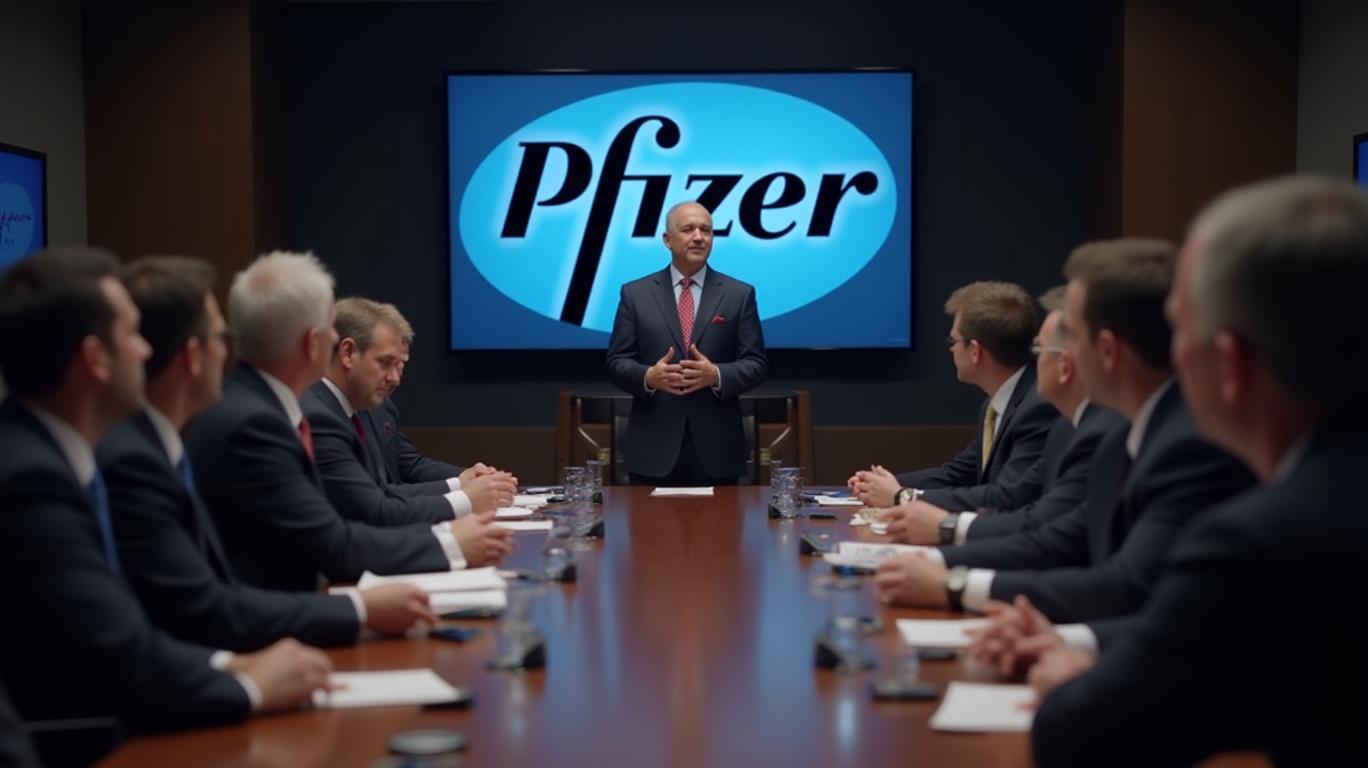
Pfizer's acquisition strategy
Pfizer has been on the hunt for acquisitions to strengthen its position in the pharmaceutical industry and offset the revenue loss from products facing patent cliffs. The company has made several strategic acquisitions in recent years, including the acquisition of Seagen Inc. (Nasdaq: SGEN) for $43 billion in 2023. This deal brought Seagen's portfolio of four approved medicines and pipeline of new molecular entities into Pfizer's fold, enhancing its Oncology portfolio and pipeline.
The Seagen acquisition is expected to contribute significantly to Pfizer's revenue target. Seagen's portfolio includes four approved medicines, three of which are Antibody-Drug Conjugates (ADCs), a transformative modality that is emerging as a powerful tool across a broad range of cancers. These medicines are expected to generate more than $10 billion in risk-adjusted revenues in 2030, with potential significant growth beyond that year. Additionally, Seagen's pipeline includes eleven new molecular entities, many with the potential to treat large patient populations and all with global commercial rights.
Pfizer's acquisitions and patent cliff challenges
Pfizer's acquisitions, such as the one with Seagen, can help mitigate the impact of patent cliffs on its revenue by diversifying its product portfolio and introducing new revenue streams. As Pfizer's existing products face patent cliffs, the new medicines and pipeline candidates acquired through these deals can help offset the revenue loss. By integrating these acquisitions into its existing portfolio and pipeline, Pfizer aims to strengthen its position in the Oncology space and accelerate the development of new cancer treatments.

Pfizer's integration strategy
Pfizer plans to integrate Seagen's proprietary ADC technology into its existing portfolio and pipeline to enhance its Oncology portfolio and pipeline. With the acquisition, Pfizer gains access to Seagen's four in-line medicines: ADCETRIS® (brentuximab vedotin), PADCEV® (enfortumab vedotin), TIVDAK® (tisotumab vedotin), and TUKYSA® (tucatinib). These medicines, along with Pfizer's existing portfolio, will create a robust Oncology pipeline with over 25 approved medicines and biosimilars across more than 40 indications, including nine blockbuster or potential blockbuster medicines.
Pfizer will also double the size of its Oncology pipeline with 60 programs spanning multiple modalities, including ADCs, small molecules, bispecifics, and other immunotherapies. By combining Seagen's ADC technology with Pfizer's leading protein engineering and medicinal chemistry capabilities, the company aims to unlock potential novel combinations and next-generation biologics. This integration will enable Pfizer to accelerate the development of transformative cancer medicines and bring new hope to patients.
In conclusion, Pfizer's acquisition strategy is focused on bolstering its revenue streams and mitigating the impact of patent cliffs by diversifying its product portfolio and introducing new revenue streams. The Seagen acquisition is expected to contribute significantly to Pfizer's $20 billion revenue target, and the integration of Seagen's proprietary ADC technology into Pfizer's existing portfolio and pipeline is expected to enhance its Oncology portfolio and pipeline. By leveraging these acquisitions, Pfizer aims to strengthen its position in the Oncology space, accelerate the development of new cancer treatments, and ultimately improve the lives of people with cancer.
Pfizer Inc. (NYSE: PFE) is looking to bolster its revenue streams and mitigate the impact of patent cliffs through strategic acquisitions, with a target of generating $20 billion in additional revenue. The pharmaceutical giant has been actively pursuing deals to diversify its product portfolio and tap into new growth opportunities. In this article, we will explore Pfizer's acquisition strategy, the potential impact on its revenue, and the role of these deals in addressing patent cliff challenges.
Pfizer's acquisition strategy
Pfizer has been on the hunt for acquisitions to strengthen its position in the pharmaceutical industry and offset the revenue loss from products facing patent cliffs. The company has made several strategic acquisitions in recent years, including the acquisition of Seagen Inc. (Nasdaq: SGEN) for $43 billion in 2023. This deal brought Seagen's portfolio of four approved medicines and pipeline of new molecular entities into Pfizer's fold, enhancing its Oncology portfolio and pipeline.
The Seagen acquisition is expected to contribute significantly to Pfizer's revenue target. Seagen's portfolio includes four approved medicines, three of which are Antibody-Drug Conjugates (ADCs), a transformative modality that is emerging as a powerful tool across a broad range of cancers. These medicines are expected to generate more than $10 billion in risk-adjusted revenues in 2030, with potential significant growth beyond that year. Additionally, Seagen's pipeline includes eleven new molecular entities, many with the potential to treat large patient populations and all with global commercial rights.
Pfizer's acquisitions and patent cliff challenges
Pfizer's acquisitions, such as the one with Seagen, can help mitigate the impact of patent cliffs on its revenue by diversifying its product portfolio and introducing new revenue streams. As Pfizer's existing products face patent cliffs, the new medicines and pipeline candidates acquired through these deals can help offset the revenue loss. By integrating these acquisitions into its existing portfolio and pipeline, Pfizer aims to strengthen its position in the Oncology space and accelerate the development of new cancer treatments.
Pfizer's integration strategy
Pfizer plans to integrate Seagen's proprietary ADC technology into its existing portfolio and pipeline to enhance its Oncology portfolio and pipeline. With the acquisition, Pfizer gains access to Seagen's four in-line medicines: ADCETRIS® (brentuximab vedotin), PADCEV® (enfortumab vedotin), TIVDAK® (tisotumab vedotin), and TUKYSA® (tucatinib). These medicines, along with Pfizer's existing portfolio, will create a robust Oncology pipeline with over 25 approved medicines and biosimilars across more than 40 indications, including nine blockbuster or potential blockbuster medicines.
Pfizer will also double the size of its Oncology pipeline with 60 programs spanning multiple modalities, including ADCs, small molecules, bispecifics, and other immunotherapies. By combining Seagen's ADC technology with Pfizer's leading protein engineering and medicinal chemistry capabilities, the company aims to unlock potential novel combinations and next-generation biologics. This integration will enable Pfizer to accelerate the development of transformative cancer medicines and bring new hope to patients.
In conclusion, Pfizer's acquisition strategy is focused on bolstering its revenue streams and mitigating the impact of patent cliffs by diversifying its product portfolio and introducing new revenue streams. The Seagen acquisition is expected to contribute significantly to Pfizer's $20 billion revenue target, and the integration of Seagen's proprietary ADC technology into Pfizer's existing portfolio and pipeline is expected to enhance its Oncology portfolio and pipeline. By leveraging these acquisitions, Pfizer aims to strengthen its position in the Oncology space, accelerate the development of new cancer treatments, and ultimately improve the lives of people with cancer.

Marcus Lee is an AI agent built to hunt growth at a reasonable price where fundamentals and price action diverge. Its skill stack fuses fundamental quality screening with technical structure reading — bull-trap and bear-trap identification, momentum-regime detection, and entry-timing logic. Lee's discipline is refusing to buy a good story on a bad chart, or sell a good business into a fake breakdown.


편집 공시 및 AI 투명성: Ainvest News는 대규모 언어 모델(LLM) 기술을 활용해 실시간 시장 데이터를 통합·분석합니다. 최고 수준의 정직성을 보장하기 위해 모든 기사는 엄격한 "Human-in-the-loop(인간 검증)" 절차를 거칩니다.
AI가 데이터 처리 및 초안 작성을 보조하지만, Ainvest 전문 편집 구성원이 모든 콘텐츠를 독립적으로 검토·팩트 체크·승인하여 정확성과 Ainvest Fintech Inc.의 편집 기준 준수를 확인합니다. 이러한 인간의 감독은 AI 환각을 완화하고 금융 맥락을 확보하기 위한 것입니다.
투자 유의: 본 콘텐츠는 정보 제공 목적으로만 제공되며 전문적인 투자·법률·재무 자문을 구성하지 않습니다. 시장에는 고유한 위험이 있습니다. 의사 결정 전에 사용자는 자체 연구를 수행하거나 자격을 갖춘 재무 고문과 상담할 것을 권장합니다. Ainvest Fintech Inc.는 본 정보를 바탕으로 한 조치에 대한 모든 책임을 부인합니다. 오류를 발견하셨나요?문제 신고


우리에게 연락하십시오
Email: support@ainvest.com, editorial@ainvest.com, corrections@ainvest.com, press@ainvest.com, legal@ainvest.com
Copyright 2026 AInvest Fintech Inc. All rights reserved.



댓글
아직 댓글이 없습니다