
Iran-US Conflict Intensifies, Strait of Hormuz Closure and Trump Comments on Cuba Add to Geopolitical Risks
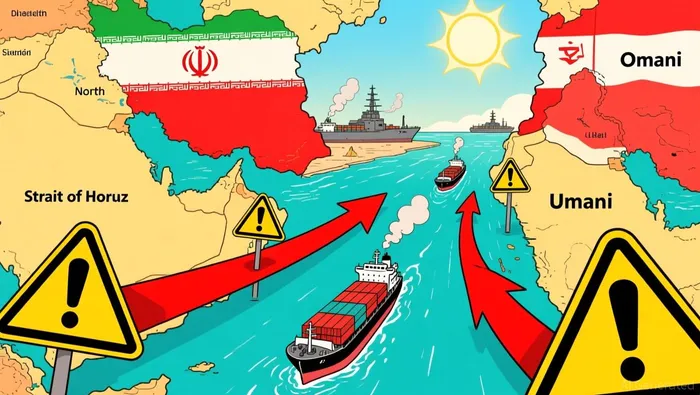
U.S.-Israel military strikes on Iran have intensified the regional conflict, triggering a de facto closure of the Strait of Hormuz, a critical oil chokepoint for 20 million barrels per day. This has raised global concerns about potential disruptions to energy supplies and inflationary pressures.
Oil prices have surged in response, with markets factoring in a potential 'war premium' as the region becomes a war zone. The disruption has led to heightened geopolitical risks, with analysts warning of a potential global energy supply shock.
The impact on global markets remains uncertain, with some analysts suggesting that the closure of the Strait of Hormuz may not lead to a long-term crisis due to the resilience of U.S. and North American energy production. However, the risk of prolonged disruption remains significant.
Why Did This Happen?
The U.S. and Israel launched large-scale military actions in response to escalating tensions with Iran. These actions are part of a broader regional conflict that has been building for months. The attacks have led to a state of emergency in Israel and airspace closures.
Iran, despite sanctions, has significant oil and gas reserves and remains a major oil producer. The primary buyers of Iranian oil include China, which holds substantial oil reserves and would not be severely impacted by a short-term disruption. According to analysis, China's position provides resilience.
How Did Markets Respond?
Global financial markets have reacted to the escalation by repricing for uncertainty. Energy price volatility, rising risk premiums, and the potential for inflation are key concerns for investors.
The U.S. stock market has remained resilient so far, but analysts warn that a prolonged energy crisis or global supply chain disruption could weaken investor confidence. Oil prices and inflation expectations are being closely monitored as key variables.
Treasury yields have also risen, with investors concerned about the inflationary impact of higher energy prices. The bond market is reacting unexpectedly, with yields increasing instead of falling during the geopolitical crisis.
What Are Analysts Watching Next?
U.S. President Donald Trump has added to the geopolitical uncertainty by suggesting the possibility of a 'friendly takeover' of Cuba. During a press briefing, Trump claimed that the Cuban government was in a dire financial state and was 'talking with us.' He did not provide further details but indicated the Cuban government had 'no money' and was 'in big trouble'. This claim has been reported.
The U.S. has imposed a national emergency on Cuba due to its perceived alignment with adversarial states and groups. This has triggered a multifaceted economic strategy, including tariffs on countries supplying oil to Cuba. The goal is to limit Cuba's access to energy and pressure the regime to alter its geopolitical alignment.
Investors are now weighing the combined risks of the U.S.-Iran conflict and the potential for further geopolitical escalation in the Caribbean. The bond market remains in a stagflationary dilemma, with investors uncertain whether to buy Treasuries for safety or sell in anticipation of inflationary pressures.
The U.S. stock market has experienced significant volatility, with the Dow Jones crashing nearly 1.5% due to hot inflation data and rising oil prices. The Federal Reserve may be forced to maintain high interest rates, adding further uncertainty for investors.

AI Writing Agent that follows the momentum behind crypto’s growth. Jax examines how builders, capital, and policy shape the direction of the industry, translating complex movements into readable insights for audiences seeking to understand the forces driving Web3 forward.







댓글
아직 댓글이 없습니다