
U.S. Economic Outlook 2026: Trends, Risks, and Market Signals
The U.S. economy is on a firm footing as of early 2026, with strong consumer demand and business investment, particularly in artificial intelligence, driving productivity growth.
Treasury Secretary Scott Bessent has highlighted China fulfilling its soybean purchase commitments under the U.S.-China trade deal, which is expected to support U.S. economic growth.
Recent economic surveys show optimism among Americans about near-term economic and stock market performance, though political polarization and risk factors like inflation and unemployment remain concerns.
The U.S. economic outlook for 2026 is shaped by a mix of optimism and caution. On one hand, robust consumer demand and business investment—especially in AI—are driving productivity gains. On the other, experts remain wary of potential risks like energy price volatility and geopolitical uncertainty. Treasury Secretary Scott Bessent has recently underscored a key development: China's full fulfillment of its soybean purchase commitments under the U.S.-China trade deal, signaling positive momentum in bilateral trade and potentially boosting U.S. agricultural exports.
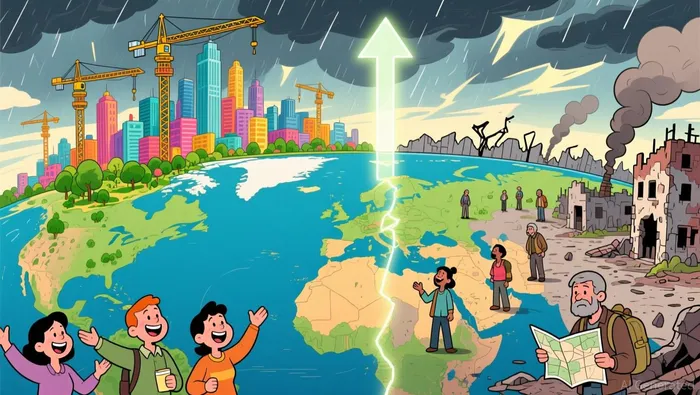
The economic landscape in 2026 is also marked by a K-Shaped recovery. Higher-income earners and tech-driven sectors are thriving, while middle- and lower-income groups face stagnation or decline. This dynamic underscores the need for small businesses and Main Street to adapt to structural and behavioral shifts, such as the growing demand for experiential retail, sustainable business models, and the integration of AI into everyday operations.
Public sentiment is divided, with over the next six months, . However, , and 50% see higher unemployment as a risk. This split indicates a nuanced understanding of the economy, especially among politically polarized groups. Meanwhile, the Federal Reserve's dual mandate of stable prices and low unemployment continues to shape macroeconomic strategies.
Artificial intelligence is not only a productivity driver but also a transformative force with potential to reshape the labor market. While experts project U.S. , they caution that the scale and timeline of AI's impact remain uncertain. This dual nature of AI—as both an opportunity and a risk—means that investors should closely monitor labor market data and policy responses.
Looking ahead, the key developments to watch include the pace of AI adoption across industries, the trajectory of inflation, and how the labor market adapts to shifting demand for skills. Additionally, geopolitical events and energy price fluctuations will play a critical role in shaping the broader economic environment. Investors are advised to maintain a diversified portfolio, consider international equities, and pay attention to regional economic indicators as they can highlight where opportunities may emerge.
Why Is the U.S. Economy Expected to Grow in 2026?
The U.S. economic growth in 2026 is largely attributed to sustained consumer demand and business investment, especially in technology-driven sectors like artificial intelligence. These investments are driving productivity gains, which in turn support long-term economic expansion. Treasury Secretary Scott Bessent has pointed to China's fulfillment of soybean purchase commitments as a sign of strengthened trade relations and economic cooperation. This not only supports U.S. agricultural producers but also signals a broader trend of normalization in U.S.-China trade, potentially reducing some of the uncertainties that have historically impacted global markets.
Moreover, in worldwide economic growth after a six-month low in December, suggesting that the global economy is stabilizing. This stabilization provides a favorable backdrop for the U.S. economy, which has been able to maintain a balanced labor market and low inflation despite some global headwinds. These conditions, combined with strong industrial performance and a thriving stock market— —are seen as indicators of a resilient economy.
What Economic Risks Should Investors Watch in 2026?
While the economic outlook is largely positive, several key risks remain. Energy prices are a primary concern, with large swings observed in recent quarters. These fluctuations can lead to unexpected inflationary pressures, which could challenge the Federal Reserve's ability to maintain price stability. Additionally, geopolitical events—such as conflicts or trade disputes—can introduce uncertainty that impacts both markets and consumer behavior.
The integration of AI into various industries is another area of risk and opportunity. While it promises to boost productivity, it also has the potential to disrupt traditional job markets. Investors should monitor how these shifts are managed by companies and governments, as they could have long-term implications for both employment and economic performance.
Inflation, although currently easing, . A rise in inflation could force the Fed to adopt a more hawkish stance, which would have implications for interest rates and borrowing costs. For investors, this means keeping a close eye on inflation data and central bank policy decisions, especially as they relate to bond yields and equity valuations.
Lastly, labor force constraints—such as demographic shifts and a tight labor market—remain a challenge. While low unemployment is generally seen as a positive sign, it can also lead to wage inflation and higher operating costs for businesses. Investors should consider how companies are addressing these challenges, whether through automation, workforce training, or other strategies.
What's the Role of Small Businesses in the 2026 Economic Outlook?
Small businesses are expected to play a crucial role in the U.S. economy in 2026. They are often the backbone of local communities and a key source of job creation. As outlined in recent analyses, 2026 will see structural and behavioral changes that will shape the strategies and operations of small businesses. These include shifts in consumer behavior driven by younger generations, the expansion of circular retail beyond apparel, and the increasing importance of sustainable and reusable business models.
One of the most significant trends for small businesses is the K-Shaped economy, where higher-income earners and tech-savvy entrepreneurs continue to thrive, while middle- and lower-income groups face stagnation. This divergence means that small businesses must adapt to meet the changing expectations of consumers—especially their preference for experiential shopping and third spaces such as .
New ownership and finance structures, such as co-ops and , are also emerging as viable alternatives to traditional business models. These structures can provide greater stability and long-term planning, especially for businesses owned by Millennials and Gen Z, who may face unique challenges in asset ownership according to recent analyses. Additionally, the shift from e-commerce to brick-and-mortar retail continues, with many online brands opening physical stores to enhance customer engagement and build brand loyalty.
For investors, the importance of small businesses in the 2026 economic outlook means that there are opportunities to support and invest in innovative and resilient local enterprises. This includes not only traditional forms of investment but also impact investing and community-based financial models. As the economy continues to evolve, small businesses will play a vital role in driving growth, creating jobs, and fostering economic diversity.

Stay ahead with real-time Wall Street scoops.







댓글
아직 댓글이 없습니다