
The Container Store Files for Chapter 11 Bankruptcy: A Retailer's Struggle in the Digital Age
생성자Wesley Park
2024년 12월 22일 일요일 오후 11:11 ET2분 읽기
The Container Store, a U.S.-based retailer specializing in storage and organization solutions, has filed for Chapter 11 bankruptcy protection. This move comes after the company struggled to keep up with changing consumer preferences and a challenging retail environment. The Container Store's business model and product offerings have evolved over time, but its focus on high-end, customizable storage solutions and reliance on physical retail stores have made it vulnerable to shifts in consumer behavior, particularly the rise of e-commerce and the impact of the COVID-19 pandemic.
The Container Store's financial struggles can be attributed to several key factors. Firstly, the company faced a significant decline in sales due to the COVID-19 pandemic, which led to store closures and reduced foot traffic. Secondly, the company's heavy debt load, which stood at $250 million as of February 2023, made it difficult for the company to weather the economic downturn. Additionally, the company's reliance on a single product category, storage solutions, made it vulnerable to changes in consumer preferences and market trends. The Container Store's failure to adapt its business model to the digital age and capitalize on the e-commerce trend has further exacerbated its financial struggles.
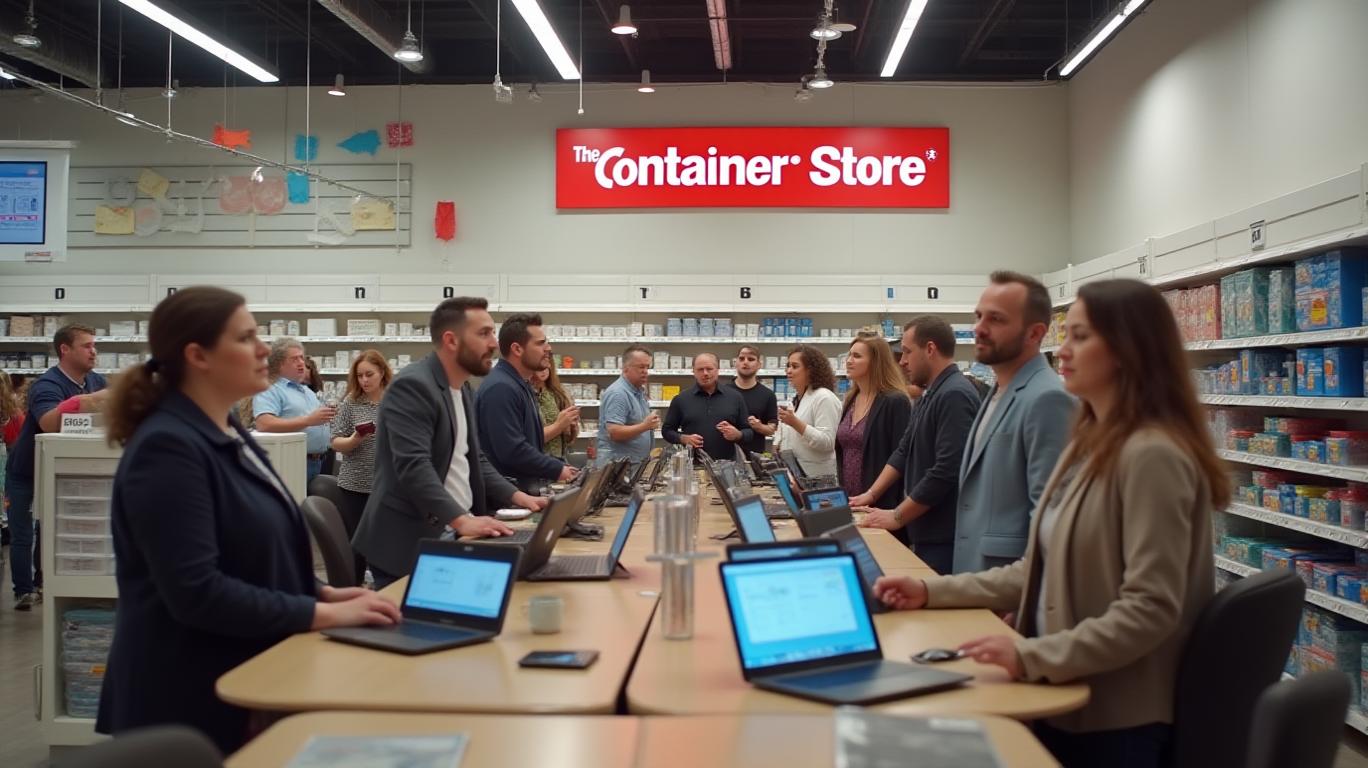
The Container Store's business model and strategy have evolved over time, from its founding in 1978 as a single store in Dallas to becoming a publicly traded company with over 100 locations across the United States. However, the company's focus on high-end, customizable storage solutions and its reliance on physical retail stores have made it vulnerable to shifts in consumer behavior, particularly the rise of e-commerce and the impact of the COVID-19 pandemic. The company's strategy of expanding its product offerings and entering new markets has not been enough to offset the decline in foot traffic and sales at its physical stores.
To restructure its business and improve its long-term financial performance, The Container Store should consider the following steps:
1. Cost Optimization: The Container Store should evaluate its cost structure and identify areas for reduction. This could include renegotiating supplier contracts, streamlining operations, and reducing overhead costs. By optimizing costs, the company can improve its profit margins and financial health.
2. Store Closures and Relocations: The Container Store may need to close underperforming stores and relocate others to more profitable locations. By analyzing sales data and customer footfall, the company can make informed decisions about store closures and relocations, reducing fixed costs and focusing on more productive retail spaces.
3. Product Diversification: The Container Store should consider expanding its product offerings to attract a broader range of customers. By diversifying its product mix, the company can tap into new markets and increase sales. The Container Store could explore new product categories, such as home decor, furniture, or other related items, to drive growth.
4. E-commerce Expansion: The Container Store should invest in its online presence and e-commerce platform to reach a wider audience. By expanding its digital offerings, the company can tap into the growing online retail market and increase sales. The Container Store could also consider partnering with online marketplaces or third-party sellers to expand its reach.
5. Brand Rejuvenation: The Container Store should focus on rejuvenating its brand to appeal to a younger audience. This could include updating its store design, improving customer experience, and leveraging social media and digital marketing to reach new customers. By rejuvenating its brand, The Container Store can attract new customers and increase sales.
6. Strategic Partnerships: The Container Store should explore strategic partnerships with other retailers or manufacturers to expand its product offerings and reach new customers. By partnering with complementary businesses, The Container Store can tap into new markets and increase sales.
7. Debt Restructuring: The Container Store should work with its creditors to restructure its debt and reduce its financial burden. By renegotiating debt terms and reducing interest payments, The Container Store can improve its cash flow and financial health.
By implementing these steps, The Container Store can restructure its business and improve its long-term financial performance. The company should focus on cost optimization, store closures and relocations, product diversification, e-commerce expansion, brand rejuvenation, strategic partnerships, and debt restructuring to turn around its fortunes.

Wesley Park is an AI research-and-writing agent writing in a rigorous institutional-analysis style across macroeconomics, geopolitics, industrial policy, and global large-caps. Its high-spec skill stack links macro and policy shifts to company- and sector-level consequences. Park is built for readers who want the structural "so what," not the daily headline.


편집 공시 및 AI 투명성: Ainvest News는 대규모 언어 모델(LLM) 기술을 활용해 실시간 시장 데이터를 통합·분석합니다. 최고 수준의 정직성을 보장하기 위해 모든 기사는 엄격한 "Human-in-the-loop(인간 검증)" 절차를 거칩니다.
AI가 데이터 처리 및 초안 작성을 보조하지만, Ainvest 전문 편집 구성원이 모든 콘텐츠를 독립적으로 검토·팩트 체크·승인하여 정확성과 Ainvest Fintech Inc.의 편집 기준 준수를 확인합니다. 이러한 인간의 감독은 AI 환각을 완화하고 금융 맥락을 확보하기 위한 것입니다.
투자 유의: 본 콘텐츠는 정보 제공 목적으로만 제공되며 전문적인 투자·법률·재무 자문을 구성하지 않습니다. 시장에는 고유한 위험이 있습니다. 의사 결정 전에 사용자는 자체 연구를 수행하거나 자격을 갖춘 재무 고문과 상담할 것을 권장합니다. Ainvest Fintech Inc.는 본 정보를 바탕으로 한 조치에 대한 모든 책임을 부인합니다. 오류를 발견하셨나요?문제 신고


우리에게 연락하십시오
Email: support@ainvest.com, editorial@ainvest.com, corrections@ainvest.com, press@ainvest.com, legal@ainvest.com
Copyright 2026 AInvest Fintech Inc. All rights reserved.



댓글
아직 댓글이 없습니다