
Berkshire Hathaway’s New Leadership Era: Abel’s Vision and Financial Strategy
Greg Abel released his first annual shareholder letter as Berkshire Hathaway’s CEO on February 28, 2026, marking the end of Warren Buffett’s 60-year letter-writing tradition. The letter was released alongside Q4 and FY 2025 earnings.
Abel emphasized the continuation of Berkshire’s disciplined investing approach, stressing the importance of a strong balance sheet, limited debt, and long-term capital allocation.
The company reported a $4.5 billion write-down on its stakes in Kraft Heinz and Occidental Petroleum, showing transparency and a willingness to reassess investments under new leadership.
The transition of leadership at Berkshire Hathaway is one of the most-watched events in the financial world, and Greg Abel’s first annual shareholder letter has set the tone for what lies ahead. Investors are keen to see how the conglomerate evolves under Abel, while preserving the core values established by Warren Buffett. The letter provided key insights into Berkshire’s financial strategy, governance, and future direction, particularly amid a challenging macroeconomic environment.
What Does Greg Abel’s First Shareholder Letter Mean for Berkshire Hathaway’s Future?
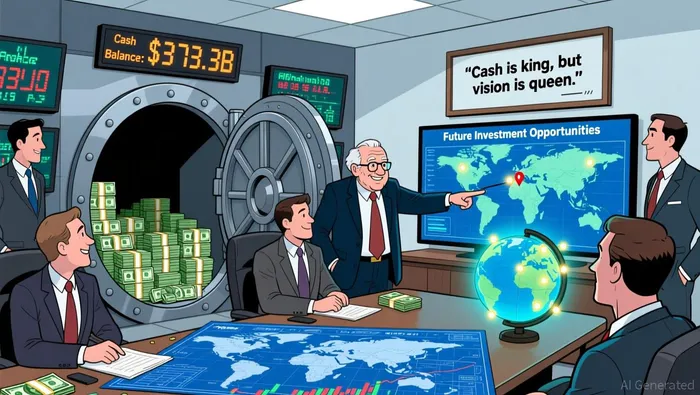
Greg Abel’s first letter reaffirmed that the culture of disciplined investing and financial conservatism—hallmarks of Warren Buffett’s leadership—will remain central to Berkshire’s strategy. Abel emphasized maintaining a $373.3 billion cash balance as a strategic asset for future opportunities, using debt sparingly, and preserving liquidity to allow swift and decisive action when needed according to CNBC.
Abel also outlined the company’s long-term investment philosophy, stating that Berkshire will continue to hold concentrated positions in a small group of American companies and will not pay dividends unless it creates more value for shareholders. This approach is consistent with Buffett’s legacy and reflects a patient, long-term mindset as reported by Yahoo Finance.
Moreover, Abel confirmed he will directly oversee the equity portfolio, with Ted Weschler managing a portion of it, ensuring continuity in investment decision-making. Abel also stated he will not adopt a quarterly earnings call cadence, instead prioritizing quality of communication over frequency, a stance that reinforces the company’s long-term focus according to Yahoo Finance.
Why Is Berkshire Hathaway’s Investment Strategy Still Relevant in 2026?
Despite the transition in leadership, Berkshire’s investment philosophy remains as relevant as ever. Abel highlighted the importance of preserving Berkshire’s reputation for integrity and avoiding businesses that could undermine societal values as noted by Facebook. This approach aligns with the long-standing reputation of the company as a disciplined and values-driven investor.
The company’s top equity investments—Apple, American Express, Coca-Cola, and Moody’s—are seen as long-term holdings that reflect Buffett’s focus on companies with strong brand power, recurring revenue, and long-term growth potential according to Yahoo Finance. These positions are concentrated, patient investments, with minimal trading activity, reinforcing the long-term approach.
Additionally, the $373.3 billion cash position is viewed not as a sign of disengagement from the market but as a strategic reserve that allows Berkshire to act decisively when opportunities arise. Abel emphasized that the company will not retreat from investing but will remain vigilant and disciplined in capital allocation as reported by Yahoo Finance.
What Are the Implications of Abel’s Leadership for Retail Investors?
For retail investors, the transition in leadership offers both reassurance and uncertainty. On one hand, Abel has made it clear that Berkshire will continue to operate under the same principles and values that have made it one of the most successful investment vehicles in history. On the other hand, investors will be watching closely to see how the company adapts to new economic conditions and whether Abel’s leadership style will bring any meaningful changes.
Investors should also pay attention to how Abel manages Berkshire’s equity portfolio, particularly in light of the $4.5 billion write-downs on Kraft Heinz and Occidental Petroleum. This transparency suggests a more active and strategic approach to managing the portfolio, which could be a sign of a more dynamic leadership style according to Yahoo Finance.
Looking ahead, the key areas to monitor include how the company handles capital deployment, whether there will be any new major acquisitions or investments, and how the conglomerate navigates macroeconomic challenges such as inflation, interest rates, and global economic uncertainty.
Ultimately, Abel’s leadership is expected to uphold the principles of long-term value creation, financial strength, and strategic patience that have defined Berkshire for decades. While the company may evolve under his leadership, the core values that have driven its success will likely remain intact.

Stay ahead with real-time Wall Street scoops.







댓글
아직 댓글이 없습니다