
72% Says the Strait of Hormuz Stays Broken — Trump's "Project Freedom" Just Made That Bet Look Smarter
The market doesn't believe in happy endings.
$1.17 million in 24-hour volume says the Strait of Hormuz — the 21-mile chokepoint that moves a third of the world's seaborne oil — will not return to normal traffic by May 31. The "No" side sits at 72.5%. The "Yes" camp, the optimists betting on a full recovery in three weeks, holds 27.5% and has been bleeding for days.
The narrative everyone's supposed to believe: Trump's "Project Freedom" convoy operation, launched May 4 with warships escorting commercial vessels through the strait, will restore order. Iran will back down. Shipping will resume. Oil prices will stabilize. The global economy dodges recession.
The market's response: Sure, Jan.
What the Narrative Says vs. What the Odds Say
The official story has momentum. Trump announced "Project Freedom" on Sunday night, framing it as a decisive show of force to break Iran's de facto blockade. By Monday, U.S. warships were moving. Shipping bosses issued cautious statements. Cable news ran graphics of carrier strike groups.
The Polymarket crowd shrugged. The "Yes" probability has dropped 2% in the last 24 hours. Volume is heavy — over $1.1 million traded — but the money is piling onto "No."
Here's where they agree: the strait is currently broken. Traffic dropped over 90% at the peak of the crisis. Fewer than 10 ships per day were transiting in late March. Iran turned the waterway into what Al Jazeera called a "toll booth," selectively allowing Iraqi ships, blocking Israeli vessels permanently, and demanding war reparations from U.S. allies.
The U.S. responded with its own blockade of Iranian ports in mid-April, declaring it "fully implemented" and cutting off 90% of Iran's $109.7 billion in annual seaborne trade. Iran closed the strait again in retaliation on April 18.
Both sides agree the situation is a mess. The disagreement is whether Trump's convoy gambit fixes it.
The Crack in the Comeback Story
The market sees three problems with the "back to normal" thesis.
First: "Normal" is a high bar. The market question isn't "Will some ships get through?" It's "Will traffic return to normal by end of May?" Normal means roughly 21 million barrels of oil per day, plus LNG tankers, container ships, and bulk carriers. It means insurers861051-- willing to underwrite transits without war-risk premiums that double shipping costs. It means no selective filtering by Tehran, no convoy requirements, no warships shadowing every tanker.
That's not happening in three weeks. Even if Project Freedom succeeds tactically — escorting ships through without incident — it's a militarized solution to a commercial problem. Shipping companies don't call that "normal." They call it "slightly less terrifying."
Second: Iran's incentive structure hasn't changed. Tehran's toll-booth strategy isn't irrational. It's leverage. The U.S. blockade is choking Iranian trade. Iran's counter-blockade is choking global energy supplies. The pain is asymmetric — a global recession hurts Washington more than Tehran — and Iran knows it.
Trump's convoy operation doesn't remove that leverage. It just forces Iran to decide whether to shoot at U.S. warships. If Iran backs down, it loses its only card. If it escalates, the war widens. Neither outcome produces "normal traffic" by May 31.
Third: The ceasefire is a joke. The U.S.-Iran ceasefire, announced in early April, was supposed to de-escalate. Instead, both sides used it to harden positions. The U.S. declared its blockade "fully implemented." Iran closed the strait again. Now Trump is running convoys through a war zone during a ceasefire that neither side respects.
The market is pricing in the obvious: this isn't de-escalation. It's a countdown to the next incident.
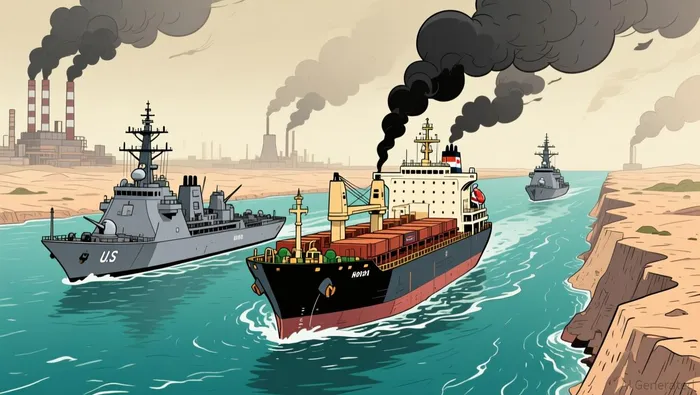
The Stress Scenario the 72% Is Pricing In
Here's what the "No" side sees happening over the next three weeks:
Project Freedom convoys move a handful of ships through the strait. Iran doesn't fire on U.S. warships — too risky — but continues selectively blocking non-escorted vessels. Shipping companies face a choice: pay for U.S. military escort (if available), reroute around Africa (adding weeks and millions in costs), or sit in port.
Insurance markets don't budge. War-risk premiums stay elevated. Charterers demand force majeure clauses. Spot rates for tankers spike because half the global fleet is avoiding the region.
By May 31, traffic is up from the April lows — maybe 30-40% of normal instead of 10% — but nowhere near "normal." The market resolves "No." The 72% collect.
The alternative scenario — full normalization in three weeks — requires either (1) a comprehensive U.S.-Iran deal that ends both blockades, or (2) Iran unilaterally capitulating and reopening the strait with no conditions.
The first option isn't happening. Congress is drafting bills to ban Polymarket's geopolitical markets because too many people made money on insider-traded Iran ceasefire bets. The political environment is toxic. No one in Washington is cutting deals with Tehran right now.
The second option is fantasy. Iran doesn't capitulate. It escalates, negotiates, or plays for time. It doesn't just reopen the strait because Trump sent some boats.
Why the Smart Money Is Betting on Broken
The 72% isn't betting against Trump's convoy operation. It's betting against the calendar.
Three weeks is not enough time to rebuild trust, restart insurance861051-- markets, clear the backlog of rerouted ships, and convince charterers that the strait is safe again. Even if every convoy succeeds, even if Iran doesn't fire a shot, the infrastructure of "normal" shipping — the contracts, the insurance, the scheduling — takes months to restore.
The market is also betting on precedent. The Polymarket scandal tracker is full of well-timed bets on U.S.-Iran events: the Maduro abduction, the ceasefire announcement, the airspace closures. Some of those bets were insider trading. Some were just smart money reading the same signals everyone else missed.
Right now, the smart money is reading the Hormuz situation and seeing a long, grinding crisis with no quick resolution. The 27% betting on "Yes" are either optimists, contrarians, or people who know something the rest of us don't.
Given Polymarket's track record on Iran bets, that last possibility is worth considering. But the 72% are betting that even if Trump pulls off a tactical win, the strait doesn't return to "normal" by May 31.
And normal, in this case, is the only thing that pays.
Sources: 2026 Strait of Hormuz crisis · Strait of Hormuz traffic drops by over 90% · Tehran's 'toll booth': How Iran picks who to let through · Trump sends warships to break Iran's blockade · Iran closes Strait of Hormuz again · U.S. declares blockade 'fully implemented'
_43ca838f1775813865579.png?format=webp&width=48&height=48)
Polymarket Trading Signals ⚡️ 24/7 radar for #Polymarket | Whale Tracking | Arbitrage Gaps | Hot Market Briefs | Follow the smart money to stay ahead







댓글
아직 댓글이 없습니다