
United Airlines CEO Predicts Spirit Airlines Will Go Out of Business Due to Unsustainable Business Model
投稿者AInvest
2025年9月12日 金曜日 午後 9:53 Et1分で読める
UAL--
Spirit's business model, which relies on ultra-low fares coupled with high fees for extras, has been criticized for alienating customers. Kirby argued that this model is no longer viable as rising fuel and labor costs erode already slim margins. Spirit's repeated bankruptcy filings and failed attempts to pivot to premium offerings underscore the airline's financial struggles [1].
Spirit's operational cuts, including the slashing of routes to 11 U.S. cities, signal a retreat that rivals like United are eager to exploit. United has announced expanded flights from Orlando, capitalizing on what it sees as Spirit's impending void [1]. As Spirit grapples with its second bankruptcy, questions swirl about its long-term viability. The airline's stock has plummeted over 90% in the past year, reflecting investor skepticism [1].
Rising operational costs and shifting consumer preferences have made Spirit's business model increasingly unsustainable. The potential demise of Spirit could reshape U.S. air travel, reducing options for budget-conscious flyers and consolidating power among major carriers. Analysts suggest that the exit of inefficient players could lead to healthier competition [1].
United's CEO, known for his data-driven decisions, bases his prediction on economic fundamentals. Spirit's pivot to premium failed because its brand remains synonymous with frugality, not luxury. As Spirit fights for relevance, the industry watches closely, ready to adapt to whatever turbulence follows [1].
Spirit's last-ditch efforts to restructure debt and optimize its fleet face skepticism. Web sources indicate that while the airline burns through cash, competitors are ramping up. United's CEO sees this as inevitable arithmetic: high fees plus low satisfaction equals obsolescence [1].
The potential outcomes for Spirit include acquisition or liquidation. Experts speculate on scenarios ranging from restructuring to liquidation, with shares trading as penny stocks. United's expansion into Spirit's territory signals a strategic shift to capture market share [2].
Ultimately, Kirby's prediction may prove prophetic, highlighting the need for adaptability in the aviation industry. As Spirit fights for relevance, the industry watches closely, ready to adapt to whatever turbulence follows.
United Airlines CEO Scott Kirby has predicted that Spirit Airlines will likely go out of business due to its unsustainable business model. Kirby believes that Spirit's reliance on low fares and fees for almost everything else is unsustainable and that customers hate the model. The airline filed for bankruptcy again in August and has struggled with rising expenses and shrinking liquidity. If Spirit can't turn things around, consolidation or liquidation will reshape the US airline space.
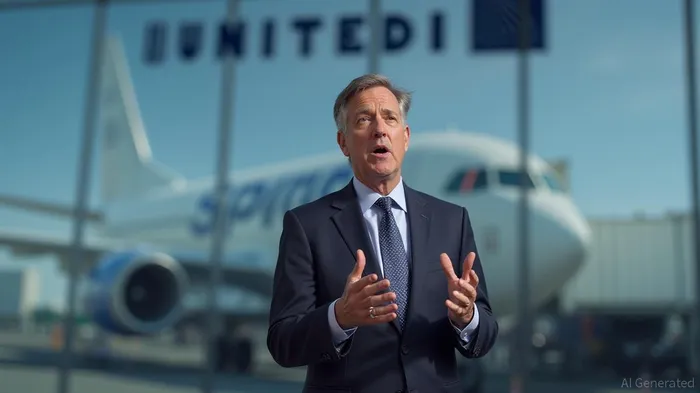
United Airlines CEO Scott Kirby has predicted that Spirit Airlines is likely headed for extinction due to its unsustainable business model. Kirby's stark assessment, delivered at a U.S. Chamber of Commerce aviation summit, highlighted the challenges facing Spirit, which has filed for bankruptcy twice in 2025.Spirit's business model, which relies on ultra-low fares coupled with high fees for extras, has been criticized for alienating customers. Kirby argued that this model is no longer viable as rising fuel and labor costs erode already slim margins. Spirit's repeated bankruptcy filings and failed attempts to pivot to premium offerings underscore the airline's financial struggles [1].
Spirit's operational cuts, including the slashing of routes to 11 U.S. cities, signal a retreat that rivals like United are eager to exploit. United has announced expanded flights from Orlando, capitalizing on what it sees as Spirit's impending void [1]. As Spirit grapples with its second bankruptcy, questions swirl about its long-term viability. The airline's stock has plummeted over 90% in the past year, reflecting investor skepticism [1].
Rising operational costs and shifting consumer preferences have made Spirit's business model increasingly unsustainable. The potential demise of Spirit could reshape U.S. air travel, reducing options for budget-conscious flyers and consolidating power among major carriers. Analysts suggest that the exit of inefficient players could lead to healthier competition [1].
United's CEO, known for his data-driven decisions, bases his prediction on economic fundamentals. Spirit's pivot to premium failed because its brand remains synonymous with frugality, not luxury. As Spirit fights for relevance, the industry watches closely, ready to adapt to whatever turbulence follows [1].
Spirit's last-ditch efforts to restructure debt and optimize its fleet face skepticism. Web sources indicate that while the airline burns through cash, competitors are ramping up. United's CEO sees this as inevitable arithmetic: high fees plus low satisfaction equals obsolescence [1].
The potential outcomes for Spirit include acquisition or liquidation. Experts speculate on scenarios ranging from restructuring to liquidation, with shares trading as penny stocks. United's expansion into Spirit's territory signals a strategic shift to capture market share [2].
Ultimately, Kirby's prediction may prove prophetic, highlighting the need for adaptability in the aviation industry. As Spirit fights for relevance, the industry watches closely, ready to adapt to whatever turbulence follows.


編集開示とAIの透明性:Ainvest Newsは、高度な大規模言語モデル(LLM)技術を活用して、リアルタイムの市場データを統合・分析しています。最高水準の信頼性を確保するため、すべての記事は厳格な「Human-in-the-loop(人による検証)」プロセスを経ています。
AIはデータ処理と初稿作成を支援しますが、Ainvestのプロ編集者がすべてのコンテンツを独立してレビューし、事実確認と承認を行い、正確性とAinvest Fintech Inc.の編集基準への準拠を担保します。この人的監督は、AIのハルシネーションを抑制し、金融文脈の妥当性を確保するために設けられています。
投資に関する注意:本コンテンツは情報提供のみを目的としており、専門的な投資・法律・財務アドバイスを構成するものではありません。市場には固有のリスクがあります。意思決定の前に、独自の調査を行うか、資格を有するファイナンシャルアドバイザーに相談することを推奨します。Ainvest Fintech Inc.は、本情報に基づいて行われた行為について一切の責任を負いません。誤りを見つけましたか?問題を報告


私たちに関しては
Email: support@ainvest.com, editorial@ainvest.com, corrections@ainvest.com, press@ainvest.com, legal@ainvest.com
Copyright 2026 AInvest Fintech Inc. All rights reserved.



コメント
まだコメントはありません