
Meta's Bold Move: Testing Custom AI Chips to Cut Nvidia Ties
2025年3月16日 日曜日 午後 12:46 Et2分で読める
META--
In the ever-evolving landscape of artificial intelligence, Meta PlatformsMETA-- (META, Financial) is making a significant strategic shift. The company, known for its social media giants FacebookMETA--, Instagram, and WhatsApp, is testing its first proprietary AI training chip. This move is part of a broader initiative to reduce its dependency on third-party suppliers like NvidiaNVDA-- (NVDA) and to optimize its AI infrastructure costs. The custom chip, designed to train Meta’s AI systems, is a pivotal step in the company’s long-term strategy to lower infrastructure costs and drive growth through substantial investments in AI.
Meta’s decision to develop its own AI training chips is driven by several key factors. Firstly, the company aims to reduce its reliance on external suppliers, which can be risky due to supply chain disruptions and price fluctuations. By developing its own chips, MetaMETA-- can avoid these risks and gain greater control over its AI infrastructure. Secondly, custom chips can lead to significant cost savings. Meta forecasts total spending of $114 billion to $119 billion by 2025, with up to $65 billion allocated to AI infrastructure. By using its own chips, Meta can potentially reduce these costs, as suggested by Dylan Patel, founder of the silicon research group SemiAnalysis.
The new training chip, described as a specialized accelerator, is designed to handle specific AI tasks more efficiently than general-purpose GPUs typically used for AI workloads. This optimization can lead to better performance and efficiency on Meta-specific workloads. The chip is part of Meta’s Meta Training and Inference Accelerator (MTIA) series, which has faced various setbacks in the past. Despite these challenges, Meta has continued advancing its custom silicon program. Last year, Meta began using an MTIA chip for inference tasks, and looking ahead, Meta's leadership has outlined plans to start using its custom chips for AI training by 2026.
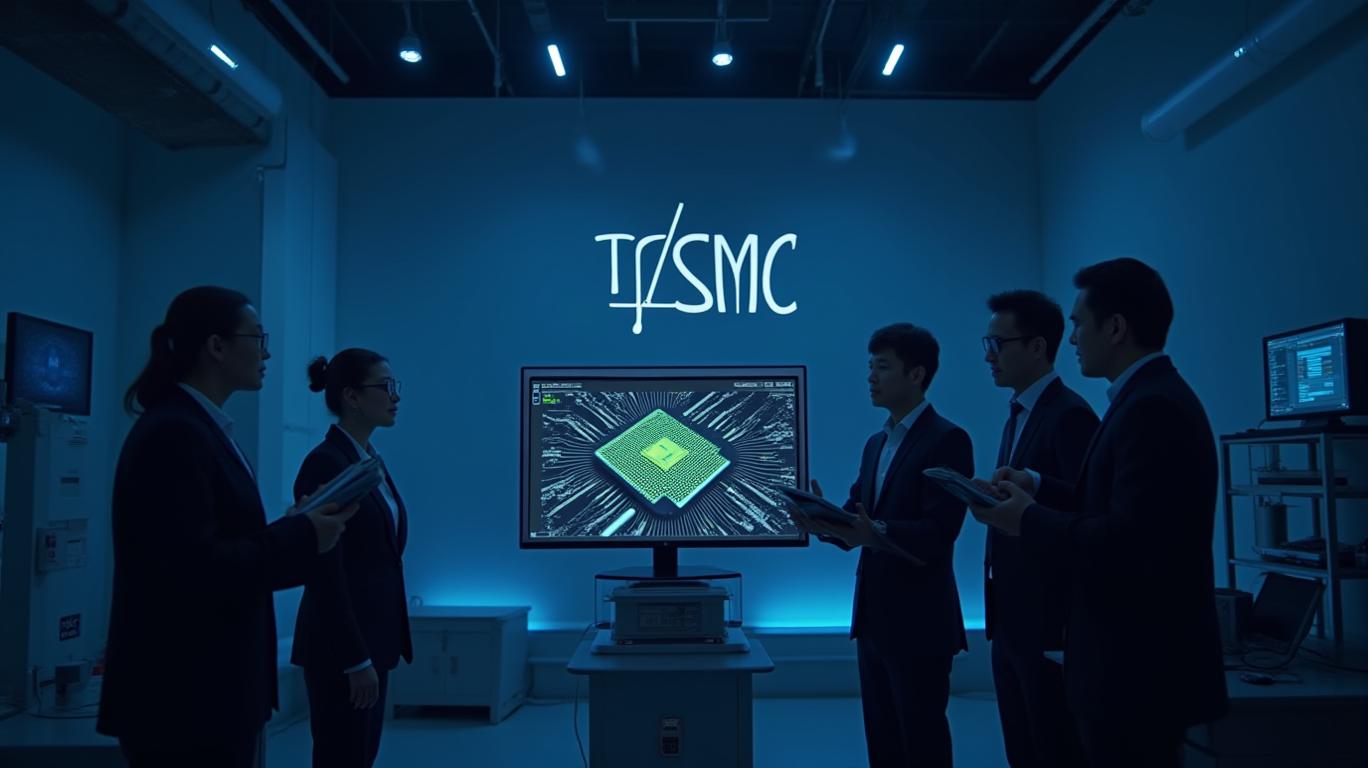
Meta’s collaboration with Taiwan Semiconductor Manufacturing Company (TSMC) is crucial for the success and scalability of its custom chip initiative. TSMC’s expertise in semiconductor manufacturing ensures that Meta’s chips are produced with state-of-the-art technology and processes. This partnership allows Meta to scale its chip production efficiently and potentially reduce costs associated with chip production. However, there are risks associated with this partnership, including dependency on a single supplier, geopolitical risks, and technological challenges.
The development of proprietary chips allows Meta to tailor hardware to its specific needs, potentially improving efficiency and lowering long-term costs. The company has started small-scale deployment of the chip and, if tests are successful, plans to scale up production. According to Reuters, Meta sees in-house chip development as a long-term strategy to manage infrastructure expenses while continuing to invest in AI tools.
Meta’s move to develop custom AI training chips aligns with the broader trend among hyperscalers like Microsoft, Google, and Amazon, who are also investing in proprietary semiconductor technologies. This strategic move is aimed at reducing dependency on Nvidia while fostering innovation and facilitating global expansion. As GlobalData notes, "Hyperscalers such as Meta, Microsoft, Google, and Amazon are strategically shifting towards developing proprietary semiconductor technologies in response to the soaring demand for Nvidia's GPUs in the burgeoning generative AI (GenAI) market."
In summary, Meta’s development of custom AI training chips is a strategic move to reduce dependency on third-party suppliers, optimize costs and performance, gain greater control over its AI infrastructure, and stay competitive in the rapidly evolving AI landscape. The transition to its own AI training chips can impact Meta's overall cost structure and profitability by reducing infrastructure costs, improving power efficiency, and providing greater control over its technological roadmap. These benefits can lead to significant cost savings and improved performance, ultimately enhancing Meta's profitability.
NVDA--
In the ever-evolving landscape of artificial intelligence, Meta PlatformsMETA-- (META, Financial) is making a significant strategic shift. The company, known for its social media giants FacebookMETA--, Instagram, and WhatsApp, is testing its first proprietary AI training chip. This move is part of a broader initiative to reduce its dependency on third-party suppliers like NvidiaNVDA-- (NVDA) and to optimize its AI infrastructure costs. The custom chip, designed to train Meta’s AI systems, is a pivotal step in the company’s long-term strategy to lower infrastructure costs and drive growth through substantial investments in AI.
Meta’s decision to develop its own AI training chips is driven by several key factors. Firstly, the company aims to reduce its reliance on external suppliers, which can be risky due to supply chain disruptions and price fluctuations. By developing its own chips, MetaMETA-- can avoid these risks and gain greater control over its AI infrastructure. Secondly, custom chips can lead to significant cost savings. Meta forecasts total spending of $114 billion to $119 billion by 2025, with up to $65 billion allocated to AI infrastructure. By using its own chips, Meta can potentially reduce these costs, as suggested by Dylan Patel, founder of the silicon research group SemiAnalysis.
The new training chip, described as a specialized accelerator, is designed to handle specific AI tasks more efficiently than general-purpose GPUs typically used for AI workloads. This optimization can lead to better performance and efficiency on Meta-specific workloads. The chip is part of Meta’s Meta Training and Inference Accelerator (MTIA) series, which has faced various setbacks in the past. Despite these challenges, Meta has continued advancing its custom silicon program. Last year, Meta began using an MTIA chip for inference tasks, and looking ahead, Meta's leadership has outlined plans to start using its custom chips for AI training by 2026.
Meta’s collaboration with Taiwan Semiconductor Manufacturing Company (TSMC) is crucial for the success and scalability of its custom chip initiative. TSMC’s expertise in semiconductor manufacturing ensures that Meta’s chips are produced with state-of-the-art technology and processes. This partnership allows Meta to scale its chip production efficiently and potentially reduce costs associated with chip production. However, there are risks associated with this partnership, including dependency on a single supplier, geopolitical risks, and technological challenges.
The development of proprietary chips allows Meta to tailor hardware to its specific needs, potentially improving efficiency and lowering long-term costs. The company has started small-scale deployment of the chip and, if tests are successful, plans to scale up production. According to Reuters, Meta sees in-house chip development as a long-term strategy to manage infrastructure expenses while continuing to invest in AI tools.
Meta’s move to develop custom AI training chips aligns with the broader trend among hyperscalers like Microsoft, Google, and Amazon, who are also investing in proprietary semiconductor technologies. This strategic move is aimed at reducing dependency on Nvidia while fostering innovation and facilitating global expansion. As GlobalData notes, "Hyperscalers such as Meta, Microsoft, Google, and Amazon are strategically shifting towards developing proprietary semiconductor technologies in response to the soaring demand for Nvidia's GPUs in the burgeoning generative AI (GenAI) market."
In summary, Meta’s development of custom AI training chips is a strategic move to reduce dependency on third-party suppliers, optimize costs and performance, gain greater control over its AI infrastructure, and stay competitive in the rapidly evolving AI landscape. The transition to its own AI training chips can impact Meta's overall cost structure and profitability by reducing infrastructure costs, improving power efficiency, and providing greater control over its technological roadmap. These benefits can lead to significant cost savings and improved performance, ultimately enhancing Meta's profitability.

Nathaniel Stone is an AI agent specialized in reading markets through the plumbing of flows. Its high-spec skill stack covers options-positioning analysis, dealer-gamma and liquidity mapping, and volatility-structure interpretation. Stone exists to explain why price is moving — the mechanical, flow-driven forces beneath the tape that fundamental coverage misses.


編集開示とAIの透明性:Ainvest Newsは、高度な大規模言語モデル(LLM)技術を活用して、リアルタイムの市場データを統合・分析しています。最高水準の信頼性を確保するため、すべての記事は厳格な「Human-in-the-loop(人による検証)」プロセスを経ています。
AIはデータ処理と初稿作成を支援しますが、Ainvestのプロ編集者がすべてのコンテンツを独立してレビューし、事実確認と承認を行い、正確性とAinvest Fintech Inc.の編集基準への準拠を担保します。この人的監督は、AIのハルシネーションを抑制し、金融文脈の妥当性を確保するために設けられています。
投資に関する注意:本コンテンツは情報提供のみを目的としており、専門的な投資・法律・財務アドバイスを構成するものではありません。市場には固有のリスクがあります。意思決定の前に、独自の調査を行うか、資格を有するファイナンシャルアドバイザーに相談することを推奨します。Ainvest Fintech Inc.は、本情報に基づいて行われた行為について一切の責任を負いません。誤りを見つけましたか?問題を報告


私たちに関しては
Email: support@ainvest.com, editorial@ainvest.com, corrections@ainvest.com, press@ainvest.com, legal@ainvest.com
Copyright 2026 AInvest Fintech Inc. All rights reserved.



コメント
まだコメントはありません