
US Flight Chaos: Why 2026 Disruptions Are Costing Airlines
- Over 2,000 flights were disrupted across the US due to operational strain at key hubs, with American AirlinesAAL-- reporting the highest delay volume and United, Spirit, and DeltaDAL-- leading in cancellations.
- U.S. regulations primarily mandate refunds for canceled flights rather than cash compensation for delays, creating a specific gap in consumer protections compared to other jurisdictions.
- Recent data shows that disruptions at major hubs like Dallas and Atlanta can trigger cascading delays across the network, directly impacting airline profitability and brand equity.
- The volatility of airline scheduling highlights the systemic risk inherent in hub-and-spoke models, where congestion at a primary node impacts downstream operations.
The U.S. aviation industry is grappling with a significant operational bottleneck that has sent ripples through the entire travel network. On April 12, 2026, a convergence of factors led to widespread chaos, with nearly 2,000 flights delayed and over a hundred canceled across major carriers. This event was not an isolated incident but a symptom of deeper structural vulnerabilities in how modern airlines manage capacity and recovery. For investors, the scale of this disruption offers a clear window into the financial risks associated with hub congestion and the limitations of current regulatory frameworks.
The sheer volume of cancellations and delays has put passenger rights and airline liability under intense scrutiny. While travelers often expect compensation for inconvenience, the legal reality in the United States is far more restrictive than in Europe or other global markets. The Department of Transportation mandates refunds for canceled services but does not generally require cash payouts for delays that do not result in a cancellation. This regulatory asymmetry creates a unique financial landscape where airlines face limited direct liability for operational failures, provided they offer rebooking options. However, the reputational damage and the cost of managing these disruptions can still have a tangible impact on the bottom line.
Why Are US Flights Cancelled Delayed So Frequently In 2026?
The surge in flight cancellations and delays observed in April 2026 stems from a perfect storm of operational strain, hub congestion, and staffing challenges. Data indicates that American Airlines reported 296 delays with only two cancellations, while United AirlinesUAL-- led the industry in cancellations with 39, followed by Spirit and Delta. The disruptions were heavily concentrated at high-traffic hubs, with Hartsfield-Jackson Atlanta International Airport recording the highest number of cancellations and Dallas/Fort Worth International Airport seeing the most delays. This pattern suggests that the issue is not merely weather-related but points to systemic bottlenecks where the network's capacity is stretched to its limit.
The hub-and-spoke model, which relies on connecting flights through central airports, is particularly susceptible to these cascading failures. When a major hub like Dallas experiences a slowdown, it immediately impacts regional airports like Phoenix Sky Harbor, where delays and cancellations spiked due to connections from the hub. The Federal Aviation Administration monitors these events through National Airspace System Status reports, which can declare departure delays when traffic volumes exceed capacity. This interconnectivity means that a disruption in one region rapidly propagates to others, creating a domino effect that is difficult to mitigate without significant network redundancy or excess capacity.
What Are The Passenger Rights And Refund Rules For Disruptions?
Understanding the distinction between controllable and uncontrollable disruptions is critical for passengers navigating these chaotic travel periods. Under current U.S. Department of Transportation rules, passengers are entitled to a full cash refund if an airline cancels a flight or significantly changes the schedule, regardless of ticket type. However, for delays that do not result in a cancellation, the primary financial obligation lies in refunding the ticket price only if the passenger declines the offered rebooking. Unlike the European Union, which mandates cash compensation for delays, U.S. regulations do not generally require airlines to provide cash for flight delays, creating a specific gap in consumer protections.
The rules also vary significantly based on the cause of the disruption. Airlines are legally required to provide amenities like hotel stays and meals for delays within their control, such as maintenance or crew issues, but not for external factors like severe weather or government shutdowns. For instance, if a passenger is involuntarily denied boarding due to overbooking, they are entitled to significant cash compensation, with amounts scaling based on the delay length. Conversely, if a passenger pays for a seat selection on a basic economy ticket and is moved to a different seat, they are entitled to a refund only if the fee was paid separately; if seat selection was bundled into a standard fare, no refund is required for intra-cabin changes.
How Do Hub Disruptions Impact Airline Network Stability And Costs?
The operational strain experienced in April 2026 highlights the financial trade-offs airlines make between immediate customer service costs and long-term brand equity preservation. When disruptions occur, airlines must decide whether to rebook passengers on partner carriers or absorb the cost of their own resources. Major carriers like Delta and United have implemented specific rebooking flexibilities for travelers at hard-hit airports, reflecting broader industry efforts to mitigate customer friction during systemic outages. These operational adjustments, while costly in the short term, are designed to restore passenger flow and minimize the financial impact of involuntary rebookings on the airline's balance sheet.
The ability to quickly reroute passengers and manage crew logistics is a key differentiator in maintaining network stability and profitability during peak travel seasons or unexpected system failures. Airlines that offer more generous partner rebooking or accommodation support may incur higher immediate costs but potentially benefit from reduced reputational damage and regulatory fines. However, the frequency of such disruptions can influence operational efficiency metrics, as the cost of managing stranded passengers and the potential for regulatory scrutiny can erode margins. Investors should monitor how these policies evolve, as the ability to maintain network stability is increasingly critical in a market where consumer expectations for reliability are rising.
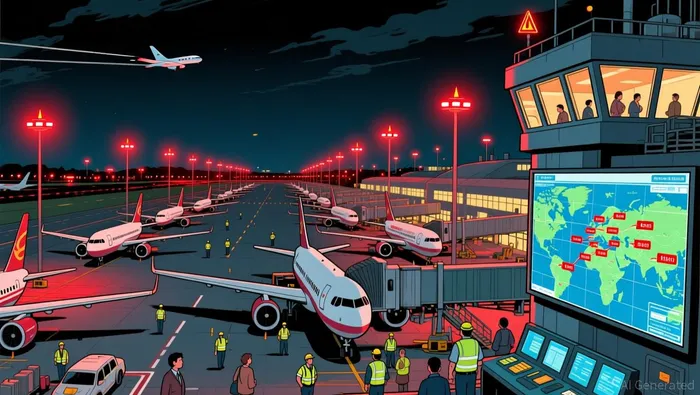
The integration of AI-driven tools, such as Skyscanner's new ChatGPT-native application, represents a strategic shift toward more efficient flight search and management. While these technologies do not directly prevent delays, they streamline the rebooking process and reduce friction for travelers, potentially mitigating the reputational damage of disruptions. As the industry continues to grapple with the complexities of hub congestion, the ability to adapt to these operational challenges will be a key determinant of long-term success for major carriers.
The April 2026 disruption serves as a stark reminder of the fragility of the modern aviation network. While regulations protect consumers from losing their money for canceled services, the lack of compensation for delays leaves passengers vulnerable to the whims of operational inefficiencies. For investors, the key takeaway is that the cost of managing these disruptions extends beyond simple refunds, encompassing the broader financial exposure associated with network instability and regulatory scrutiny. As the industry evolves, the ability to balance operational efficiency with customer satisfaction will remain a critical competitive advantage.

Stay ahead with real-time Wall Street scoops.







コメント
まだコメントはありません