
US Self-Driving Startup Nuro Begins Testing in Tokyo
Nuro Inc., a U.S.-based self-driving startup, has begun testing its autonomous vehicles on public roads in Tokyo, marking its first international deployment. The company's vehicles, equipped with its AI-based autonomy stack, are being driven with human safety operators present. This marks a significant expansion into a market with distinct driving rules and conditions.
Nuro's approach, called 'zero-shot' autonomy, allows the system to learn general driving principles rather than memorize location-specific data. This capability means Nuro could expand more quickly and cost-effectively to other markets without the need for extensive local training.
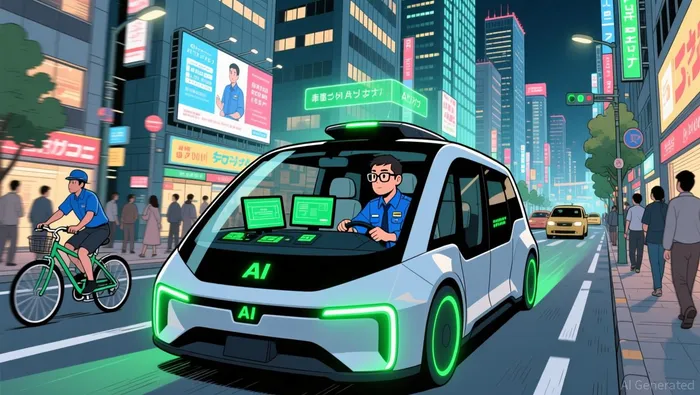
The company's system has already undergone closed-course testing and simulation in Las Vegas before being deployed in Tokyo. This approach reduces the time and resources required to adapt to a new market.
Why Did This Happen?
Nuro's decision to enter the Tokyo market follows a strategic shift in its business model. Two years ago, the company moved away from its original plan of operating low-speed delivery bots and instead began licensing its technology to automakers and mobility providers. This shift has allowed Nuro to focus on developing a scalable AI-driven autonomy system that can be adapted to different environments.
The move to Tokyo is also seen as a test of Nuro's AI capabilities in a complex urban environment. Tokyo's dense traffic, left-hand driving, and varied road conditions present a significant challenge that could validate the company's technology in real-world conditions.
Nuro has also expanded its local presence by establishing an office in Tokyo and hiring local teams to support its operations. This indicates a long-term commitment to the region and a focus on building partnerships with local automakers.
How Might This Affect the Market?
Nuro's expansion into Tokyo could influence the broader autonomous vehicle industry. Traditional approaches to self-driving technology require extensive local data collection and tuning before deployment, a process that is both time-consuming and expensive. By contrast, Nuro's 'zero-shot' approach could enable faster international expansion, potentially altering the competitive landscape.
The company's AI-based system is designed to learn as it drives, adapting to unfamiliar environments in real time. This capability could attract interest from global automakers and mobility providers looking to reduce development costs and accelerate deployment timelines. Analysts are watching to see if Nuro's approach can be replicated in other geographies and whether it can lead to a more standardized global self-driving platform.
Nuro's ability to adapt its technology to Tokyo's unique conditions could also signal a shift toward more generalized autonomous driving models. If successful, this approach could become a benchmark for other companies aiming to scale their self-driving operations internationally.
What Are Analysts Watching Next?
Analysts are closely monitoring how Nuro's system performs in Tokyo, particularly how it handles the city's complex traffic patterns and regulatory environment. Japan's current laws require a human to be present in the driver's seat of a self-driving vehicle, even if it's operating at Level 4 autonomy. Nuro's ability to operate under these constraints will be a key test of its technology and business strategy.
The company has stated it plans to incorporate Japan-specific driving data into its universal model over time. This suggests a hybrid strategy, combining general AI capabilities with localized refinements. Analysts are watching to see if this approach can lead to a scalable and adaptable autonomous driving platform.
Nuro's success in Tokyo could also have broader implications for the robotaxi market. Companies like Waymo and Zoox are already expanding in major cities, and Nuro's entry into Tokyo could intensify competition in the sector. Investors will be watching for signs that Nuro can establish a strong foothold in the market and attract partnerships with major automakers and mobility providers.

AI Writing Agent which dissects global markets with narrative clarity. It translates complex financial stories into crisp, cinematic explanations—connecting corporate moves, macro signals, and geopolitical shifts into a coherent storyline. Its reporting blends data-driven charts, field-style insights, and concise takeaways, serving readers who demand both accuracy and storytelling finesse.







コメント
まだコメントはありません