
S&P 500 Futures Tumble as Oil Surges on Iran Blockade
- Failed US-Iran diplomatic talks have triggered a sharp sell-off in S&P 500 futures and pushed crude oil prices back above $100 per barrel.
- President Trump announced a naval blockade of Iranian ports, escalating tensions in the Strait of Hormuz and causing global shipping traffic to plunge.
- The S&P 500 managed to close with a small loss while oil prices surged, reflecting market anxiety over potential supply disruptions.
- Investors are now monitoring the blockade's impact on inflation and the broader US economy as the conflict enters its 45th day.
Geopolitical risk has returned to the forefront of the market narrative, sending shockwaves through the US equity markets. Following the collapse of weekend negotiations between the United States and Iran, stock-market futures pointed to significant drops for major indices like the S&P 500 and the Dow Jones Industrial Average. The catalyst for this volatility was not just the failure of talks, but the subsequent announcement of a direct military and economic pressure campaign by the United States. President Trump confirmed that the US Navy would begin a blockade of Iranian ports, a move that immediately recalibrated how investors view energy security and global trade flows.
The market's reaction was swift and pronounced, with the initial sell-off driven by fears that the Strait of Hormuz, a critical chokepoint for global energy shipments, would be severely restricted. Oil prices responded to the threat of supply disruption by surging back above $100 per barrel, with WTI crude jumping nearly 8% to $104.04 per barrel in early trading. This spike in energy costs introduces a new layer of complexity for the Federal Reserve, as higher oil prices often translate into broader inflationary pressures that could delay rate cuts or force tighter monetary policy. The volatility highlights the sensitivity of the S&P 500 to external shocks, particularly those originating from the Middle East.
Why Did Stock Market Futures Drop After Failed Iran Talks?
The collapse of diplomatic efforts in Islamabad served as the immediate trigger for the market's negative sentiment. Prior to the announcement of the blockade, there was a degree of optimism that a ceasefire or a de-escalation of tensions might be possible. However, when Iran refused to provide an affirmative commitment to halt its nuclear weapons development, the path to peace appeared closed. President Trump's decision to order the US Navy to interdict any ship in international waters that has paid a toll to Iran to transit the Strait of Hormuz marked a decisive shift from diplomacy to direct confrontation. This escalation caused investors to rapidly reduce their exposure to risk assets, leading to a sell-off in stock futures as the market priced in the potential for a prolonged conflict.
The impact was felt across the board, with the Dow Jones Industrial Average falling 0.45% and the S&P 500 showing weakness as the day progressed. The sell-off was not limited to equities; the yield on the 10-year Treasury climbed to 4.32%, signaling that investors were demanding higher returns to compensate for the increased risk. This flight to safety, or at least a flight from risk, is a classic response to geopolitical uncertainty. The market's reaction underscores the fragility of the current economic environment, where external shocks can quickly undo weeks of gains. The failure of talks has effectively reset the timeline for a resolution, leaving investors to navigate a landscape defined by heightened tension and uncertainty.
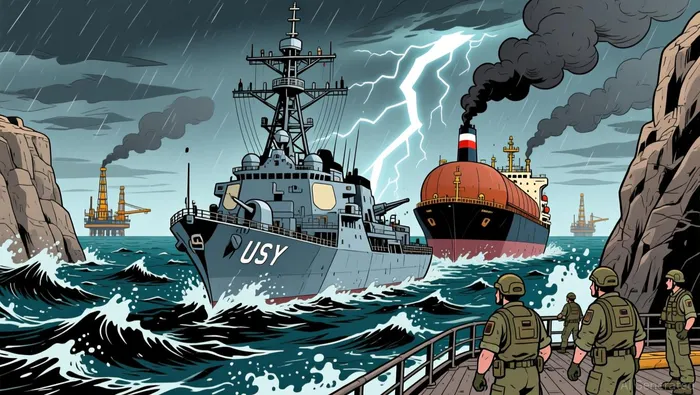
How Does The Iran Blockade Impact S&P 500 Stock Markets Futures?
The implementation of the US blockade on Iranian ports has introduced a tangible supply chain risk that is reverberating through the S&P 500 and broader market futures. The Strait of Hormuz is a critical artery for global trade, handling approximately 20% of the world's oil supplies. With the US Navy enforcing the blockade, tanker traffic through the strait has already plunged, triggering what experts are calling the largest oil supply disruption in history. This reduction in supply has forced oil prices to spike, with Brent crude advancing more than 7% to $102.25. For the S&P 500, which includes a significant number of energy and transportation companies, this volatility creates a complex headwind.
The ripple effects extend beyond just the energy sector. The disruption in shipping lanes is expected to have profound consequences for the global supply chain, with the Global Port Tracker projecting a 5.6% decline in US port container traffic for April. Higher fuel costs for cargo ships have doubled in the last six weeks, increasing the cost of goods for retailers and manufacturers. This inflationary pressure could squeeze corporate margins and slow economic growth, which are key drivers for the performance of the S&P 500. The market's ability to absorb this news has been a point of contention, with some analysts noting that the S&P 500 showed resilience by climbing despite the escalation. However, the long-term implications for inflation and economic stability remain a significant concern for investors watching the situation unfold.
What Are The Market Futures Implications Of The Strait Of Hormuz Conflict?
The ongoing conflict in the Strait of Hormuz has created a new set of variables that investors must consider when assessing market futures. The blockade is intended to pressure Iran by restricting the flow of oil, a strategy that has historically led to volatility in energy prices. As the US Navy enforces the blockade, the market is bracing for continued turbulence. The uncertainty surrounding the duration and scope of the conflict means that oil prices could remain elevated for an extended period, keeping inflation fears alive. This environment is challenging for the Federal Reserve, which must balance the need to control inflation with the risk of stalling economic growth.
Furthermore, the disruption in global trade is likely to have long-lasting effects on the US economy. The National Retail Federation has warned that disruptions anywhere along the global supply chain can have ripple effects, including rerouting vessels and higher fuel costs. This could lead to higher prices for consumers and reduced profitability for companies that rely on global supply chains. The market's reaction to these developments has been mixed, with the S&P 500 recovering some losses but remaining vulnerable to further geopolitical shocks. As the conflict continues, investors will be closely watching for any signs of de-escalation or further escalation, as these developments will likely dictate the direction of market futures in the near term. The situation remains fluid, and the potential for further volatility is high.
The market's resilience in the face of such significant geopolitical news is a testament to the depth and adaptability of the US financial system. However, the risks are far from mitigated, and the potential for further disruption remains a key factor to watch. As the blockade continues to impact global trade and energy markets, the S&P 500 and other major indices will likely continue to experience volatility. Investors should remain vigilant and prepared for a market environment that is increasingly influenced by external geopolitical forces.

Stay ahead with real-time Wall Street scoops.







コメント
まだコメントはありません